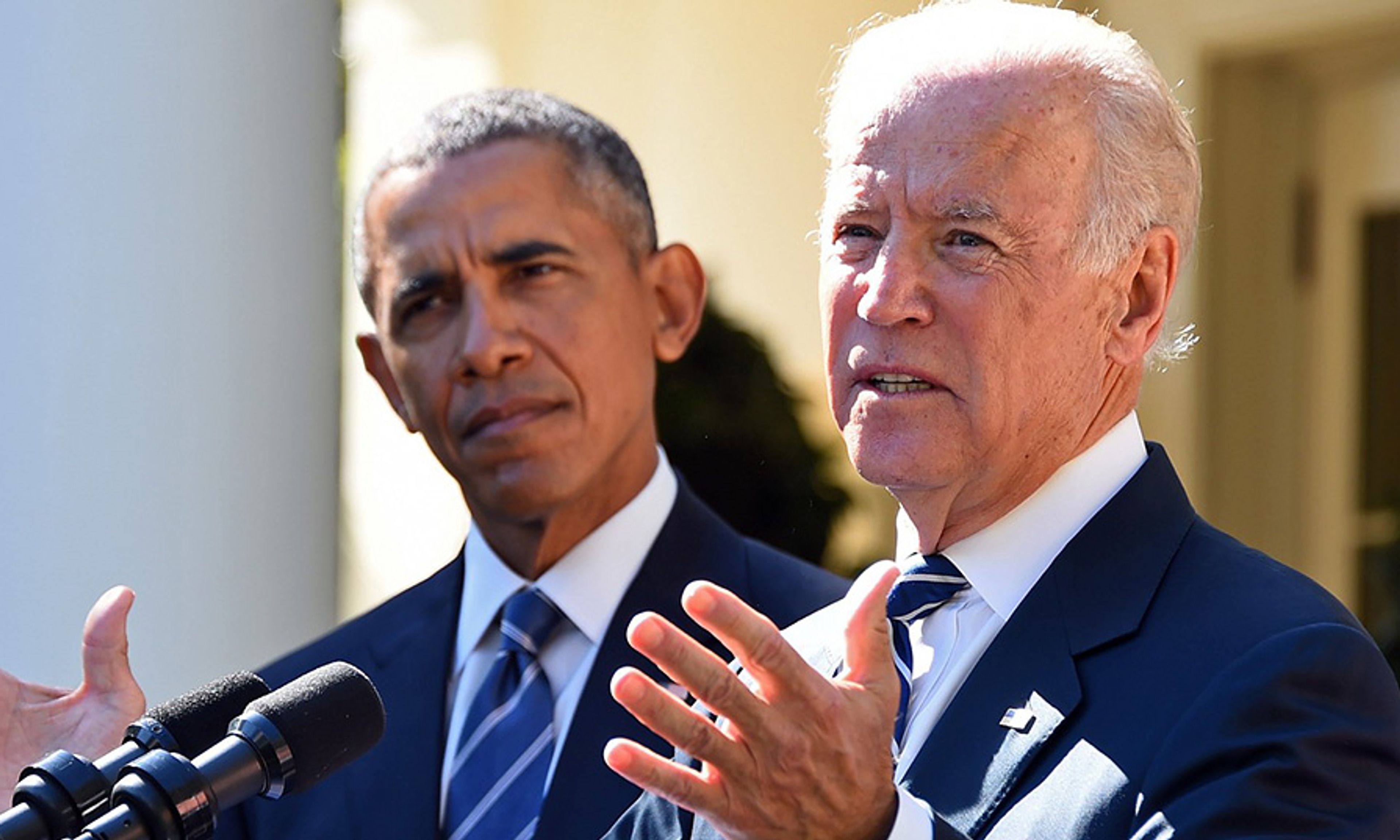
Joe Biden has made it official: He is not running for the 2016 Democratic presidential nomination. It’s the latest development in a presidential campaign cycle that has not been going according to script.
Biden said that personal factors played a part in his decision. At a time when few children die before their parents, he has had to endure the grief of losing two of his four children — his daughter Naomi in December 1972, his son Beau last May. “There’s no timetable for this process,” he said in announcing his decision October 21.
But it also has to be said that the voters this year don’t seem to be putting a high value on Biden’s greatest strength: experience — 36 years in the Senate, seven as vice president.
We have seen the same thing in the Republican withdrawals. Rick Perry, who served 14 years as governor of Texas, withdrew September 11. Scott Walker, who has served five years as governor of Wisconsin and eight as Milwaukee County executive, withdrew September 21.
And Jim Webb withdrew, at least from the Democratic race, on October 20, a day before Biden. His experience includes Marine service for which he was awarded the Navy Cross; writing acclaimed novels; serving as Ronald Reagan’s Navy secretary; and serving as a senator from Virginia, the state which voted closest to the national average in the last two presidential elections.
RELATED: Why Hillary Will Likely Win the White House
That leaves the two parties with clear front-runners in the polls, both with weaknesses that threaten to make them unelectable in November.
Hillary Clinton now looks like the inevitable Democratic nominee. Bernie Sanders, her only rival who polls over 1 percent, handed her a lifeline in the October 13 debate when he said he was tired of hearing about her “damn e-mails.”
But the FBI is still investigating what went out over the private e-mail system Clinton used as secretary of state. An indictment is at least theoretically possible.
RELATED: Clinton Coronation Back on Track? Not So Fast
Even absent that, her candidacy has been damaged. Substantial majorities of Americans believe she is not honest or trustworthy. She currently wins only 44 percent against five leading Republican candidates — well below Obama’s 51 percent in 2012.
Most parties would not want to go to the voters with such a candidate. But the Democrats seem to have no choice.
Their next debate is scheduled for November 14 in Des Moines. Is there any justification for putting Martin O’Malley (0.5 percent in recent polling) or Lincoln Chafee (0.0 percent) on the stage? Does anyone expect that Sanders will overtake Clinton among any Democratic constituency except highly educated white liberals?
#share#As for the Republicans, Donald Trump has outlasted by several months the confident pronouncements that his candidacy would inevitably flame out. His poll numbers have dipped a bit after each debate, and then revived. His closest current competitor, Ben Carson, has no executive or electoral experience and considerably less knowledge of politics. No other candidate scores in double digits.
Republicans debate again on October 28 in Boulder and November 10 in Milwaukee. Then come the Thanksgiving and Christmas holiday seasons. History tells us that there is plenty of time for voters to change their minds, and current polling tells us that voters can move quickly between various non-Trump candidates.
RELATED: How Trump Got the Top Spot
There’s a widespread expectation that the party “establishment” will settle on one alternative to Trump. But that process isn’t automatic, and when you look for that “establishment” it’s hard to find at any given location.
There is reason as well for each party to dread the general election. Republicans have heard for years that increasing numbers of Hispanic, black, millennial, and single-female voters mean their vote share is in inevitable decline. That’s plausible.
#related#As for Democrats, their turnout has been in decline since November 2008, and it’s not clear that Clinton can match Obama’s black turnout or millennial percentages. Obama’s low job approval, which has not topped 47 percent since June 2013, provides a weak basis for a third consecutive Democratic victory.
That low job approval, more than the visible disarray in both parties (i.e., Republicans’ unruly candidates and their turmoil in the House, Clinton’s low ratings on honesty and trustworthiness), is probably the biggest factor driving politics in this presidential cycle.
The record audiences for the presidential debates — 23 to 24 million for Republicans, 13 million for Democrats — suggest that voters are casting about restlessly for alternatives. And that the incumbent vice president’s decision not to run may have been prematurely determined.
— Michael Barone is senior political analyst for the Washington Examiner. © 2015 The Washington Examiner. Distributed by Creators.com.






Comments