
As the Trump campaign marches toward an almost-assured 2024 nomination, the press has suddenly rediscovered that tariffs are taxes that would have a meaningful impact on consumer prices in the affected industries. But the Biden administration’s taxes and regulations are taxes too, and more onerous ones.
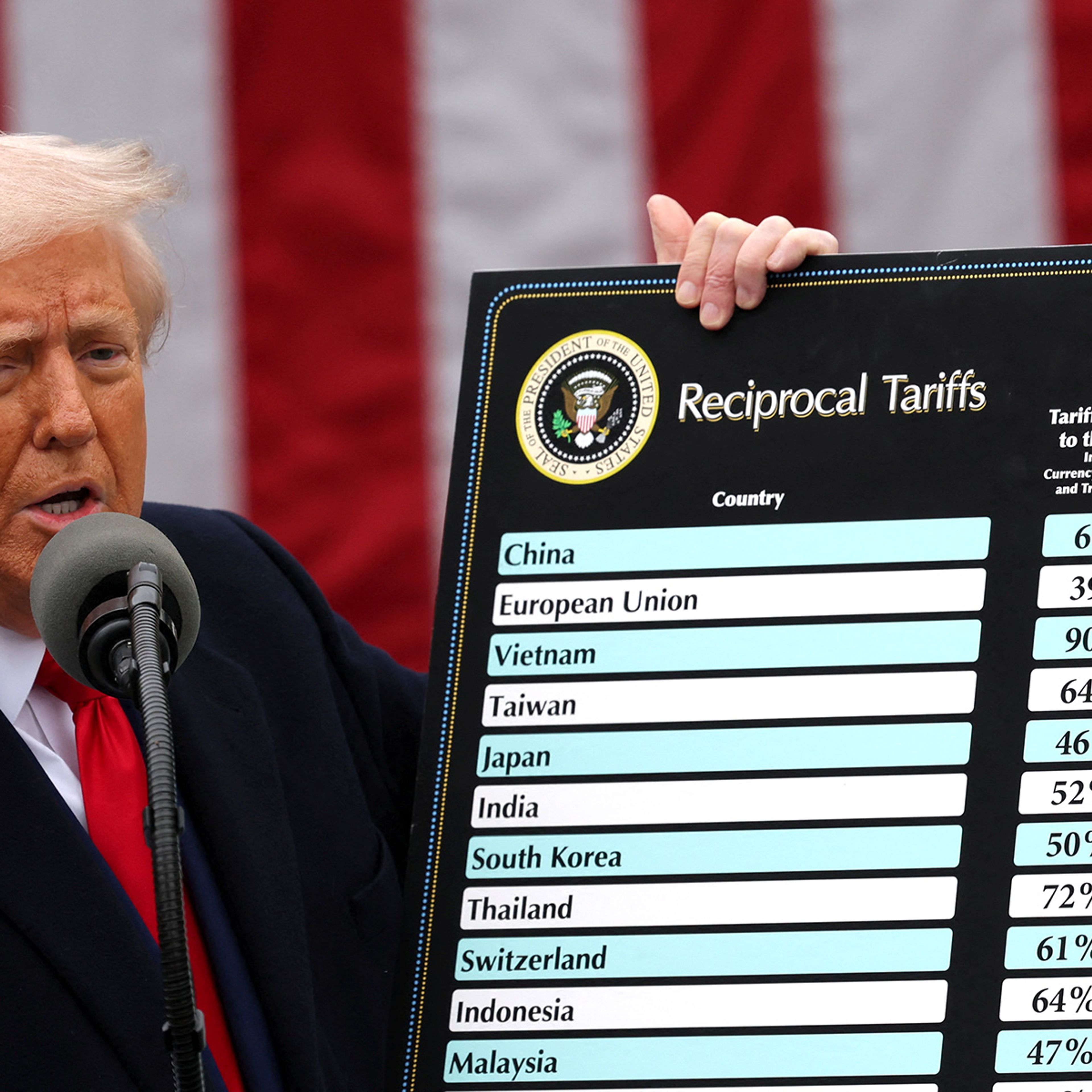
The 2017–21 Trump administration implemented a variety of tariffs, including a 25 percent tariff on imported steel plus levies on solar panels, aluminum, washing machines, and various imports from China. With the transition to the Biden administration, essentially all of the “Trump tariffs” have been continued. (A Biden gimmick has been to convert steel tariffs into quotas, which are just as costly for U.S. consumers, but the revenue goes to foreign steel companies rather than our Treasury.) Candidate Trump now proposes to increase tariffs in a second term by about $200 billion annually beyond the Trump–Biden tariffs.
Beyond tariffs, the Biden administration proposes new taxes to the tune of $500 billion annually, especially with higher income-tax rates for households and businesses, which is a new burden of about $4,000 per household per year. From the John F. Kennedy era through the Obama administration, even Democrats understood that high taxes on business and investment are growth killers.
Biden and Trump are opposites when it comes to the most regressive and undemocratic of taxes: regulatory costs imposed by the administrative state. The Biden administration is on pace to impose new regulations during its second term that would cost the average household $2,000 every year until a future administration was merciful enough to revoke them.
Even if President Trump only reversed the first-term Biden regulations, that would reduce regulatory costs by $1,400 per household per year well into the future. Combining the net candidate differences in tariffs, taxes, and regulatory costs, a second Biden term will cost the average household $5,800 per year well into the future.
Although it’s reasonable to worry about losing our cars, dishwashers, and stoves to regulation, most regulation is not about keeping air and water clean. Significantly more common and costly are the business regulations: rules about employment contracts, telecommunications, consumer finance, health-care business, and more. Regulation reduces wages and raises prices by making it more difficult for workers and businesses to excel at what they do.
Sometimes, one industry’s regulation moves the national aggregates by itself. In early 2017, Janet Yellen’s Federal Reserve was a bit puzzled as to how the economy was growing while something was dragging down inflation. Her statisticians dug into it and found “a large decline in telecommunication service prices” that occurred as costly internet regulations were eliminated. Immediately, prices fell about $40 per subscriber.
Small businesses are especially burdened, as their limited resources make compliance more difficult. Moreover, regulators often see the small-business sector as a supervision nightmare, introducing additional regulations to try to force more economic activity into big corporations that are easier for Washington to monitor and mold. Examples include the joint-employer rules from the Department of Labor and National Labor Relations Board that “pose a direct threat to the franchise business model” that is ubiquitous in retail and other sectors.
New federal regulations disproportionately reduce the incomes of households whose incomes are already low, especially because a number of the rules “indulge[] the preferences of the wealthy.” Obama and Biden regulations have, as a share of income, reduced the purchasing power of bottom-quintile households seven times as much as it would for top-quintile households.
Consumers would benefit from tariff cuts rather than increases. But the evidence is clear that the free trade with our fellow citizens that comes with deregulation and low income taxes is worth more than free trade with international partners.



Comments