Dropping membership is the waking nightmare of American unionism. To cope, Big Labor is turning to pot.
Cannabis holds out promise as a growth industry, especially as state legislatures consider reform. Almost half of all states in the U.S. have revised their laws to allow or decriminalize marijuana in some form. In California alone, medical marijuana is a $1.3 billion industry, according to a 2011 study by See Change Strategy.
The size of the black market for marijuana is tough to calculate, but the 2011 study estimated it was around $18 billion in 2011,and legislative developments may soon bring much of it above ground. Since January 1, at least 18 states have introduced bills to reduce penalties for marijuana possession, allow medical use, or regulate adult use, according to the Marijuana Policy Project. Seven more states are expected to introduce medical-marijuana legislation this year; in Hawaii, New Hampshire, and Rhode Island, bills have been introduced to permit and tax adult recreational use of marijuana, and four states are expected to introduce similar proposals soon.
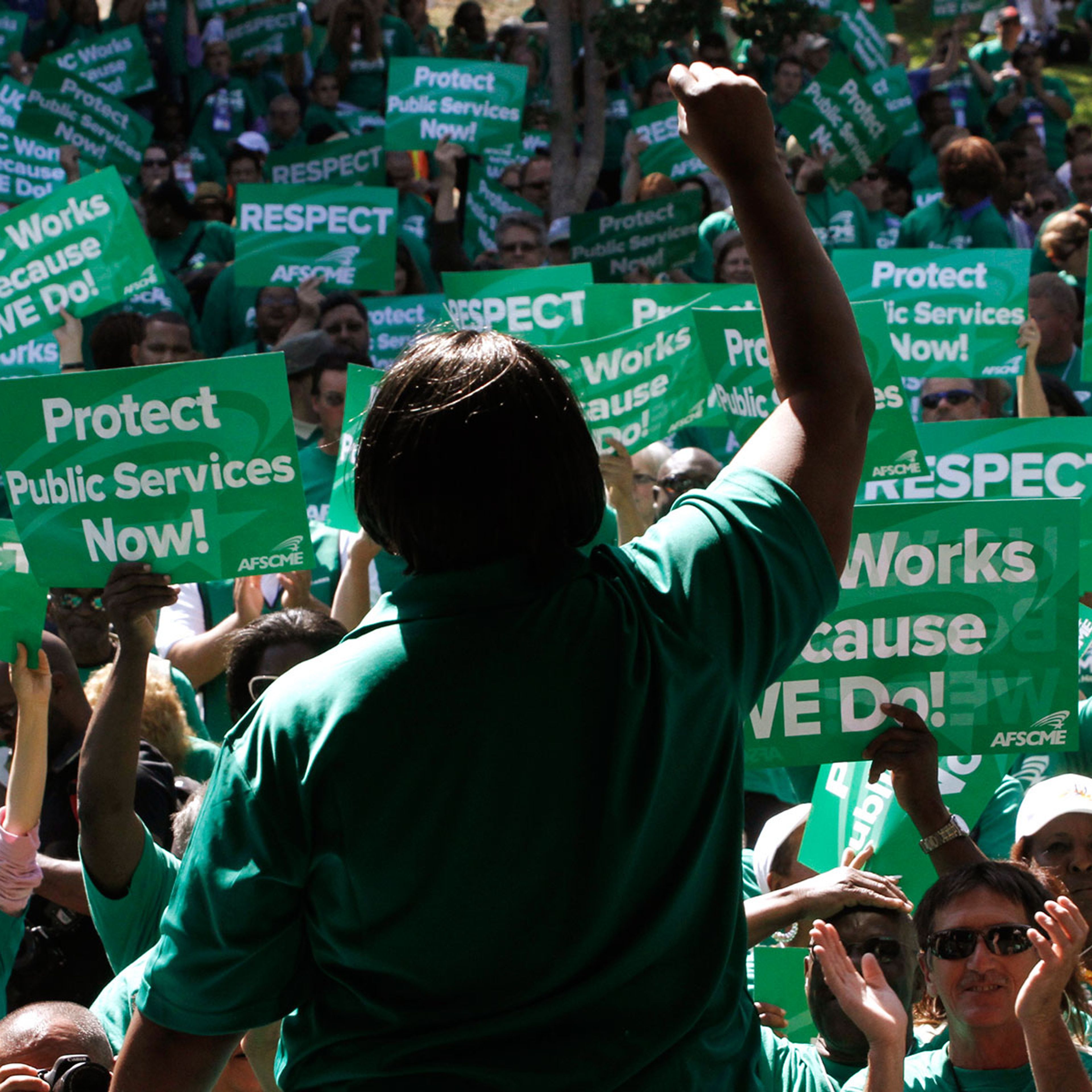
For Big Labor, that looks like an opportunity to counteract its trend toward contraction. The Bureau of Labor Statistics found that in 2012, union membership sank to 11.3 percent of the labor force, the lowest level on record since the 1930s. Against that background, unions have put their political heft behind state-level marijuana efforts, hoping to form a strong union presence within the industry. United Food and Commercial Workers has led the effort, going so far as to create a Medical Cannabis and Hemp Division. It seems to be paying off: Already, the UFCW counts around 3,000 cannabis-industry workers in its ranks.
The New Republic has been tracking unions’ pro-marijuana work. It reports that in California, where Proposition 19, which would have liberalized state marijuana laws, narrowly failed to pass in 2010, the UFCW arranged endorsements from other unions and brokered meetings with legislators, statehouse staffers, and lobbyists. It notes that a California bill was “drafted using language from UFCW.” In Fort Collins, Colo., where a referendum to ban medical marijuana was on the ballot in 2011, Local 7 dedicated several full-time staffers to campaign efforts and sent dozens of volunteers to canvass neighborhoods and man phones. When Colorado considered legalizing recreational use, “the UFCW had anywhere from 100 to 1,000 precinct workers knocking on doors at any given time, and volunteers who made hundreds of thousands of calls.” Elsewhere, UFCW officials tell me, they’ve contributed to pro-marijuana campaigns, conducted get-out-the-vote drives, sponsored initiatives, and collected signatures to counter referendums to shut down California marijuana collectives.
Such political activity on the part of unions is nothing new. What’s unusual is that, on this particular issue, unions are courting businesses rather than confronting them. And the UFCW comes with an offer most in the marijuana business can’t refuse. Union endorsements lend legitimacy to an industry with a brand problem, and organized labor also knows how to mobilize and gain political support — skills the marijuana lobby has long lacked.
“It’s a collaboration,” says Jon Hughes, UFCW Local 5’s representative for organized marijuana dispensaries and collectives. “This isn’t your typical organizing campaign. . . . I always tell people, you will more likely see us on a picket line protesting what the federal government is doing [regarding marijuana] than, . . . let’s say, protesting working conditions” at a marijuana business.
Big Labor’s organizational skills are particularly valued because marijuana’s supporters are notoriously motley. Already, pot politics have created strange bedfellows. In Colorado, illegal-immigration hawk Tom Tancredo supported legalization alongside 70 percent of the state’s Latino voters; elsewhere, marijuana supporters range from Port Huron hippies to Ayn Rand libertarians.
“The big reason that we’re on the same page is that we have a common enemy,” says Dave Hodges, who operates the All-American Cannabis Club in San Jose. “The thing that’s trying to stop [cannabis-industry] jobs and the thing that’s trying to stop [marijuana businesses] are one and the same — the push of anti-marijuana propaganda. I don’t know whether there’s another situation too similar to this, but any time people in a fragile industry needed help organizing and speaking up for themselves, that’s what unions are for.”
If legalization efforts continue to succeed, one wonders when the relationship between unions and marijuana businesses will strain. It is, after all, based wholly on shared interest.
But the underlying political philosophy is actually quite dissonant. Businesses and labor unions rarely agree on economics. The key argument for legalizing drug use, then, is that individual choice outweighs the collective good, whether that choice is represented by government or by mediating institutions such as unions. Big Labor endorses that principle at its own peril.
— Jillian Kay Melchior is a Thomas L. Rhodes Fellow of the Franklin Center for Government and Public Integrity.




Comments