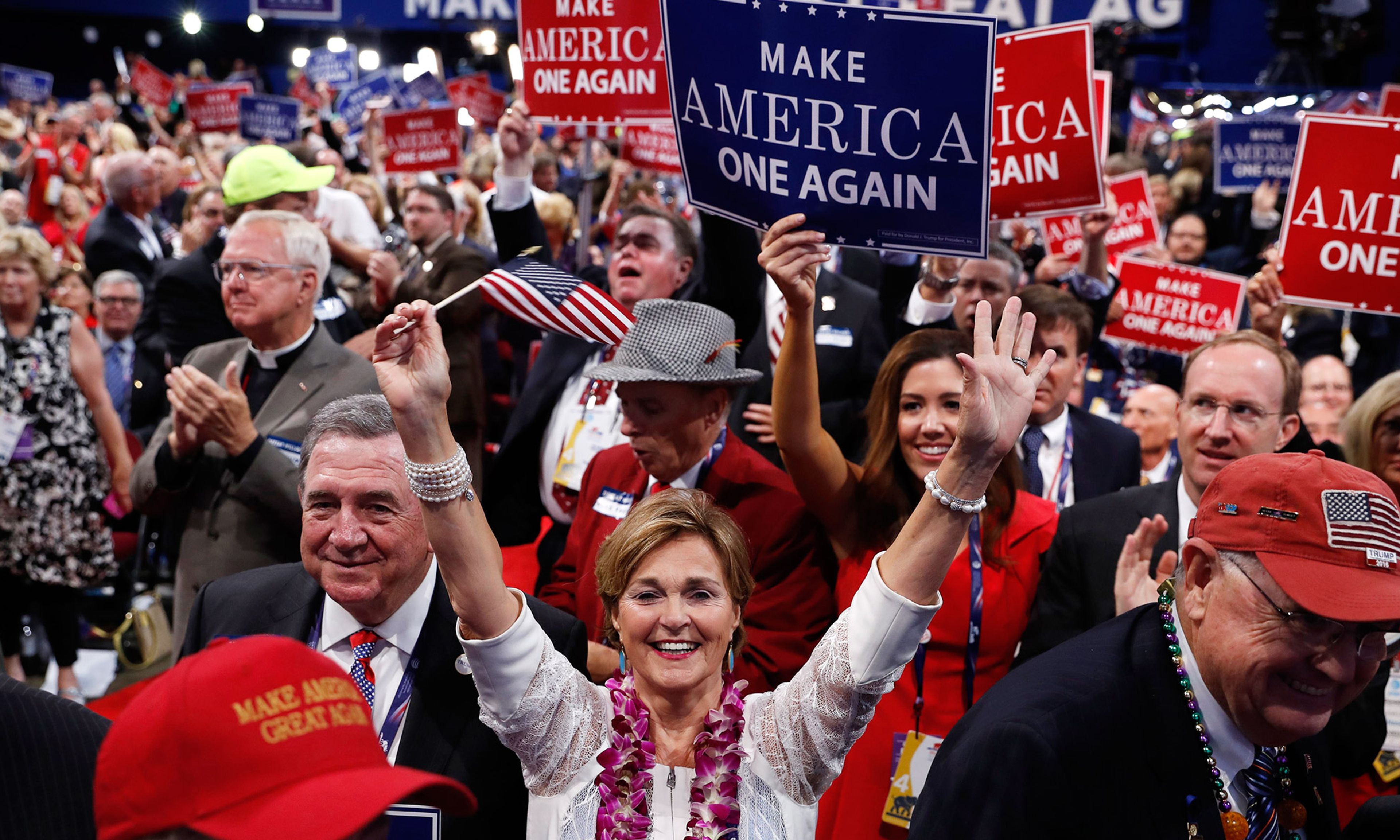
Is the Republican party dead? Has it changed irrevocably, for better or for worse, into something completely unrecognizable? Is it destined to defeat at the hands of a permanent Democratic majority? Michael Barone is here to tell you that we’ve heard this all before, and we should not be so hasty in projecting present trends to continue indefinitely. The seesaw rivalry of our two-party system probably isn’t going away. Observers half a century from now will probably still see Republican and Democratic parties that bear many of the same characteristics that have defined each party since the middle of the 19th century.
In How America’s Political Parties Change (and How They Don’t), a slim 118-page volume adapted from a series of lectures, Barone draws on his decades of analysis of the American political scene, his nearly bottomless well of granular knowledge of American political geography, and the more detailed analyses laid out in his multiple previous books. The result is a long-term narrative portrait of our two major parties, now both over 150 years old. The Democrats and the Republicans are, in Barone’s estimation, respectively the oldest and third-oldest political parties in the world (assuming you credit his tracing of the birth of the Democrats to their 1832 convention and the birth of the British Conservative party to the 1846 rebellion against the repeal of the Corn Laws).





Comments