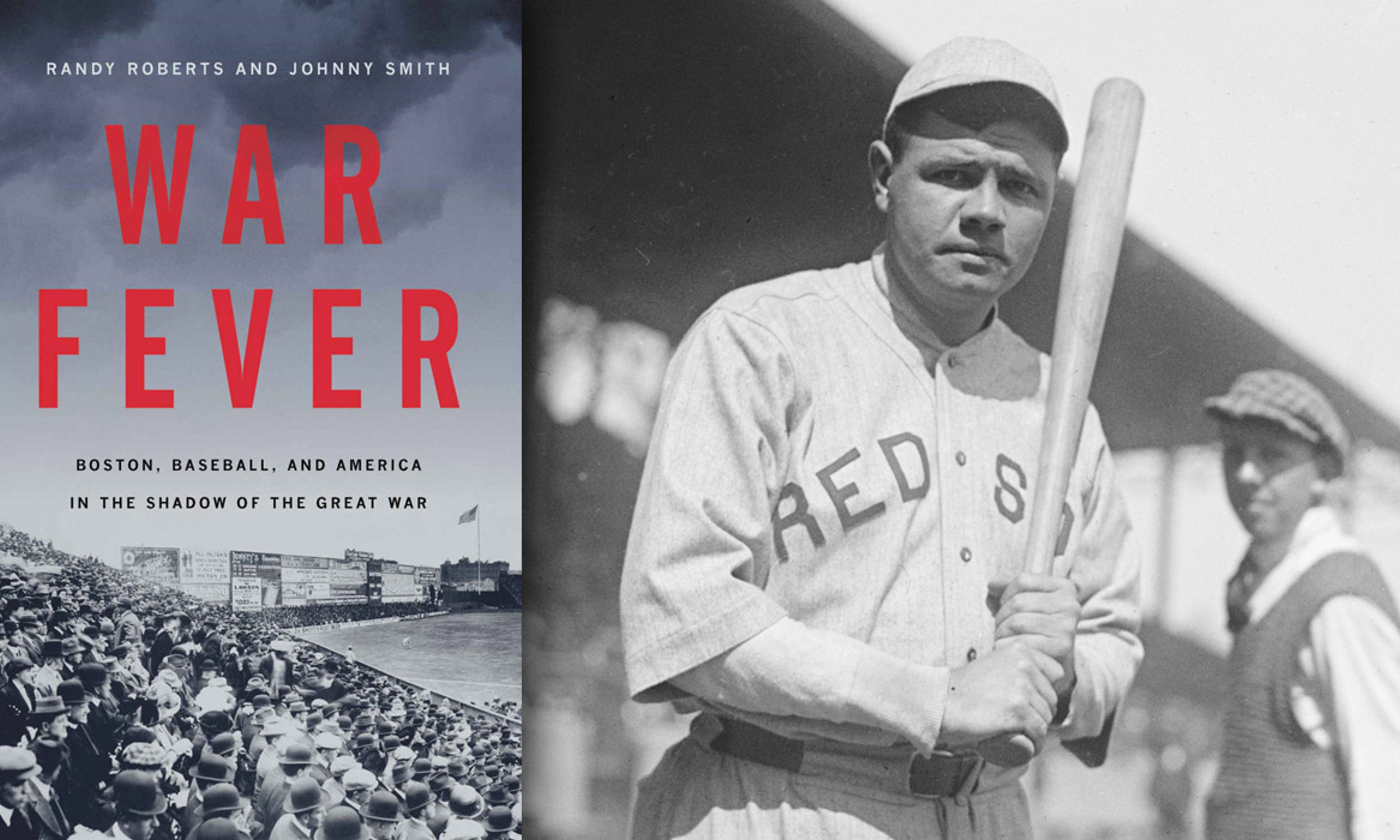
Randy Roberts and Johnny Smith didn’t set out to write a book about the Spanish-flu pandemic of 1918, but the outbreak looms like the ghost at the banquet over their new book War Fever: Boston, Baseball, and America in the Shadow of the Great War. A recurring storyline that runs through the book’s narrative has a much more urgent feel today as America is in the grips of the worst pandemic since that terrible autumn.
War Fever looks at America in the First World War through the lens of three interwoven stories, all tied to Boston in 1918: baseball legend Babe Ruth, Boston Symphony Orchestra conductor Karl Muck, and Charles Whittlesey, the commander of the “Lost Battalion” in the Argonne Forest. One became an American legend during the war; one was destroyed by it; one met both fates. The three storylines never intersect and rarely share the same lessons, so the book has to rely on brisk storytelling and the reader’s interest in combining them into a larger picture. Along the way, there are many memorable cameo appearances, by figures including General Pershing, Walt Disney, Ty Cobb, Shoeless Joe Jackson, Franklin Roosevelt, Billy Sunday, Damon Runyon, and Kenesaw Mountain Landis.




Comments