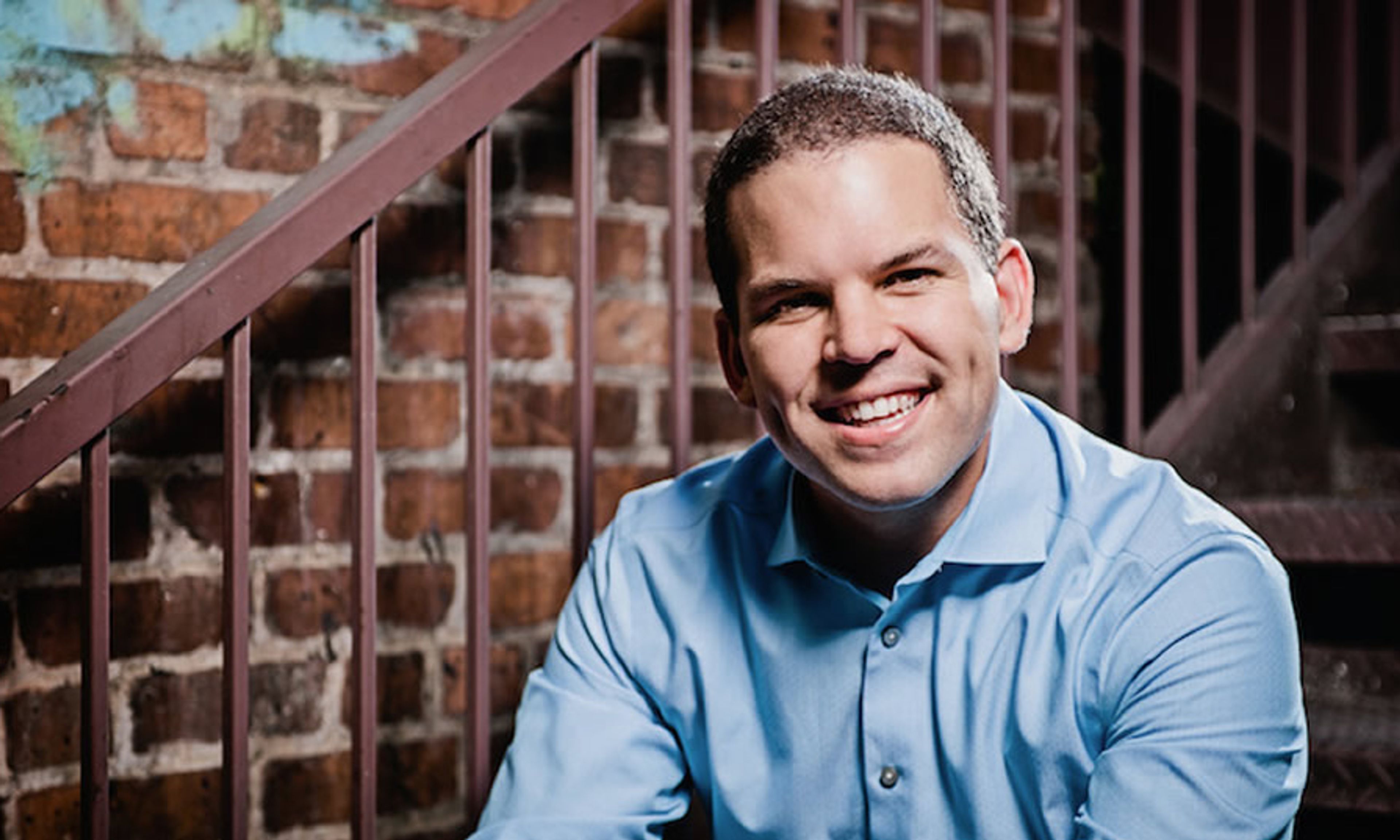
Brandon Vogt is a young entrepreneurial evangelist. It isn’t that he’s profiting from evangelism, but rather, he’s thinking creatively and independently about saving souls. Vogt is a 29-year-old father and Catholic convert, with a heart full of faith and a desire to show people the joy of Catholicism. During the course of his work, which includes giving speeches, he receives his most frequently asked questions from parents who want his advice on urging their adult children to return to the Church. In response, he’s written a book and created a DVD and video series called “Return,” which just launched online. We discuss the problem of young people leaving the Church and some of Vogt’s solutions. Return offers no quick fixes, but it does offer a strategy for opening doors. – KJL
Kathryn Jean Lopez: You say that “The Catholic Church is hemorrhaging young people”? Is it really that bad? Why do so many Catholics seem to leave the Church of their youth? What are the most obvious reasons, and what are the most under-appreciated ones?
Brandon Vogt: The Church’s attrition isn’t merely bad; it’s an epidemic. The most recent Pew survey found that 50 percent (exactly) of young Americans raised in the Catholic Church no longer identify as Catholic today. Think about what that means: Over the last 20-30 years, half of the kids you’ve seen baptized, half of the kids you’ve seen confirmed, and half of the young couples you’ve seen married have likely left the Church.
People leave for many reasons, but thankfully we have lots of data on this. Dioceses in Springfield, Illinois and Trenton, New Jersey have commissioned surveys of former Catholics, and the Pew study mentioned above identified some of the actual reasons people leave. The most common one is that people just drift away unintentionally, over time. In general, roughly seven in ten fallen-away Catholics say they “just gradually drifted away from the religion” or they just “lost interest.” In other words, nothing really pushed them away. The real problem was that nothing anchored them to the Church. And we know the strongest anchor is a personal encounter with Jesus Christ, something they never experienced.
The second most common reason Catholics drift away is because their “spiritual needs were not met.” The majority of these people end up in an Evangelical or non-denominational community. These people remain, in general, deeply interested in God and spiritual things. They pray and take the Bible seriously. But for whatever reason, they were never fulfilled in the Catholic Church and see it as spiritually impotent.
Lopez: Why are the “pelvic issues” so powerful an obstacle to young people returning to the Church?
Vogt: The Catholic journalist John Allen Jr. coined the term “pelvic issues” to describe all the sexual hot-button issues, such as homosexuality, abortion, contraception, pre-marital sex, divorce and remarriage, etc. These issues are putting lots of pressure on young people to leave and stay away from the Church.
For example, many young people no longer consider Catholicism a serious option simply because they assume the Catholic Church condemns gay people. Since most young people today have friends or family who identify as gay, they face a choice between the Catholic Church and those friends. The friends almost always win. Similarly, if a young person has to choose between having sex with a girlfriend/boyfriend they love, and a Church that they don’t understand or value, it’s an easy decision.
The challenge is to show how the Church’s teachings on sexuality and love aren’t meant to curb true happiness; they’re the condition for it.
Lopez: Still: What’s so wrong with being “unaffiliated” or one of the “nones”?
Detaching yourself from the Church means detaching yourself from Christ. Jesus Christ has a body — the Church
Vogt: The problem is that detaching yourself from the Church means detaching yourself from Christ. Jesus Christ has a body — the Church (this is why, when Saul was persecuting the Church, Jesus said to him, “Saul, why are you persecuting me?”). You can’t embrace the head without the body. If you say, “I love Jesus, but not the Church,” you’re committing spiritual decapitation.
Also, as young people drift into the world of “unaffiliated,” they’re missing out on all the gifts God wants to give them through his Church, primarily the sacraments. The Church is the privileged channel of God’s grace — why would we want our young people to miss that?
Lopez: Do we all have a warped view of God in need of some healing and education, to some extent? Is this part of the problem? Is that where your difference between being baptized, catechized, and evangelized comes in?
Vogt: Certainly. There are so many distorted views of God in our culture (if you want a thorough survey, read Ross Douthat’s book, Bad Religion.) One popular view held by many young people, especially those who have drifted away, is what sociologists Christian Smith and Melinda Lundquist Denton have termed “moralistic therapeutic deism.” This view sees God as distant and mostly uninvolved, existing only to provide comfort and to help us be “nice people” on earth so we can go to heaven when we die.
Of course, that’s a far cry from the God revealed through the Bible and the Church — it’s much closer to a celestial Santa Claus than the strange, demanding, beguiling, unnerving God revealed through Jesus Christ.
Baptism introduces us to God. Catechesis (ideally) teaches us about him. But evangelization facilitates an encounter with him. That’s what we’re missing. Most young people today have been baptized, some have been catechized, but few have been evangelized. That’s what is needed to trigger their return.
Lopez: Yours is a Catholic book and plan. Can it work for other Christians? Other religious parents?
Vogt: Many of the tips can be used by any Christian parent, but most of the advice is tailored for Catholic parents. For instance, the sacraments are so important. It’s not enough to just lead your child to have warm feelings about Jesus and personally commit to following his moral path. That’s a great start and, of course, necessary. But we also need to help our children make a decisive commitment to return to his Church, where Christ offers the fullness of his grace.
Lopez: Can this work during Thanksgiving and Christmas time? You write about seeds in the book — what kind of seeds can begin to be planted?
Vogt: Holidays are always a sensitive time to approach neuralgic issues like religion or morality, so for many parents, it’s better just to use those times to strengthen the relationship with their children, paving the way for conversations later on.
Yet even still, parents can begin planting seeds of curiosity and openness. For example, maybe over Thanksgiving meal, you say, “I don’t think we talked about Pope Francis’ visit to the United States. Did you see that? What did you think?” Questions such as this can at least get your child thinking about Catholic things again. You might then follow-up with questions about what he likes (or doesn’t like) about Pope Francis. Listen carefully because his answers will likely clue you in on what he likes or doesn’t like about Catholicism.
Lopez: When all hope feels lost to a parent who prays their child or children will return to the faith, what do you hope each one keeps in mind? #AllAboutMonica?
Vogt: “Hopeless” is not a word in God’s vocabulary. As long as your child still has breath, there is always hope. God loves your child even more than you do. As much as you yearn for your child to come home, God desires his return infinitely more and is continually working to make that happen, even when things appear dire.
St. Monica is a great example, as you hinted. Just look at her son, Augustine. By all accounts, his situation was beyond hopeless. He was a wild teenager who partied, roamed the streets, and stole food. He took a mistress, moved in with her, and got her pregnant. He didn’t want anything to do with Christianity. He openly mocked and denounced his mother’s faith.
But then what happened? Monica prayed fervently for him for years, and her prayers were answered through the pivotal figure of Ambrose, who stepped in and began meeting with Augustine. Ambrose opened Augustine to the possibility of God, and eventually Augustine asked to be baptized. Now? They’re both saints and Augustine is remembered as one of the greatest saints in history and one of the key figures in Western civilization.
If God could turn this pagan, egotistical playboy into a great saint, why can’t he help your child return? So as Padre Pio said, “Pray, hope, and don’t worry.”
— Kathryn Jean Lopez is senior fellow at the National Review Institute and editor-at-large of National Review Online. She is co-author of the new revised and updated edition of How to Defend the Faith without Raising Your Voice. Sign up for her weekly newsletter here.





Comments