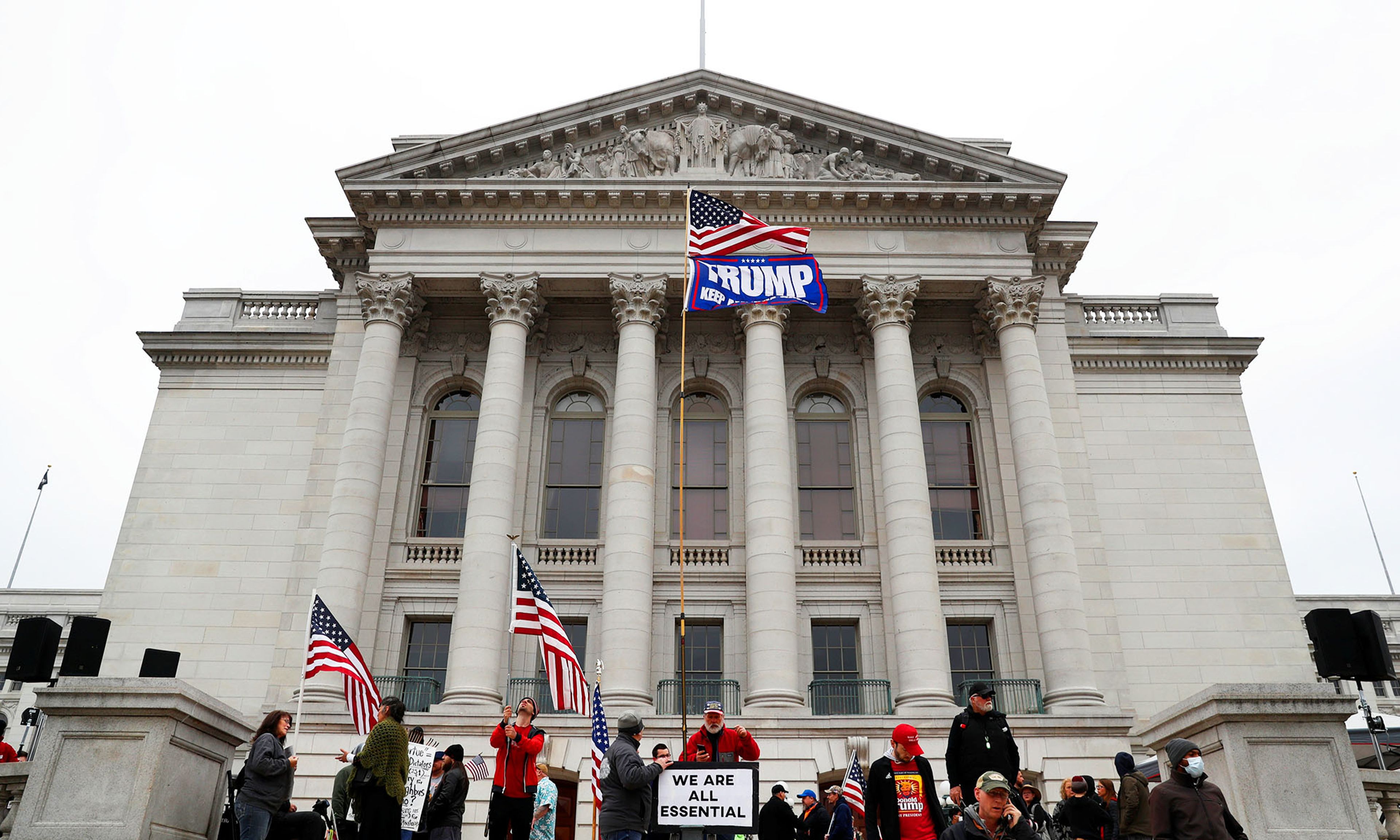
While several federal courts have recently issued decisions addressing the constitutionality of various stay-at-home orders, few state courts have done so. That changed late yesterday, when the Supreme Court of Wisconsin issued its much-anticipated decision in the state legislature’s challenge to Democratic governor Tony Evers’s “safer-at-home” emergency order, issued by his designee for secretary of the Department of Health Services (“DHS”), Andrea Palm. Every Wisconsinite has suddenly become interested in administrative law and the workings of the high court. It is a beautiful thing.
The decision found the order immediately unenforceable. The governor responded by arguing that the Republican legislature now owns the “chaos.” In fact, what will likely follow is an orderly emergency rule-making process whereby DHS and the legislature will be forced to work in concert to establish legal guidelines for managing the reopening process. As with many Supreme Court decisions, while the concurrences and dissents contain the rhetorical mortar fire, the majority opinion, which garnered four out of seven votes, contained eight key takeaways.


Comments