In the most recent issue of The Atlantic, the always interesting, and frequently brilliant, Jonathan Rauch wrote an essay on why politics doesn’t work anymore. His take? We have reformed away the power of the middlemen — the parties and party leaders. Direct democracy pits irreconcilable differences against each other in a cage match without any obvious exit strategy.
Today I’m trying to figure out whether Brexit is further proof of Rauch’s thesis or a stunning repudiation of it.
Yesterday, wading through the British political debates, I was struck by how much they share the cultural dynamic we are experiencing here in the U.S.: not just hyper-partisanship, but the hating partisanship; the sense that our moral disputes with one another are mediated entirely through the lens of a politics fueled by wishes of personal destruction. Witness the horrendously awful response to the Orlando massacre. There was no time for mourning before we turned to using our feelings of disgust and horror to beat up on one another.
There’s a stupid party and a wicked party, the old joke goes. “Which one are we?” the conservative asks. But in truth, the Left has defined us in their own heads as both stupid and wicked, while they are the smart and the good. The campaign against Brexit was based on insulting and discounting the legitimate grievances of those who were thought wicked for questioning immigration and too stupid to recognize the many benefits of EU membership so self-evidently visible to the already well-off.
Sound familiar?
The Left has defined us in their own heads as both stupid and wicked, while they are the smart and the good.
The backdrop for this Great Divorce is a now-15-year-long period of economic stagnation in which the rich have become better off not by growing the economy for everyone but by manipulating political power to create a system that bids up their own assets, as George Gilder was the first to explain in The Scandal of Money (he’s my colleague at the American Principles Project). Relying on the Federal Reserve to create growth, we’ve enriched Wall Street while castrating the once-great engine of capitalism into a servant of Washington and the wealthy, not the wider economy. The Fed keeps making promises of growth that don’t come true, and the liberals respond that if we just grow government some more, economic growth will come into being.
Fighting over a shrinking pie, or rather watching hungrily as the rich get fatter and the broad middle class declines, makes everything harder.
But economic malaise is not the whole story of how we came to hate each other more than we hate those who want us dead.
#share#Two great trends are at work here. First, the Internet has flung our diverse moral communities up against one another in a new way — at the very same time it has sharply divided our information streams. Back in the day, if people had different moral views, they could create communities of the like-minded where they felt supported and at home — Peoria and Manhattan both — and therefore had less call to hate each other.
One tiny symptom of what cyber culture hath wrought: One of my Twitter followers calls himself “The Professor.” A few days ago he angrily forwarded me a story about a Sacramento storefront “pastor” who had applauded the murder of 50 Americans in a gay nightclub — and now his landlords were saying they wouldn’t renew the lease. “Religious liberty? Freedom of speech???” he sarcastically asked me.
“Good,” I responded. There are a whole lot of bad people in the world and some of them claim to be Christians.
“Color me surprised,” he responded, “pleasantly so.” So we ended on a good note, but it has haunted me ever since.
Many gay people, in addition to having experienced hurt and cruelty personally, base their vision of social conservatives on the worst the Internet has to offer. Of course, to make the dynamic more intense and counterproductive still, they don’t merely passively receive these images, they hungrily seek out the images that confirm their dislike and disgust — just as those who dislike gay people or liberals or Muslims do.
It’s not just the dynamic between Maggie and The Professor, it’s what we do these days across the board: We create communities in our heads, based not on real people but on the Internet perception of who our enemies are — be they Evangelical conservatives or Muslims, white people or black, Trump supporters or Hillary lovers.
When our interactions were more directly personal, they were both more pleasant and rarer. To the extent we fed our anger and our hatreds off media stereotypes, they were a less frequent part of our daily diet of mediated reality.
Both sides do this, but when culturally powerful elites do this, the effects are far more systemic and dangerous to the body politic.
We are permitting the moral and symbolic fabric of the higher-order identities we once had in common to fray.
But there is a second, even bigger trend here: I think the real warning from Brexit to our cultural elites, who are overwhelmingly liberal, is that the ties that bind us together are growing weaker in comparison with the clan identities that tear us apart. We are permitting the moral and symbolic fabric of the higher-order identities we once had in common to fray. They need to be knit back together if our nation is to thrive, and possibly survive.
What were the sources of those common identities that bound us together, that made us hate our enemies more than one another? What made black Americans, living under horrifying conditions of discrimination, want to rush off to fight against the Nazis in World War II, for example? What made working-class whites — who were never going to get rich — personally proud of America’s space program, to name another?
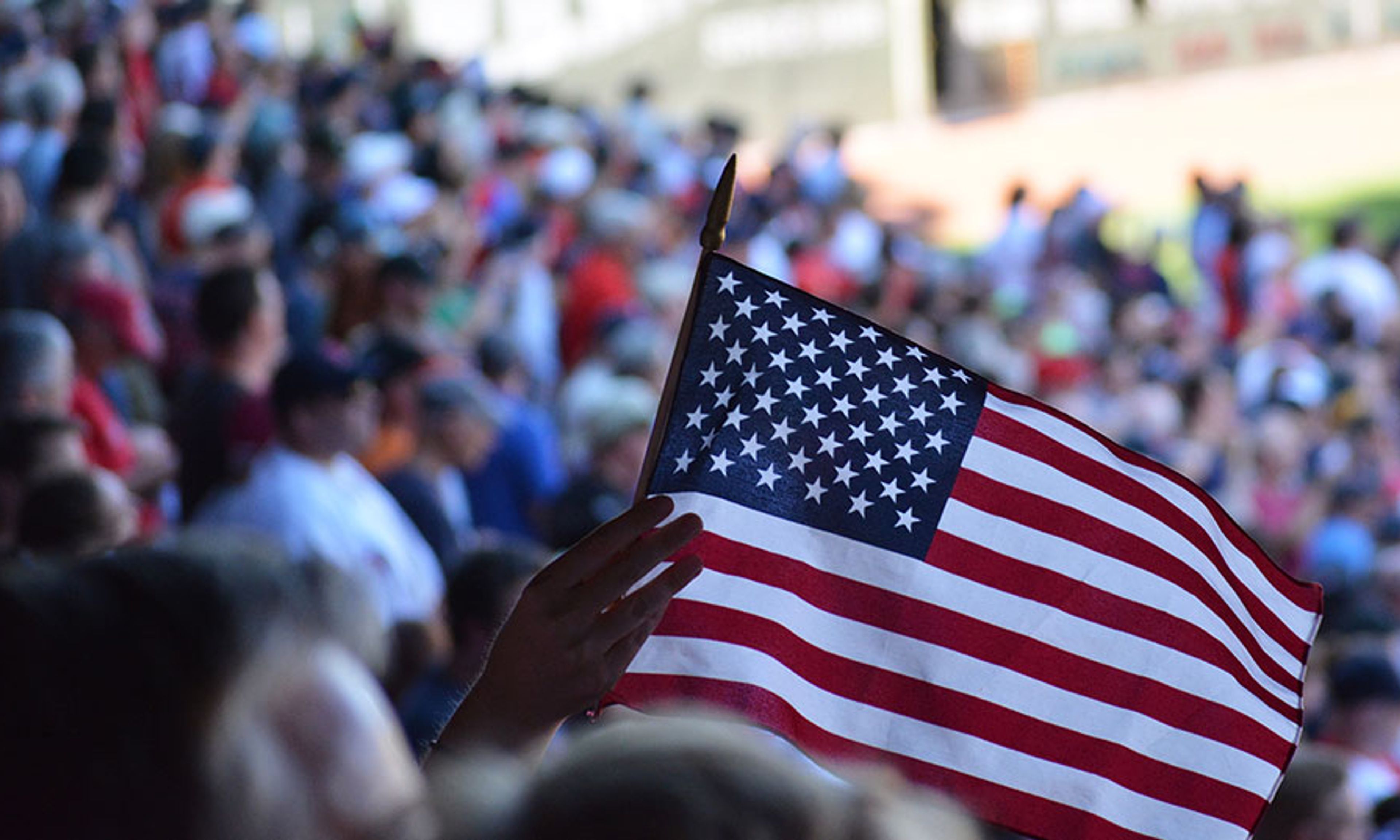
The two great sources of common moral identity are patriotic nationalism, in which we tell ourselves a story of why it is great to be an American, and religion. Watching the Southern Baptists publicly repudiate the Confederate flag (not long after electing a black man head of their convention) is testament to the potentially healing power of religion to rise above ethnic partisanship. Both of these sources of identity are systematically discounted and undermined in contemporary cultural liberalism.
#related#The story that liberals tell themselves is always one of progress for minorities; it is understandably a source of great pride, but an ideological commitment to diversity appears to blind them to the dangers of creating an educational system allergic to teaching the glories of the American tradition and history and its institutions, and to blind them also the dangers of undercutting religion in public life.
If conservatives controlled the instruments of cultural creation (there are more open Marxists in universities than conservatives) we would no doubt have a different set of problems, and liberalism would be key to the answer.
But let’s face it, cultural liberals: You aren’t a beleaguered minority, you are the face of power in America. Can you find within your own tradition something that binds you to and creates a common moral identity with conservatives?
Because the alternative looks like Trump.






Comments