Revolutions don’t become so overnight. It was a long, escalating spiral from the Stamp Act riots in October and November of 1765 to the Declaration of Independence in July 1776. After a decade of mayhem, property destruction, and nervous soldiers firing into a crowd, the rebellion broke into gunfire between British regulars and American militia at Lexington and Concord on April 19, 1775. Over a hundred men died, and nearly 15 percent of the British troops engaged were killed or wounded. But the fighting at Lexington and Concord was unplanned on both sides, resulting in disorderly skirmishing. Ethan Allen’s capture of Fort Ticonderoga a month later, on May 10, was a surprise raid without fatalities.
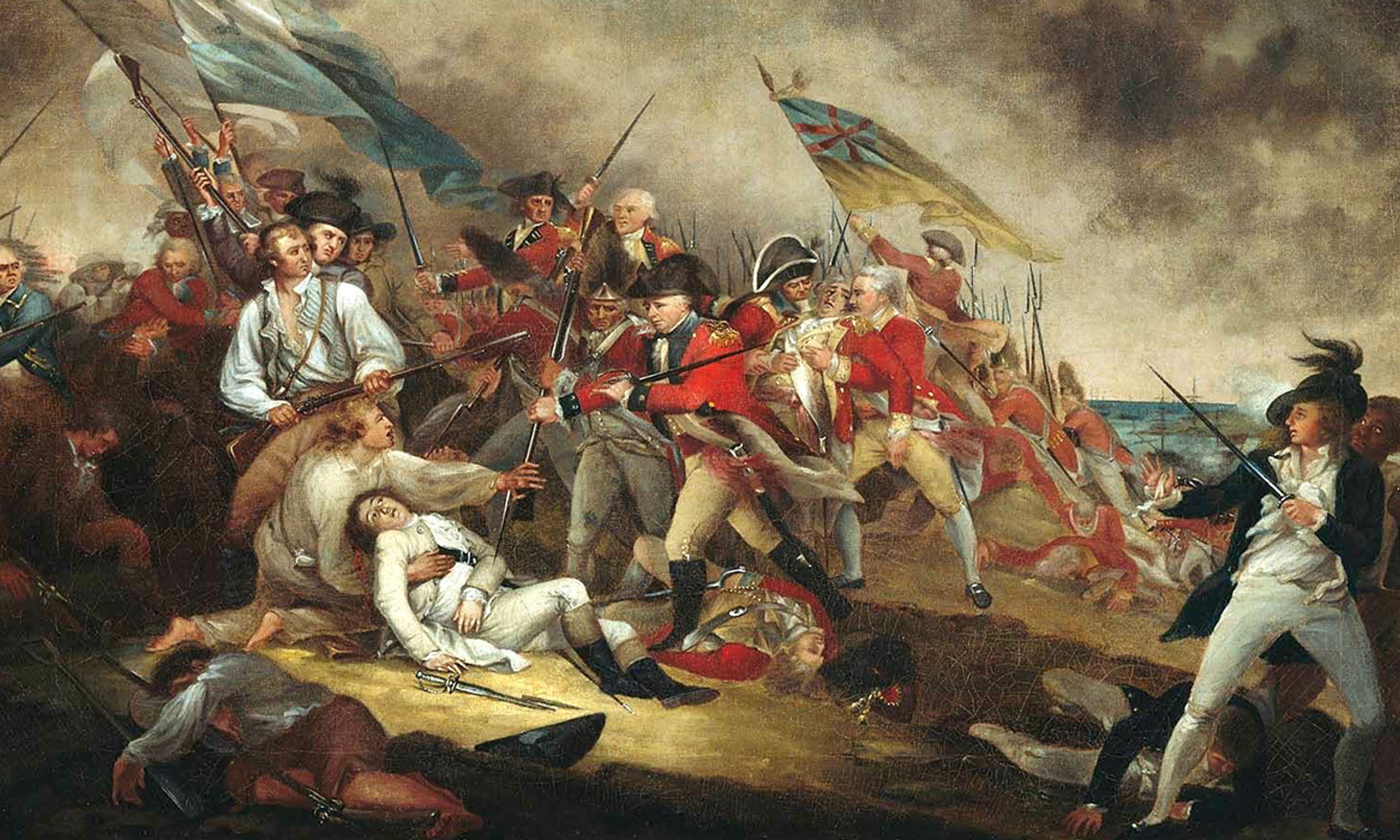
But the Battle of Bunker Hill this day 250 years ago was war, in all of its ghastly glory and horror. Anyone lucky enough to live through it knew it as a battle. One British officer wrote later that “that day will never be out of my mind till the day of my death.” It had crucial significance, both strategically and psychologically, for the rest of a war that lasted over six more years. American independence — not yet even the goal of the fighting — would become possible due to what happened that day. And yet, it was the strangest of American battles: the largest and most consequential pitched battle in American history to be fought entirely by amateur volunteer militia without national armed forces on the field.



Comments