It’s great to fly from the Eastern time zone to the Western — a 27-hour day. I wish every day were a 27-hour day. But then, I might wish for a 30-hour day, and complain about not having one.
‐To step out into the California air — even at a crowded airport — is wonderful. I’m in Los Angeles, at “LAX,” as everyone says. The blooms of California — they begin at the very airport. They gladden the eye and perfume the air.
‐When I was a kid, I used to listen to Johnny Carson, who used to joke about the traffic in L.A. It was one of his staples — along with Ed McMahon’s drinking, etc. I thought he was exaggerating, simply milking a line.
Then I visited L.A. a few times. And I wondered: Why would anyone put up with this? How can anyone abide this traffic?
And yet, people will put up with a lot, to live here.
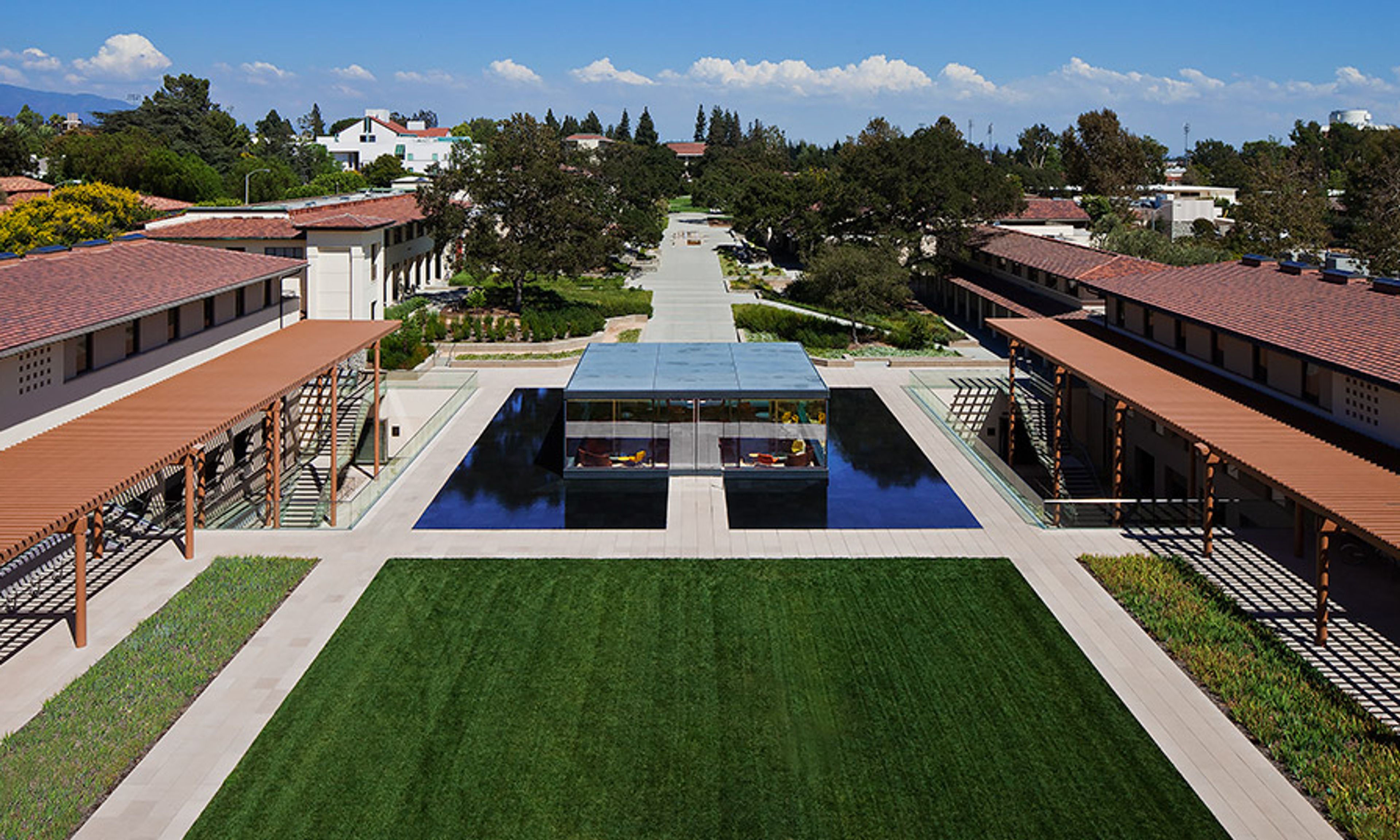
‐I’m going to Claremont, Calif., the home of the Claremont colleges, by which I mean that consortium of five colleges, plus two graduate schools. Plus the famous Claremont Institute, a conservative think tank.
Every conservative I know has been to Claremont — everyone but me. I’m like the last pilgrim to make the Hajj. The last one to Mecca.
‐Charles Kesler is a famous political scientist here — and long associated with National Review. A reader, knowing I was going to Claremont, e-mailed to say that he was an alum. And, as he put it, “I majored in Kesler.”
I would love to enroll here, and major in Kesler.
‐Claremont, Calif., is … well, Californian. This is still a golden state, despite all its problems. In Claremont, the blooms perfume the air. Did I say that about the airport? Well, the blooms are super-charged in Claremont. No team of chemists could come up with what’s in this air.
The food tastes good — better than elsewhere, somehow. The girls are pretty. The birds chirp as though happy to be here. California is everything it’s cracked up to be. “Believe the hype.”
I think of Reagan, who liked to quote an old line: If the Puritans had landed on the California coast, rather than the opposite coast, the country would never have developed — because people would have stayed, not pushing eastward.
‐The problem with writing like this is that people say, “Oh, you don’t know about the problems, huh? You’re living in a bubble, huh? You think everything is peaches and cream, or milk and honey, huh?”
Usually, I try to preempt this in my writing (as I’m doing now, I guess). Last year, I wrote a Chicago journal — I concentrated on the best: Ferris Bueller land. And I noted that I was well aware of the murder, the generational poverty, the nasty schools, etc. Indeed, I have written on those subjects for many years.
But occasionally … you want to look at something else in life, you know?
Last week, I tweeted a glamorous photo from Bel Air (a neighborhood in L.A.). And someone said, “Well, why don’t you see how the other half lives!” People are afraid, somehow, that I don’t know about suffering and hardship. This is so strange.
Let me just talk about work. I spend much of my time writing about horrors. Both at home and abroad. Have you ever been to the Pine Ridge reservation in South Dakota, the worst place in the U.S.A.? Go ahead, try it.
Last year, I wrote about a doctor in Congo who devotes his life to treating rape victims. You ever seen an infant with its genitals destroyed?
Around that same time, I wrote about a defector from North Korea. He had been in the gulag. Here, why don’t I give you a taste, for those who barf at flowers and delicious tortillas and pretty girls?
In the winter, the prisoners were made to get wood from the mountain. Many were injured or killed, as the trees fell or the logs rolled down the mountain. Other prisoners would not pause to bury the dead. It would have taken too much energy in the frozen ground. They carried the bodies back to a shed next to a latrine. At night, when you went to the latrine, you could hear moaning from the shed — some weren’t dead yet. By the spring, they were all dead, of course. The bodies had formed a great gelatinous mass. And Jung and the others would have to break it apart, with shovels, and bury it.
Okay, you like that? Satisfied?
For many years, I was told by the Left that I knew nothing of human hardship. Now I hear the same from the Right. An annoying lie, from whichever direction.
‐Here in SoCal, I talk with some conservatives who are native Californians, and we talk about the antipathy to California that beats in the breasts of many Americans. This same antipathy beats against New York (City).
Hang on, let me tell you a story: Years ago, I had a co-worker who knew I enjoyed golf and who decided that he would vituperate golf. “It’s so boring, it’s such a waste of time. Who in his right mind would want to play golf?” I responded that the courses were jam-packed. Rounds took forever. You could hardly get a tee time. So, if he didn’t want to play — good.
Another story: I know a woman who is a patron of the arts and whose mother was the same. The story involves the mother (a formidable lady — as her daughter is).
One day, she heard some ladies say what they frequently said, about some modern painting: “I wouldn’t hang it in my home if they gave it to me.” She said, “Don’t worry: They’re not going to give it to you.”
I hear people say, “I would never live in California, I would never live in New York.” Okay. Who asks you, or any of us? Those places are crowded and expensive as they are. A chacun son goût. To each his own. Vive la différence. I hope that people are happy where they are. And if they’re not, that they can get to where they will be.
‐In Claremont, there’s an eatery called, simply, “I Like Pie.” Yup — speaks for me.
‐There is another eatery in which a young woman is pounding out an ice-cream concoction, on a slab. A father says to his son — a toddler in arms — “Isn’t that cool?” The toddler looks away. The father mutters, charmingly, “Not cool enough for your attention span.”
‐Claremont has a big botanical garden, the Rancho Santa Ana garden. But you know? The whole region — possibly the whole state — is a botanical garden. A particular, designated botanical garden seems to me … I don’t know: a little redundant.
‐In Claremont, there is a Bonita Avenue. Isn’t that redundant? Or all too obvious? Bonita means “pretty” in Spanish, and all the streets, or most of them, are plenty bonitas.
‐Many, many of the streets are named after colleges: Harvard and Yale; Oxford and Cambridge; Oberlin and Principia. There is a Hope Street. That’s named for the feeling, right, not Hope College in my home state of Michigan?
‐If you’re a pedestrian, a driver is liable to wave you through at an intersection. Doesn’t happen all that much in Manhattan. (The borough of New York, I mean. Can’t speak for the town in Kansas or other Manhattans.)
‐These days, it’s hard to ask people for directions — on the street, I mean, or the sidewalk. Everyone’s on the phone or listening to music. Honestly, 20 people can go by before you see someone without buds or what have you.
‐A kid is practicing his golf swing, as he walks down the street. His takeaway. Him, I can ask (and we talk a little about golf).
‐There is a Thatcher Music Building — combines two of the things I like: Thatcher and music.
‐Andrew Carnegie’s name is on a building. That man is everywhere, isn’t he? In fact, this building is called Carnegie Hall. Truly.
‐There is a Mabel Shaw Bridges Music Auditorium. The names of five composers are chiseled at the top. They are Wagner, Chopin, Beethoven, Bach, and Schubert. That’s a peculiar order (not chronological or anything). And Chopin’s presence is rather peculiar. Not that I don’t revere him, of course.
Maybe there was an especially ardent Chopin-lover among the donors?
I think that’s probably enough for one day, journal-wise. I’ve been droning on. I’ll continue my droning tomorrow. Much to discuss.
A word from the National Review Store: To get Digging In: Further Collected Writings of Jay Nordlinger, go here.





Comments