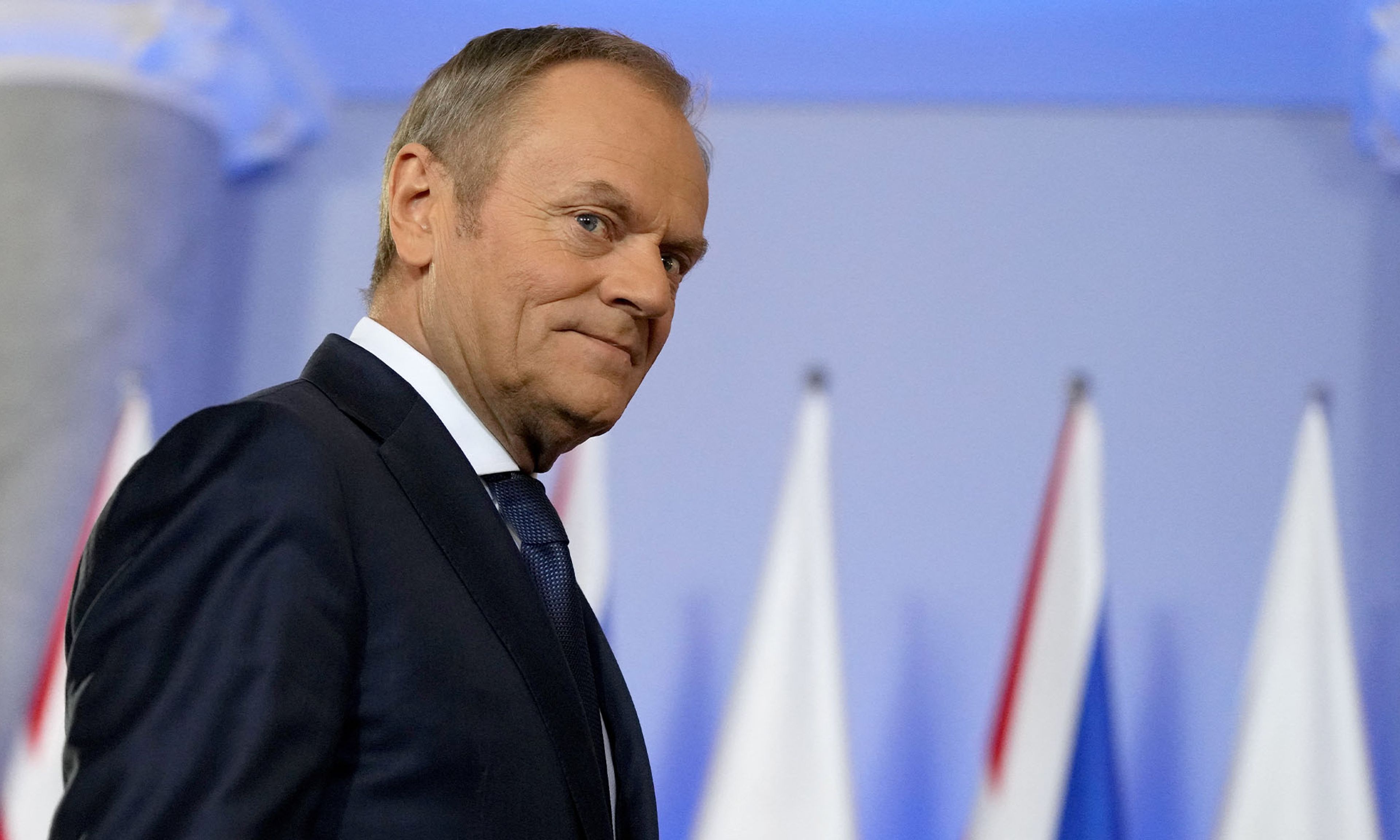
For the past several months, Poland has been torn by political storms that send ripples across the conservative and liberal media here in America. Last October, a historically high election turnout swept away the right-wing Law and Justice party (PiS), abruptly ending its eight years of total domination of Polish politics. Donald Tusk, a political juggernaut and liberal icon, returned for a second ride as prime minister of Poland (his first was from 2007 to 2014) following several years serving as president of the European Council.
Immediately after taking office, Tusk plunged into a head-on collision with the vestiges of PiS rule. Just weeks into the new government’s term, based on a complicated and contentious legal interpretation, the new minister of culture, Bartłomiej Sienkiewicz, dismissed the directors of public television and radio, and of the Polish Press Agency. This was immediately followed by a physical standoff between politicians of the former ruling party and the police in front of the public-television building, which was occupied by protesting dismissed employees for the next several weeks.



Comments