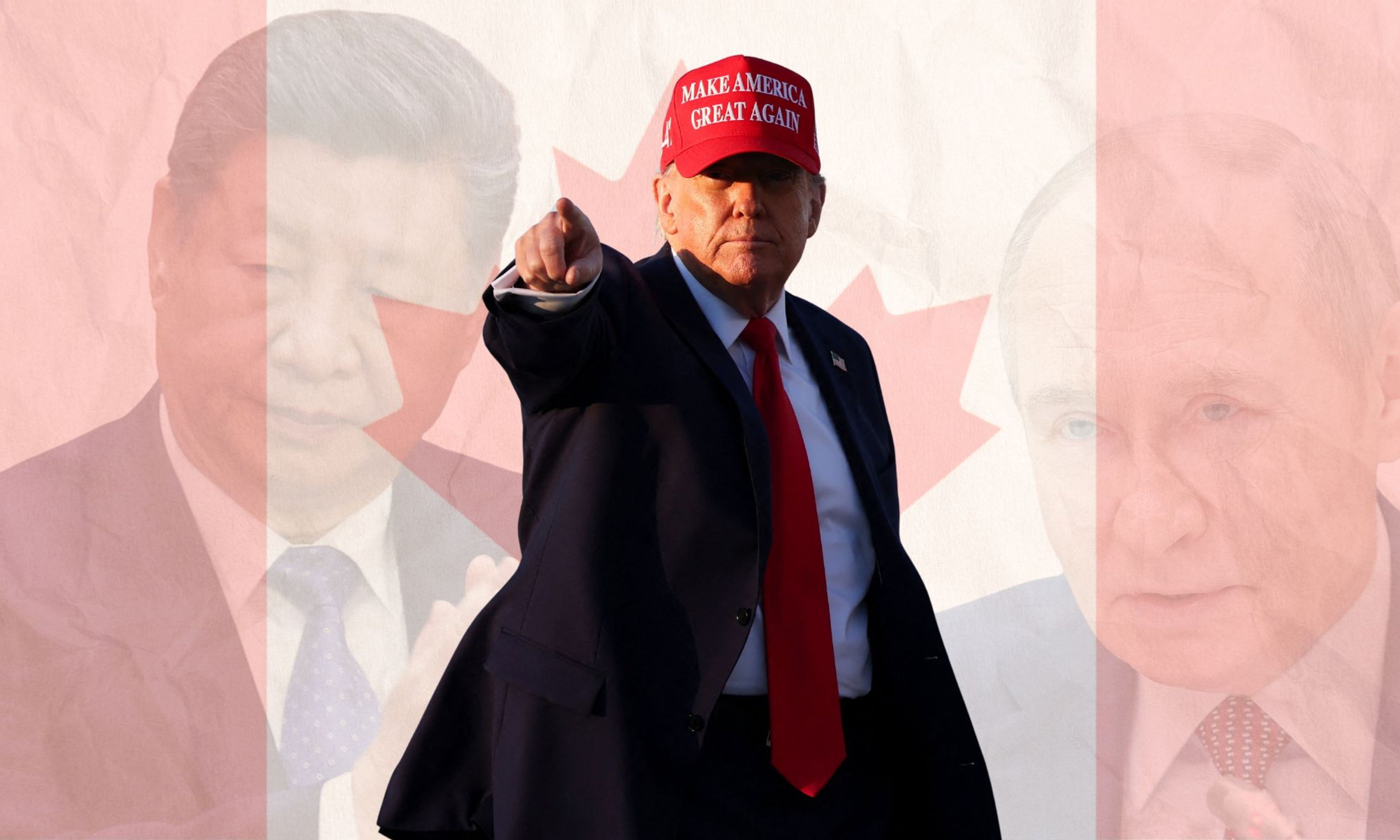
There is a comfortable orthodoxy settling over editorial boards, university seminars, and policy conferences from Ottawa to Brussels. It goes something like this: Donald Trump broke the international order, the United States is an unreliable partner, and the remedy is diversification — toward China, toward the BRICS bloc of emerging economies (including players like Brazil, Russia, and India), toward anyone who is not Washington. This narrative is not merely incomplete, it is dangerously wrong, and the countries indulging in it are squandering what little time they have to prepare for a world that is about to change in ways that have nothing to do with who occupies the Oval Office.
Let’s begin with the diversification fantasy. Canada in particular has spent considerable political energy signaling that it can meaningfully reduce its economic dependence on the United States. The arithmetic tells a different story. Roughly 75 percent of Canadian exports flow south. The infrastructure — pipelines, rail corridors, and supply chains — is integrated on a north-south axis that took the better part of a century to build. As Michael Hart has argued, the Canadian-American economic relationship is not a policy choice; it is a geographic and structural reality. Talking about diversification may win applause at Davos panels, but it does not build liquified natural gas (LNG) terminals, nor conjure new consumer markets out of thin air.





Comments