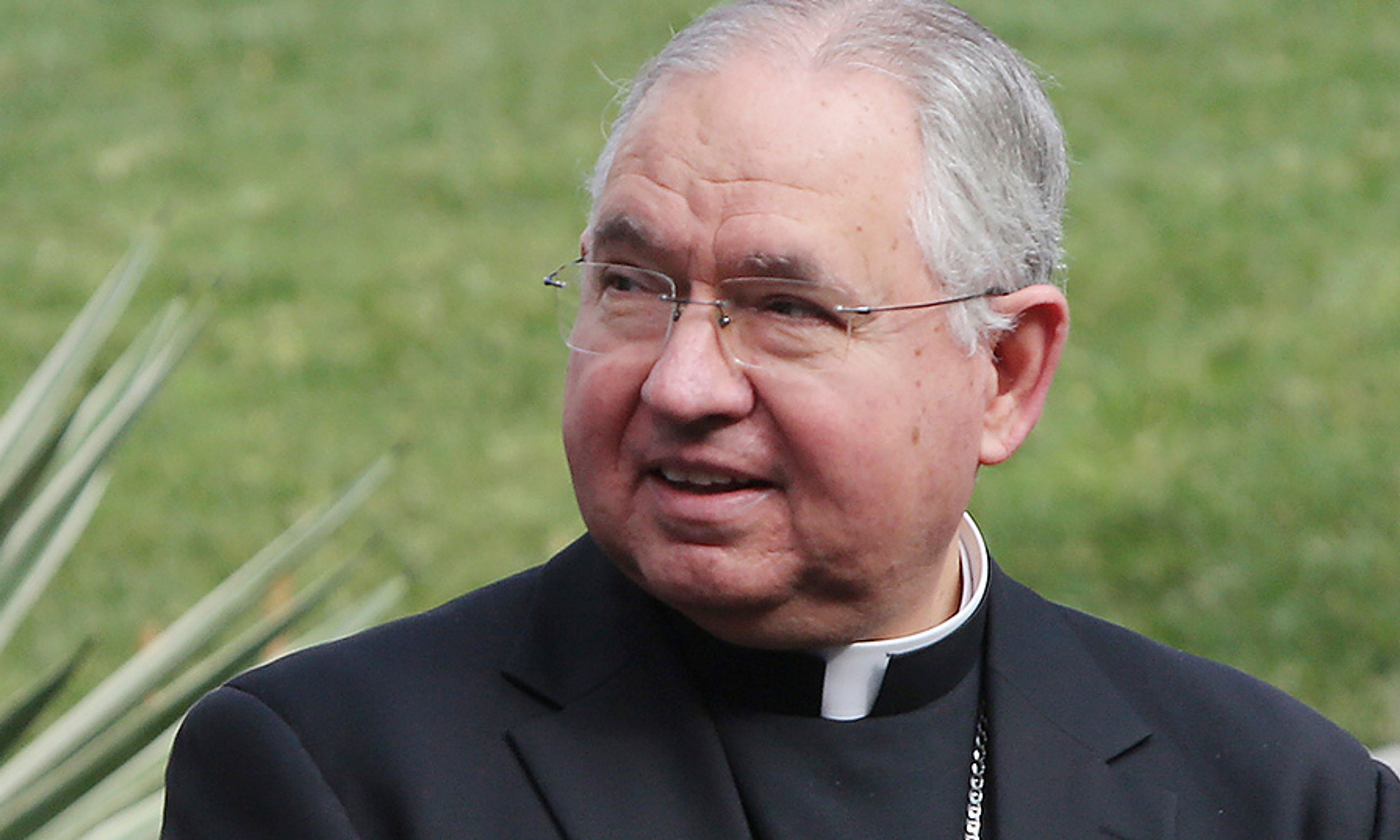
Bogotá, Colombia — As Donald Trump was making his political pilgrimage to the Mexican border, some 400 Catholic leaders from throughout the Americas, about 120 of them bishops, were meeting here, on an actual pilgrimage. The occasion was the “jubilee of mercy” that Pope Francis opened last December. And the opportunities for renewal together as a continent — which was the vision of Pope John Paul II, to look at all of the Americas as one — became apparent fairly quickly.
Yes, there are barriers of language and politics and history. But these things could actually be bridges, especially at a time when citizens of the United States of America aren’t exactly happy with their politics, and when more and more among us speak Spanish as a first language. Further, when you start exploring the history of the continent, you discern a Christian thread that is largely underappreciated.
The gathering in Bogotá included a primer on some of the saints and martyrs of the Americas — St. Junípero Serra, for example, the founder of the California missions, whom Jose Gomez, the archbishop of Los Angeles, described as “the great apostle of California and one of the heroes of the first evangelization of the Americas.” When Pope Francis visited the United States last fall, the stops that generated the most buzz were the White House and Congress, but the canonization Mass for Serra was the agenda item that might have the most lasting impact.
Serra worked to change systems and legal frameworks and attitudes so that people would treat one another differently, valuing human life with a depth of respect due to created beings made in the image and likeness of a Divine creator.
In his 30-minute video message (the length is somewhat unheard-of, which tells you how important the first pope from the Americas found it to be), Pope Francis talked about the importance of conversion in a full picture of mercy. He said:
To understand and accept what God does for us — a God who does not think, love or act out of fear, but because he trusts us and expects us to change . . . must perhaps be our mode of operation: ‘Go and do likewise’ (Luke 10:37). Our way of treating others, in consequence, must never be based on fear but on the hope God has in our ability to change.
Here you begin to understand again why people whose motivation is mercy — and who believe that living lives of mercy is to imitate God Himself — are needed and ought to be welcome in a functioning, healthy society.
Francis, in his message, also asked: “Which will it be: Hope for change, or fear?” Filtering that through a U.S. context, I find it hard not to remember Barack Obama’s “hope and change” campaign mantra. And recall, too, the bullying tendencies of Donald Trump and the lecturing tone of Hillary Clinton. In all cases, candidates benefit from an inflated view of what the government can or should do. But, in all cases, the problems before us run much deeper than any government policy will ever be able to remedy.
Fear is better alleviated not by campaign promises or by more tempered rhetoric. Fear is alleviated by the witness of people living for more than themselves.
Fear is alleviated by the witness of people living for more than themselves.
And that’s where I’m seeing promise here. There are more similarities than differences. I’ve thought this while being a fly on the wall to conversations in recent years between Christian leaders in the Middle East. What’s essential is finding the common ground of identity as a people who are compelled by love and gratitude to serve others. And here in Bogotá, it was not only love and gratitude that united the attendees but a common concern that elite hostility to religion will make it increasingly harder for faith-based entities to do what they do and be who they are. Archbishop Gomez called it an “existential threat.” (Hillary Clinton has said that churches that disagree with her on sexual-revolutionary values will have to change their views.)
Facing just that — the mandated dispersal of grave untruths about the human person, for one, and most important — Archbishop Gomez pointed to the great responsibility and opportunity of mercy. “Witness is always more powerful and more persuasive than words, as we know. But this becomes even more crucial in a society that denies the reality of God, the relevance of faith and the liberty of conscience,” he said. “In a post-Christian society, mercy — lived through works of love — becomes the best proof for God’s presence and power.”
The gathering here included a lot of what Christians do best: praying. It was no coincidence that it bore fruit in some of the clearest conversations I’ve heard in a long time. Leaving public space for Christians to do what they do, and not just on Sundays, will be of benefit for any renewal you’re seeking. And are we ever at home.





Comments