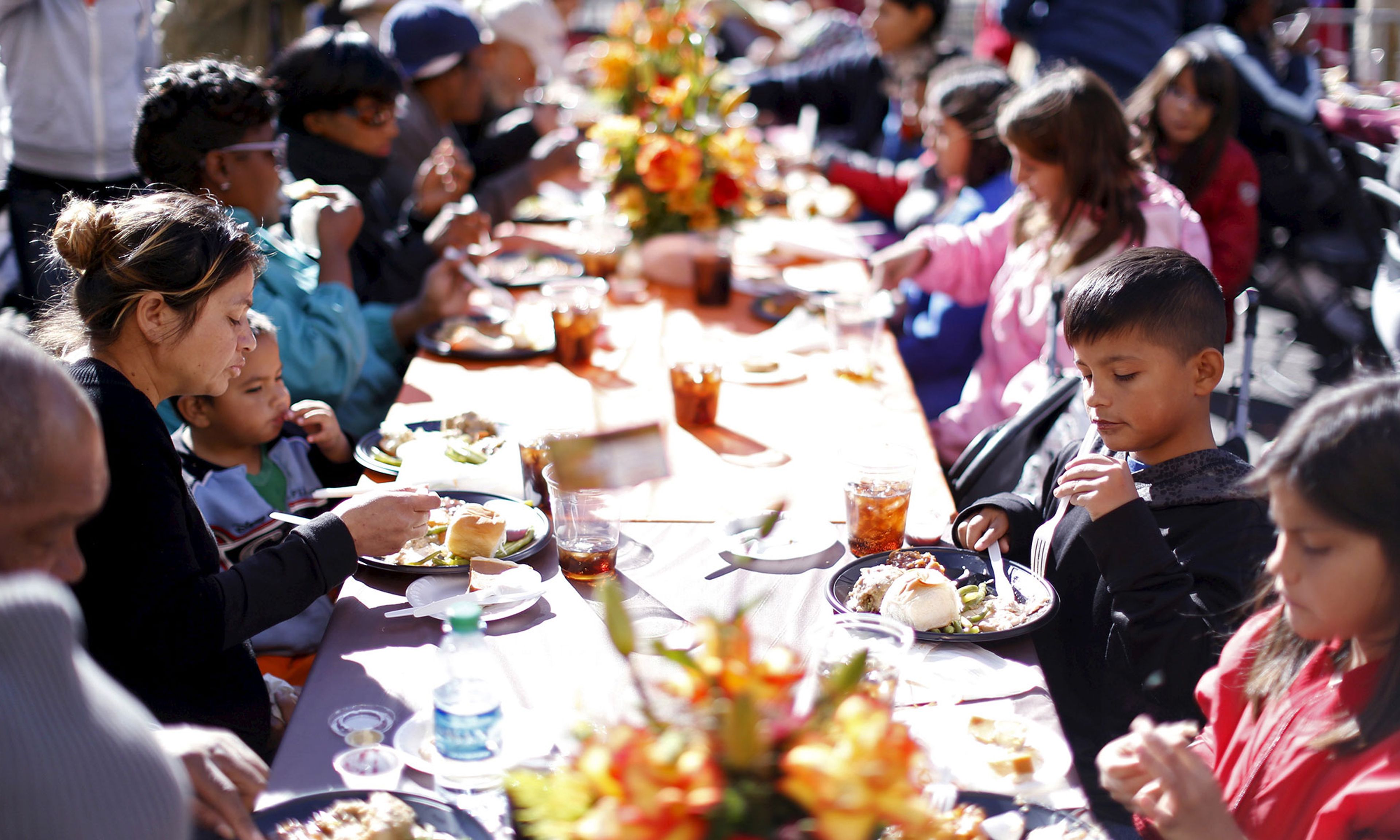
Thanksgiving is a time when many feel compelled to help those less fortunate. As temperatures drop and families gather for bountiful meals, the contrast with people lacking housing, blankets, warm clothing, and food becomes stark. Yet, in some localities, sharing food or clothing with the homeless without government permission is a punishable offense.
Take Dayton, Ohio, where a man was recently put in handcuffs for handing a burrito to a homeless person. The city requires individuals and groups seeking to share food, clothing, or hygiene products in public spaces to secure a permit — at least if they’re trying to help the homeless. Picnics, barbecues, and birthday parties in public parks go unbothered. The targeted enforcement appears designed to sweep homelessness under the rug, even as it stems in part from the government’s own restrictive housing and employment policies.




Comments