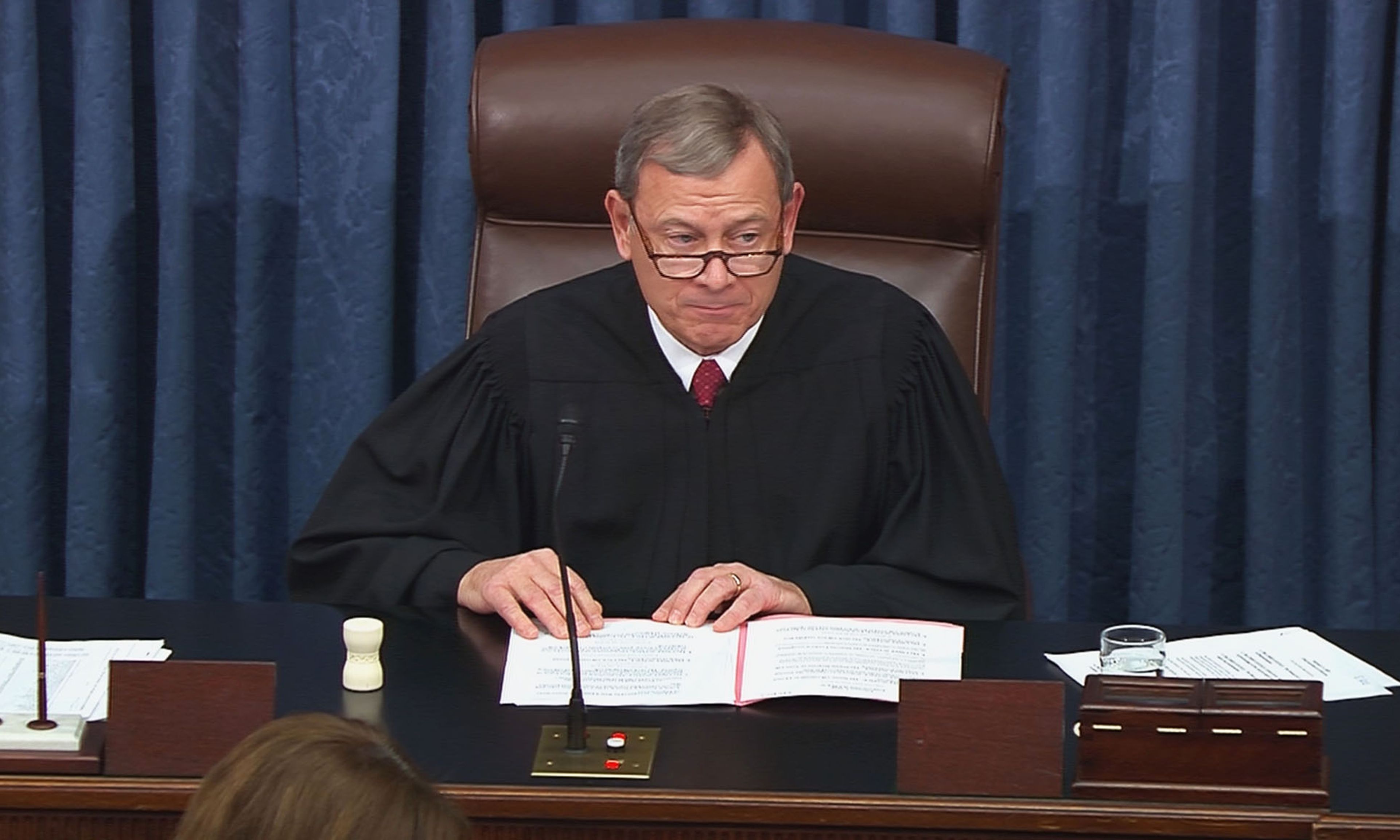
There are undoubtedly few things Chief Justice John Roberts would less enjoy doing right now than taking a position on the second impeachment of Donald Trump. Roberts does not, in fact, need to decide whether the impeachment trial in the Senate can go forward, or whether the Senate can bar Trump from becoming president again. But he does need to decide whether he will preside over the trial. In order to make that decision, he must decide at least some of the contested constitutional questions. He owes it to the American people, the Senate, and our constitutional system to put his reasons in a written opinion.
Under normal circumstances, Supreme Court justices do not write advisory opinions telling political actors what the Constitution means or what the law is. Federal courts only decide “cases or controversies” between parties to a court case. But the chief justice has one additional duty under the Constitution: “When the President of the United States is tried, the Chief Justice shall preside.” Indeed, this is the only time the role of chief justice is mentioned in the Constitution at all.





Comments