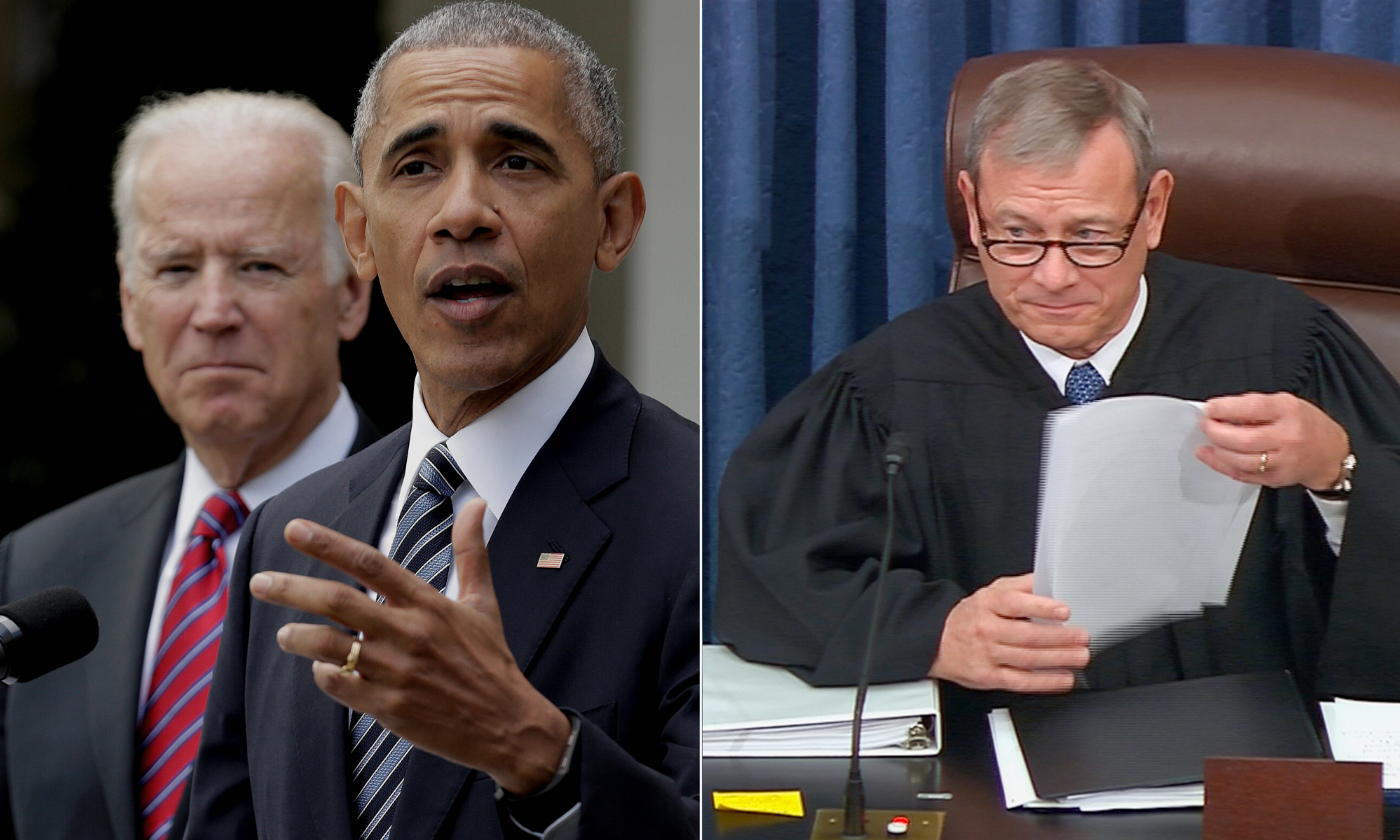
The Supreme Court ended this momentous term the way it began: telling a federal administrative agency that it had overstepped its powers by writing laws without the authority of Congress. This time, it was the Environmental Protection Agency and its Obama-era Clean Power Plan rule, which sought to require existing coal-fired and natural gas-fired power plants to reduce carbon emissions by producing less electricity or converting to green-energy sources — as the Court described its aim, to “compel the transfer of power generating capacity from existing sources to wind and solar.” This is one last loss for Barack Obama’s “pen and phone” strategy to use the executive branch to write laws that Obama could not get through Congress after the 2010 and 2014 elections.
In terms of outcomes, the last day of the Court’s term ended with split decisions characteristic of Chief Justice John Roberts: The 6–3 Roberts opinion in West Virginia v. EPA striking down the Clean Power Plan rule was coupled with a 5–4 Roberts opinion in Biden v. Texas upholding the Biden administration’s power to undo the 2019 Trump-instituted Migrant Protection Protocols, also known as the “Remain in Mexico” policy. EPA was a clean split between the six conservative and three liberal justices; in Texas, Roberts and Justice Brett Kavanaugh joined with the three liberals, and Justice Amy Coney Barrett wrote that she agreed with their analysis of the legality of the policy but procedurally would not have ruled on the issue.





Comments