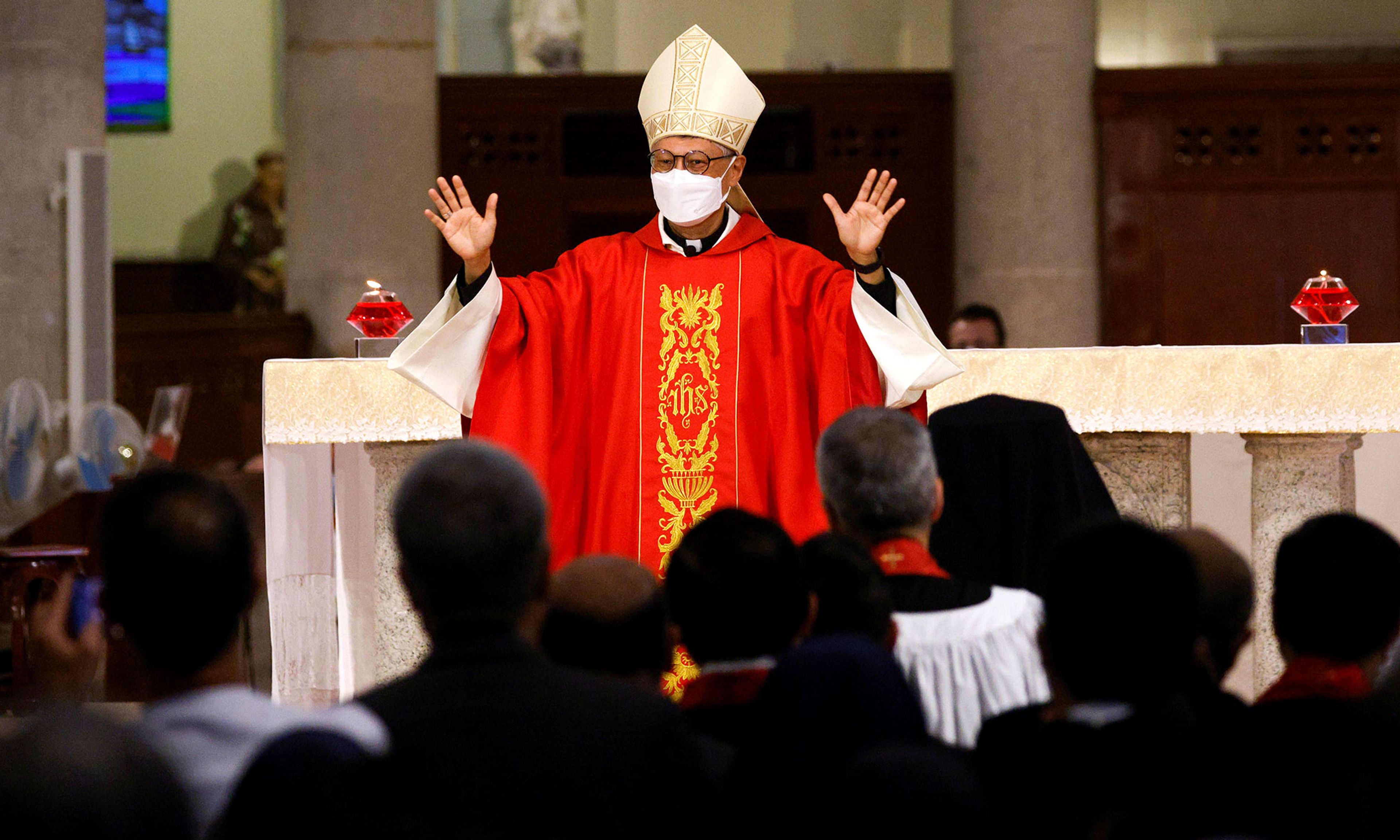
At Beijing’s insistence last October, Hong Kong’s Bishop-elect Stephen Chow and 15 senior Catholic priests met with the mainland’s state-controlled Chinese Patriotic Catholic Association. As the government watched on Zoom, the Hong Kongers were lectured on the fine points of President Xi’s religious policy of “Sinicization.” While no directives were issued, priests knowledgeable about the unprecedented conclave reported that “Xi was the elephant in the room” and saw that this was “just the first step” in what the CCP calls their “reeducation.” The clear takeaway was that Hong Kong’s churches, historically independent of the CCP, are having their wings clipped.
Sinicization is a strategy to absorb China’s religious communities into the party’s United Front, to help the CCP indoctrinate, surveil, and ensure ideological conformity. Since 2018, Sinicization regulations have restricted mainland churches in their preaching and practice of Christian teachings that are not authorized by the atheistic CCP. Moreover, they require them to actively support the party leadership and promote “values of socialism” and Xi’s thought in sermons and “learning sessions.”




Comments