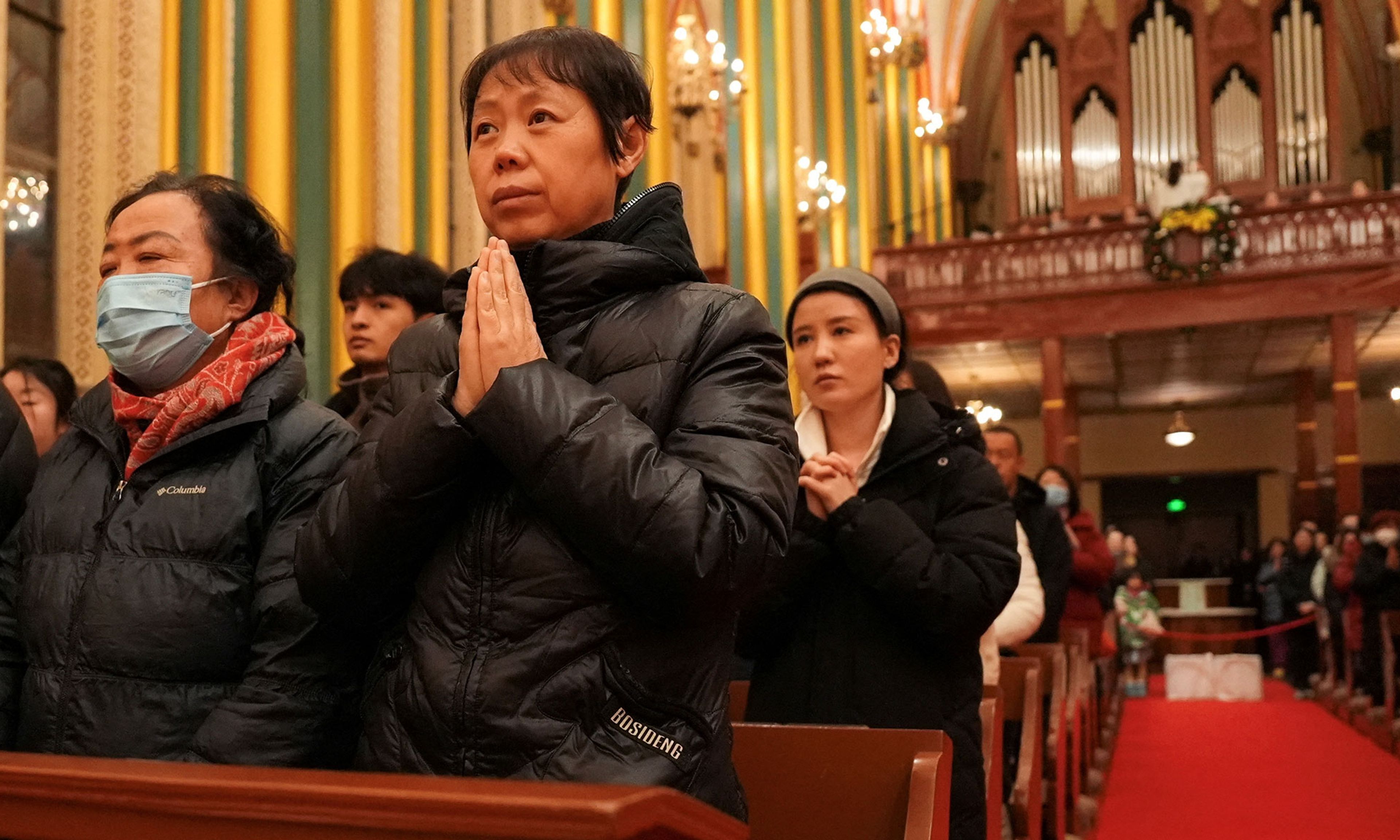
The Chinese Communist Party has never quite known what to do with God. Mao Zedong tried to bury Him under the rubble of the Cultural Revolution; Deng Xiaoping tolerated Him so long as He stayed in His designated pew; Jiang Zemin and Hu Jintao kept a wary eye on Him. Xi Jinping has decided the experiment is over. Under Xi, the party has launched the most systematic campaign against religious life in the world today — a campaign that, for all its bureaucratic euphemism, amounts to a war.
The CCP calls it “Sinicization.” In practice, Sinicization means that every faith practiced in the People’s Republic must be reshaped to serve the party. Crosses come down from steeples in Zhejiang. Mosques in Ningxia lose their minarets and domes, reduced to the architectural vocabulary of a Han pagoda. Monasteries on the Tibetan plateau are forced to display portraits of Xi alongside those of the Buddha. Children under 18 are barred from entering churches, mosques, and temples — a measure that even Soviet authorities never fully managed, and one designed to ensure that the next Chinese generation is raised in atheist sterility.



Comments