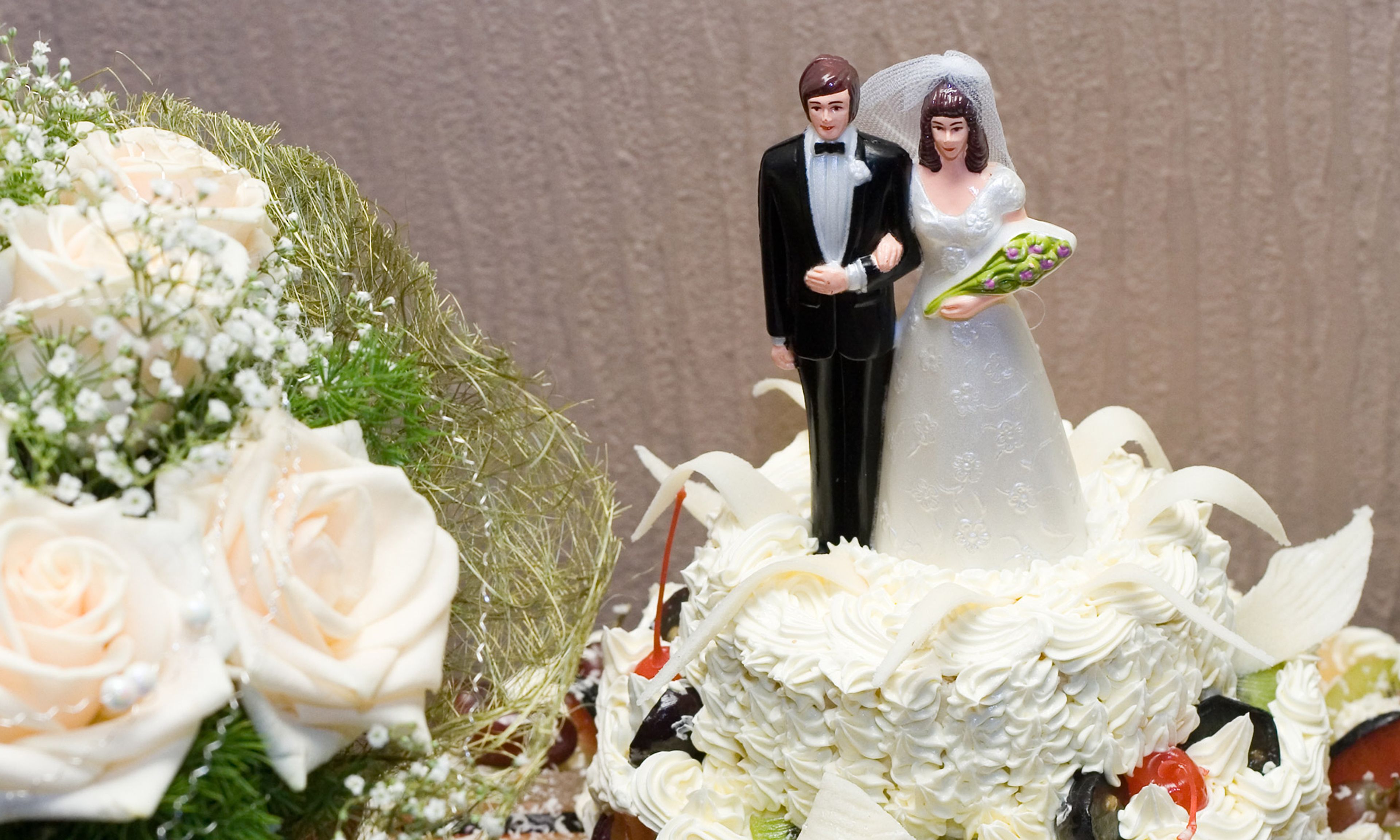
Earlier this week, a California state-court judge ruled that the California Department of Fair Employment could not require Cathy Miller to make a wedding cake for a homosexual couple to celebrate their marriage.
The couple, Eileen and Mireya Rodriguez–Del Rio, had visited Tastries, Miller’s small Bakersfield bakery, in August 2017, seeking a cake to celebrate their nuptials at a reception scheduled for October. Miller, a Christian, told the couple that “she would provide their order to Gimme Some Sugar — a competitor bakery — because she does not condone same-sex marriage,” according to an order issued by Judge David R. Lampe in California Superior Court on February 5.
Whether the Rodriguez–Del Rios hired Gimme Some Sugar to design their wedding cake is unclear. In any event, shortly after their reception, the couple filed a complaint with the California Department of Fair Employment and Housing, claiming that Miller and Tastries (incorporated as Cathy’s Creations, Inc.) had “violated the Unruh Act by denying them full and equal services on the basis of sexual orientation.” Following an investigation, the state sued Miller and Cathy’s Creations, Inc., seeking to force Miller to create custom wedding cakes for same-sex weddings — or to stop designing them for opposite-sex couples.
In his eight-page order, Judge Lampe held that the free-speech clause of the First Amendment protected Miller’s right not to use her artistic talents to create a cake that conveyed a message with which she disagreed — that a same-sex marriage should be celebrated — reasoning:
This case falls well within the reach of the Supreme Court’s “compelled speech” doctrine. Hurley v. Irish-American Gay, Lesbian & Bisexual Group of Boston, 515 U.S. 557 (1995), establishes that generally applicable public-accommodation laws violate the Free Speech Clause when applied to compel speech. In Hurley, the Supreme Court, by Justice Souter, held that a state courts’ [sic] application of public accommodation law to essentially require defendants to alter the expressive content of their parade by permitting a group of participants to march behind a GLBT banner violated the First Amendment.
Applying the “compelled speech” doctrine, Judge Lampe then concluded that “the fact that Rodriguez–Del Rios feel they will suffer indignity from Miller’s choice is not sufficient to deny constitutional protection.” He entered an order denying the state’s request for a preliminary injunction.
The Bakersfield Californian reported that, on hearing the news of their victory, an elated Miller said: “We were so joyful. We weren’t expecting it to be so soon. We started screaming and praising God because we felt we had been heard.” Charles LiMandri, Miller’s attorney and president of the Freedom of Conscience Defense Fund, added that
Cathy would never discriminate against anyone who walks through her bakery’s doors. She will gladly serve anyone, including same-sex couples. But Cathy will not use her artistic talents to express messages that conflict with her sincerely held religious beliefs about marriage. We are pleased that the judge recognized that the First Amendment protects Cathy’s freedom of speech.
While Judge Lampe recognized that the First Amendment protects Miller’s right to free speech — including the right not to be compelled to create a wedding cake in celebration of a same-sex marriage — the real question is whether the United States Supreme Court will recognize such a right. That was the question the nine justices considered in December when the parties argued Masterpiece Cakeshop, Ltd. v. Colorado Civil Rights Commission. In that case, the Colorado Civil Rights Commission fined Jack Phillips after he refused to create a cake to celebrate a homosexual marriage. Like Miller, Phillips argued that designing a custom-order cake constituted speech and that the First Amendment prohibited the state from compelling him to make a cake to celebrate their wedding and thereby speak in support of a same-sex marriage.
The Supreme Court seems ready to rule for Jack Phillips by accepting his argument for the free exercise of religion, but premised on a very narrow basis.
The Supreme Court has yet to rule in the Masterpiece Cakeshop case, but its decision will bind all lower courts. And unfortunately for Miller, as I explained shortly after the hearing, the questions from the bench indicate that the Court is poised to reject Phillips’s free-speech argument and conclude instead that baking a cake is not “speech” for purposes of the First Amendment. That is, the Supreme Court seems ready to rule for Phillips by accepting his argument for the free exercise of religion but premised on a very narrow basis — that the Colorado Civil Rights Commission violated his right to free exercise of religion by acting “with hostility” toward his “religious beliefs, as demonstrated by the commissioners’ anti-religion comments and refusal to sanction bakers who refused to sell cakes celebrating the traditional meaning of marriage.”
That outcome, while benefiting Phillips and his Masterpiece Cakeshop, would do nothing for religious liberty more broadly. It would offer only scant protection to people of conscience, such as Miller. Only those able to prove an anti-religious animus would succeed in free-exercise-of-religion challenges. And few, including Miller, would be able to mount such challenges: In ruling for Miller on free-speech grounds, Judge Lampe stressed that there was “no evidence before the court that the State is targeting Christian bakers for Unruh Act enforcement under these circumstances.”
Should the Supreme Court rule in Masterpiece Cakeshop as I predict, Miller will find her victory short-lived. The only real reprieve will come if the Supreme Court breathes life back into the concept of religious liberty on which our country was founded.




Comments