It’s not cheery, but one of the most striking things I’ve read in the run-up to Christmas comes from historian Stanley Weintraub. He has written about Christmas in time of war before now, and more than once. His recounting of the Christmas truce of 1914 is a testament to the goodness in the heart of man, even in the midst of war, where all bets, as they say, are off. Weintraub’s latest is A Christmas Far from Home: An Epic Tale of Courage and Survival during the Korean War. Douglas MacArthur had told the troops they would be home for Christmas. That didn’t happen. And in the book, about a war he himself served in, Weintraub writes about China’s way of dealing with its prisoners of war.
On Christmas Eve, their captors decorated their prison camp as an indoctrination technique. Brainwashing was well underway by the time the POWs were greeted with a Merry Christmas sign with a placard underneath it that read: “If it were not for the Wall Street Imperialists you would be home with your families on this Christmas night.” You can only imagine what a man who fought at Normandy on D-Day and spent time as a POW in Germany suffered the time he rose on command, to declare adulation for his captors, and denounce the American military mission in Korea.
The Chinese deliberately spread the “reeducated” around to other camps in the hopes that they in turn would spread “their anticipated contagion.” A senior officer who had been ambushed and had surrendered explained to a lieutenant who was furious about “the turncoat behavior” that, “to save lives, he saw nothing wrong with ‘going along with the program to a certain extent.’” After all, he rationalized, what they would find themselves saying was merely “a parody of Communist ideology.”
What would I do in that situation? Most Americans never serve in the military, so for many it remains a hypothetical question. But it happens to be a question that we should be reflecting on more often than we realize. The size and scope of the situations we face differ dramatically, but on a daily basis, what do we associate ourselves with and what do we renounce by the way we live our lives? And what are we indifferent to? What do we look away from? What do we give ourselves to?
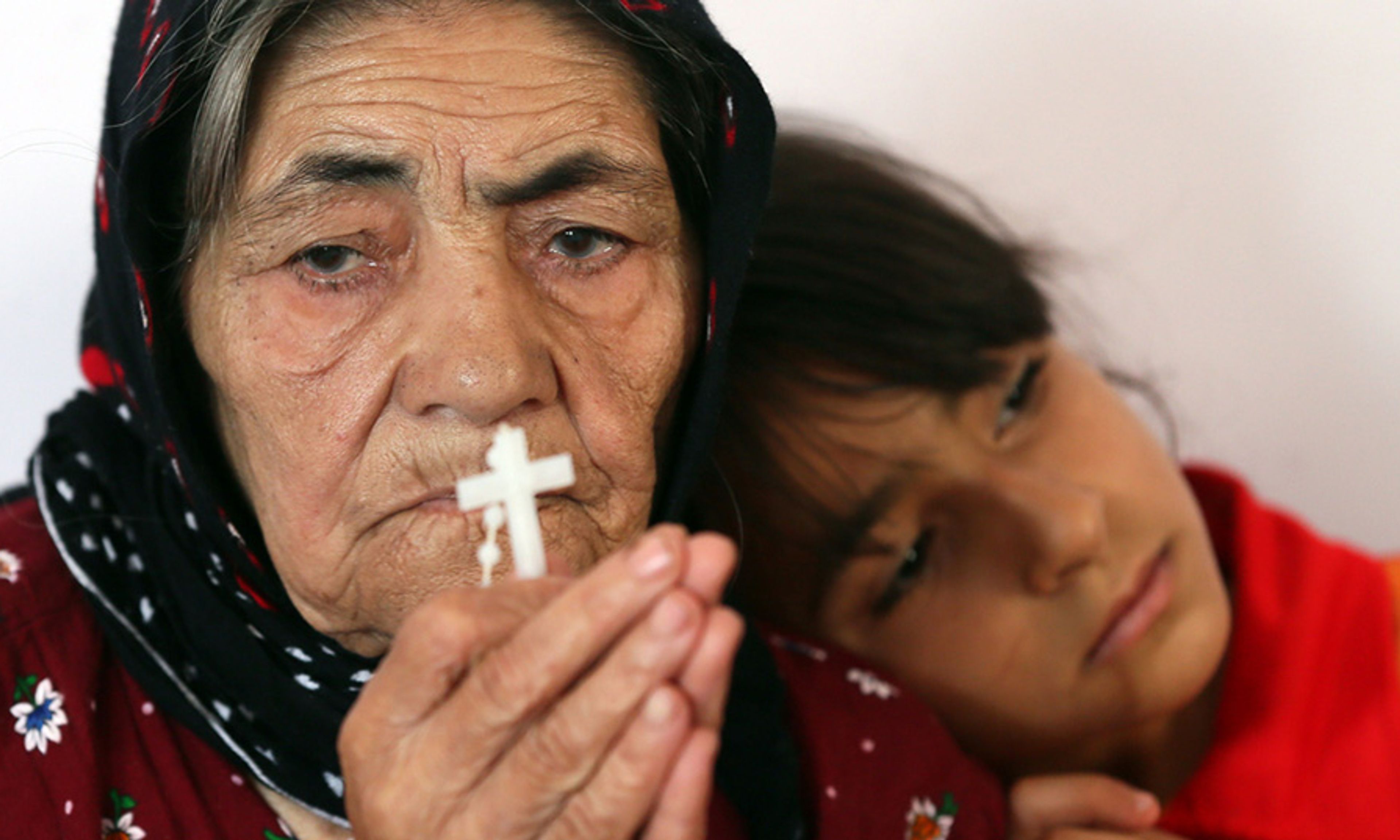
Stories coming out of Iraq and Syria of Christians who will not stand down, who will not renounce their faith as the Islamic State threatens Christianity’s very existence there, remind us that martyrdom is not the stuff of history. An elderly woman with breast cancer named Ghazala comes to mind. Earlier this year, she and a group of other sick or disabled Iraqi Christians defied tormenters and told them they’d rather die than surrender their faith.
And while most of the choices and decisions we are faced with are not matters of life or death, many of them are about integrity and whether or not we really are who we claim and pray to be. You can’t celebrate Christmas authentically without keeping this in mind.
Johnnie Moore, formerly pastor of Liberty University, went to Iraq this year and recently wrote about the “genocide” of Christians that is happening there. “I am amazed, inspired, and convicted by the commitment to Jesus Christ shared by all these displaced Christians,” he tells me. He was most struck there by the prevalence of the cross.
Christians had crosses tattooed on their arms, placed at the entrance to their tents, adorned in lights on top of their buildings. One Christian family even snuck back into their village — which had been ransacked by ISIS — to put the cross back on their church. It’s that cross that almost cost them their lives, but they are so committed to it that they continue to raise it high for the world to see. ISIS will have no problem finding them again; they need only to look across the skyline for the crosses, for these Christians are not ashamed of their faith, even if it costs them their lives. They have “taken up their crosses.” They are willing to die for what most Christians are barely willing to live for.
Moore is now chief of staff to television producer Mark Burnett, the creator of Survivor, among other shows. Burnett and his wife, Roma Downey — well known for her role as an angel in Touched by an Angel — have taken on winter in Iraq and Syria as a cause, launching an effort to raise $25 million to help some of the estimated 10,000 Christians who fled their homes and remain displaced for the winter. (I talked with a partner in the Cradle Fund effort, Chris Seiple, who was in Iraq last week; read the interview here.)
They join the Knights of Columbus, the Catholic Near East Welfare Association, Samaritan’s Purse, and others who are working to help. I’ve written before about a parish priest in Vermont whose troubled conscience drove him to start an effort selling bracelets, pins, and zipper pulls; he has been able to deliver checks totaling $30,000 in three months to Aid to the Church in Need for their efforts.
Threats to freedom around the world call us to action. Whether it’s in the form of a charity donation or something more. Educating. Service. Activism.
It also calls us to remember who we are and why we are.
Stanley Weintraub wrote a previous book about what George Washington thought was his farewell to public life, when he retired as commander of the Revolutionary Army in 1783. In his address at the time, he impressed upon his brothers, victorious, that their work would continue in lives of virtue and civil service to a new republic. We need that same spirit of service, looking today to our neighbors — in front of us, next door, and on the other side of the world. That is what the Christ Child Who is celebrated at Christmas calls His people to.
— Kathryn Jean Lopez is senior fellow at the National Review Institute, editor-at-large of National Review Online, and founding director of Catholic Voices USA. This column is based on one available exclusively through Andrews McMeel Universal’s Newspaper Enterprise Association.




Comments