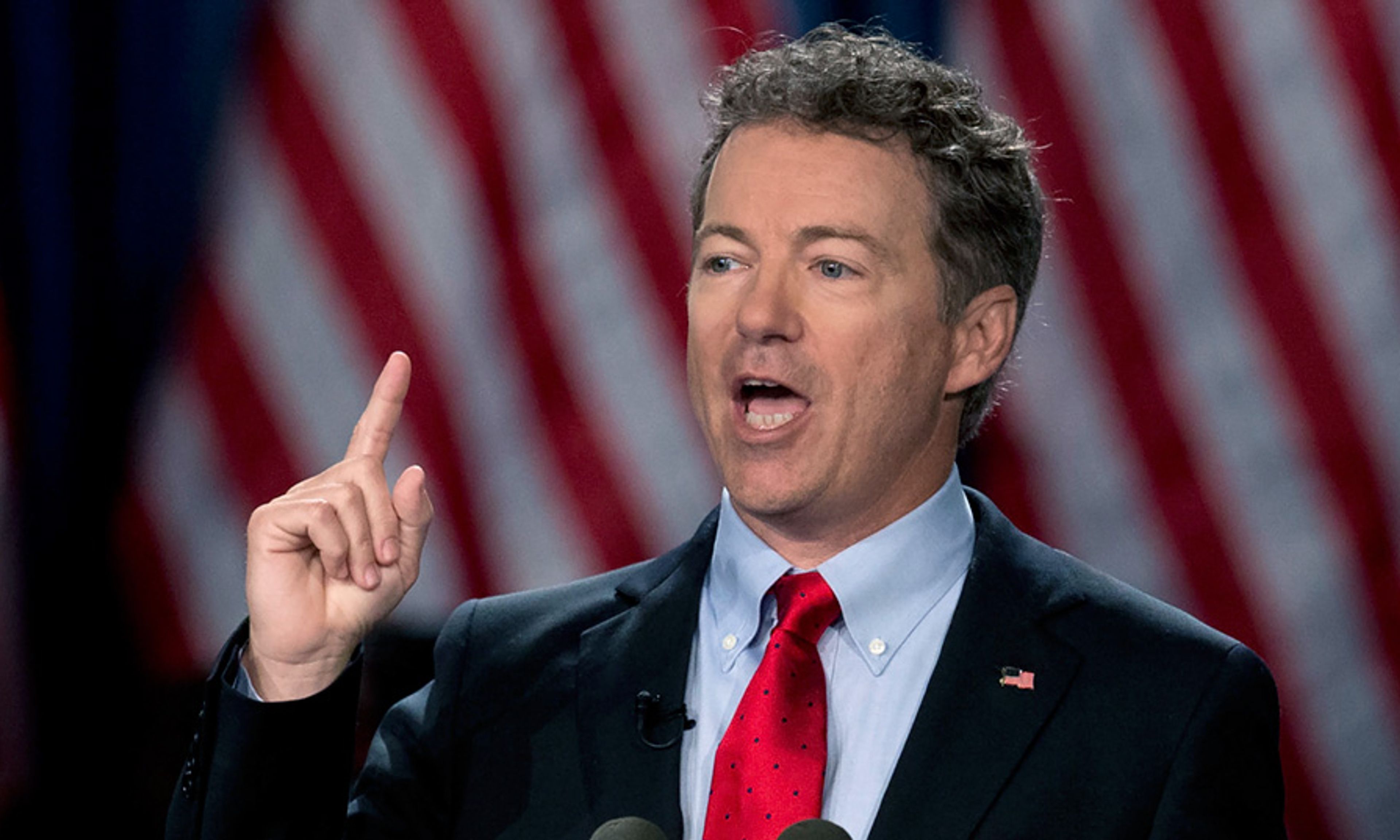
As the 2016 presidential-primary season kicks off, a vast array of GOP candidates and a newly assertive Republican electorate have economic conservatives feeling spoiled for choice.
That’s the message, at least, conveyed by the Club for Growth’s new “white papers” on the three freshman Republican senators now vying for the White House. In reports released on Thursday, the influential conservative advocacy group lavishes praise on Rand Paul, and gives high marks to Ted Cruz and Marco Rubio, for their strong support of free-market policies. But quibbles over tax plans, green-energy subsidies, and political endorsements mean all three still face scrutiny from the Club’s big-money donors — and their similar economic viewpoints may make it difficult for supply-siders to decide which one to support.
Every election cycle, the Club for Growth releases detailed evaluations of each GOP hopeful’s economic record. As a big-time campaign bundler and the nation’s top enforcer of Republican loyalty to a low-tax, low-regulation agenda, the Club steers millions in political contributions to candidates it believes will push pro-growth policies and keep the party honest. A high grade on a Club for Growth white paper can fill a campaign’s coffers, while a low one can send candidates packing.
“The members love [the white papers],” Club for Growth president David McIntosh tells National Review. He says that many of the Club’s well-heeled backers often reconsider donating to a candidate after perusing his or her economic record.
The Club’s kingmaker status is good news for the three Republicans who’ve already declared. Paul, Rubio, and Cruz all benefited heavily from the Club’s endorsement and donor base during their successful, long-shot Senate campaigns against establishment Republicans. And Rubio and Cruz both spoke at a ritzy Club for Growth event in February, where 200 top-dollar donors gathered at The Breakers resort in Florida to hear candidates make their economic pitch.
That favorite-son status stood out in the Club’s white papers, with all three senators earning grades above 90 percent for their small-government stands on taxes, spending, entitlements, regulation, and free trade. “My members are telling me, ‘Well, we’ve got a lot of ‘our guys’ getting ready to run,’” McIntosh says.
But that doesn’t necessarily mean smooth sailing for the three freshman senators. The always-assertive Club, which put aggressive free-market economics back on the map, plans to be even more vigilant than usual in criticizing ideas that deviate from its principles — and those who espouse them — this cycle.
The sometimes-critical tone of the Club’s white paper on Rubio illustrates that high bar. While the senator’s 2015 plan for a comprehensive tax-code overhaul is called “massively and unquestionably pro-growth,” planks like a $2,500 increase in the child tax credit and a top marginal tax rate of 35 percent are viewed skeptically. “President Ronald Reagan’s 1986 tax reform slashed the top marginal rate to 28 percent,” the report notes disapprovingly.
The Florida senator is also chided for a series of proposals he made supporting environmental mandates and votes he took to expand entitlement programs during his time in the Florida state legislature. Rubio’s career in Tallahassee is described as “largely positive, though somewhat uneven on pro-growth issues.” And the Club takes particular umbrage at his “endorsement of liberal former Arkansas governor Mike Huckabee in December of 2007, well after many fiscal conservatives had made their distaste for Huckabee’s record clear.”
Ted Cruz receives gentler treatment in his own white paper, with the Club expressing particular admiration for the Texas senator’s crusade against Obamacare and squishy GOP leadership in Congress. “Cruz has shown a willingness to do what he can to stop adding to the nation’s debt — even if it means embarrassing members of his own party,” it says.
But the report also highlights Cruz’s lack of a comprehensive tax-reform plan, noting the senator seems to pay little attention to the issue. And his lack of experience in the U.S. Senate — in particular, the small number of votes he’s taken on key economic issues — seem to give the writers pause. “Some might argue that his short tenure does not provide enough time to meaningfully judge his performance,” they claim.
Rand Paul receives the warmest review, with the Club repeatedly calling the Kentucky senator’s budget proposals “outstanding.” His most recent plan for entitlement reform is labelled “an inspiring vision,” and on nearly every issue the Club calls Paul “a true champion of economic freedom.” While they claim Rubio and Cruz would both be “pro-growth president[s],” the Club says they are “confident Rand Paul would be a very pro-growth president.”
But even Paul is not immune from the Club’s criticism. The group calls his plan for “economic freedom zones” — which would slash tax rates in areas with chronic unemployment or a risk of bankruptcy — bad policy, saying it would incentivize bad management and put responsible communities at a disadvantage. They question his objection to rules that would allow a president to “fast track” foreign trade agreements. And they blame “presidential politics” for his 2014 endorsement of Senate majority leader Mitch McConnell and other “RINO” Republicans.
McIntosh cautions against “read[ing] the tea leaves” on Paul, saying any perceived enthusiasm for the Kentucky senator over the other two candidates is accidental. “We’d be equally happy with all of them,” he says, adding that each is “transformational” in his own way.
But that brings up another problem for the three Republican senators: The similarity of their economic policies may end up splitting free-market donors between them.
For the first time ever during an election cycle, the Club for Growth is considering explicitly endorsing a presidential candidate. But if it came down to the wire in a fight between Cruz, Rubio, and Paul, McIntosh said it’d be tough to pick sides. “I don’t think we would endorse one over the other of those three,” he said, adding that the Club may choose to endorse multiple candidates and let their donors decide.
Whether that neutrality will ultimately redound to the benefit of one of the Club’s favored free-market champions, or allow a more moderate Republican to take advantage of a split field, only time will tell.
– Brendan Bordelon is a media reporter for National Review.






Comments