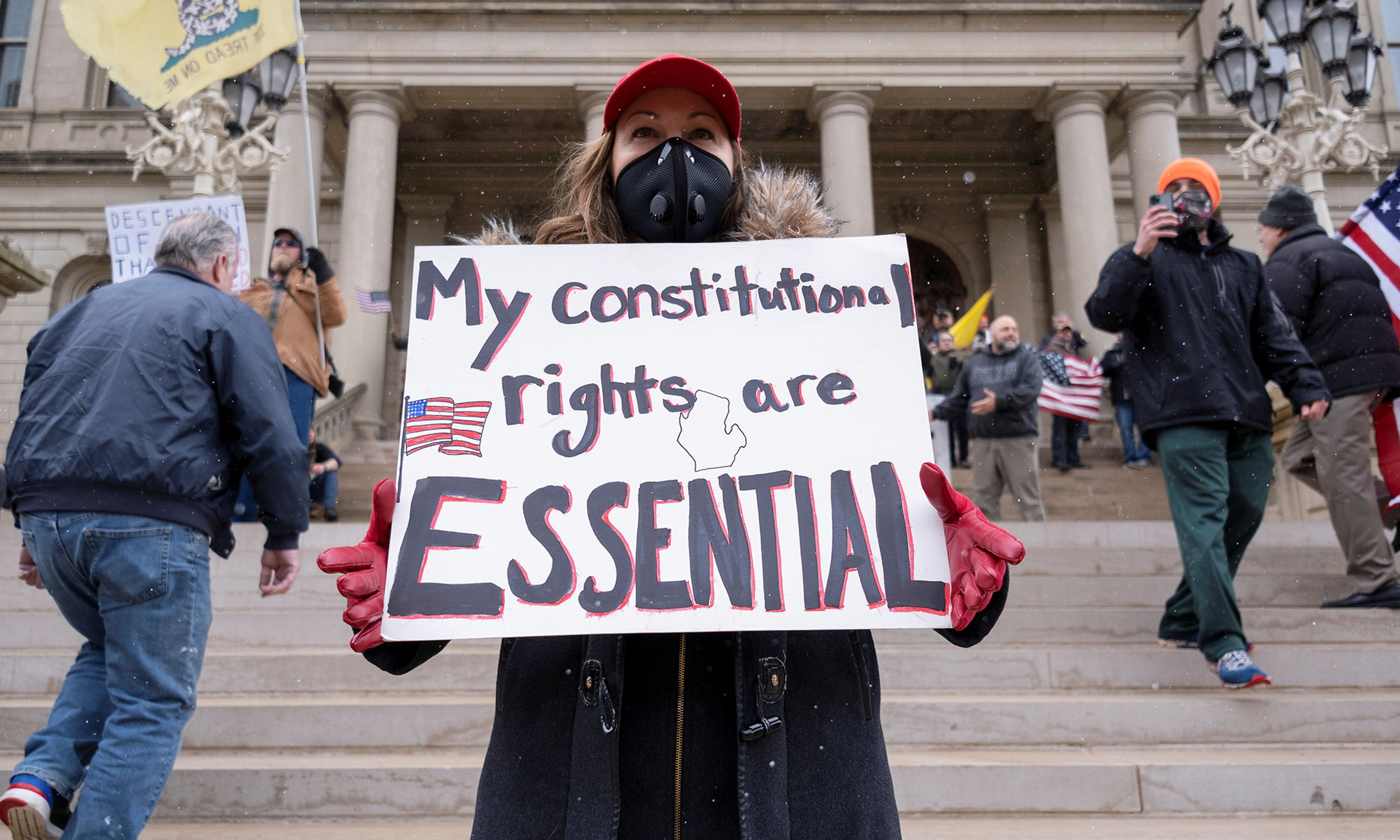
‘Live Free or Die,” read one protester’s sign. “Make Michigan Work Again” and “We Deem Our Governor Non-Essential” read others, as thousands gathered Wednesday in Lansing, Mich., to protest the state-mandated coronavirus lockdown. Similar protests have occurred in other parts of the country — Kentucky, North Carolina, Texas, and Oregon.
For now, these protesters are a minority. A survey conducted by Morning Consult and Politico at the end of March found that 74 percent of voters support a national quarantine, with 19 percent opposed and 7 percent unsure. However, this is significantly less support than in other countries. In the United Kingdom, for instance, a YouGov poll taken around the same time found that 93 percent of the public supported the government’s action. On Thursday, the U.K. government indicated that the lockdown will continue for “at least” another three weeks. Historically, Europeans have been more willing to trade in civil liberties for safety than their American counterparts. In the U.S., however, if lockdowns continue, the number of dissenters could grow into a more significant minority.





Comments