In mid-March, the New York City Council approved a ban on metal bats in high-school baseball — including public, private, and parochial schools. Mayor Michael Bloomberg (R.) vetoed the legislation, apparently believing that those who run baseball leagues should make baseball decisions, not the government.
Bloomberg’s veto was overridden by a 41-4 vote on April 23, which officially made New York City the first government in the United States to impose such a ban, according to a Daily News report. Bat makers are not happy, and the players look headed for the courts.
What are those of us who are baseball traditionalists, yet also free-market conservatives, to make of all of this?
Since about seven years old, I have found baseball an utter joy. My father and grandfather passed on a love of the game, and I’m doing the same with my own children. There’s so much to savor — the pastoral game on a sun-drenched green field played within a major metropolitan city, the sound of the ball landing in a leather glove, and the ping of the bat.
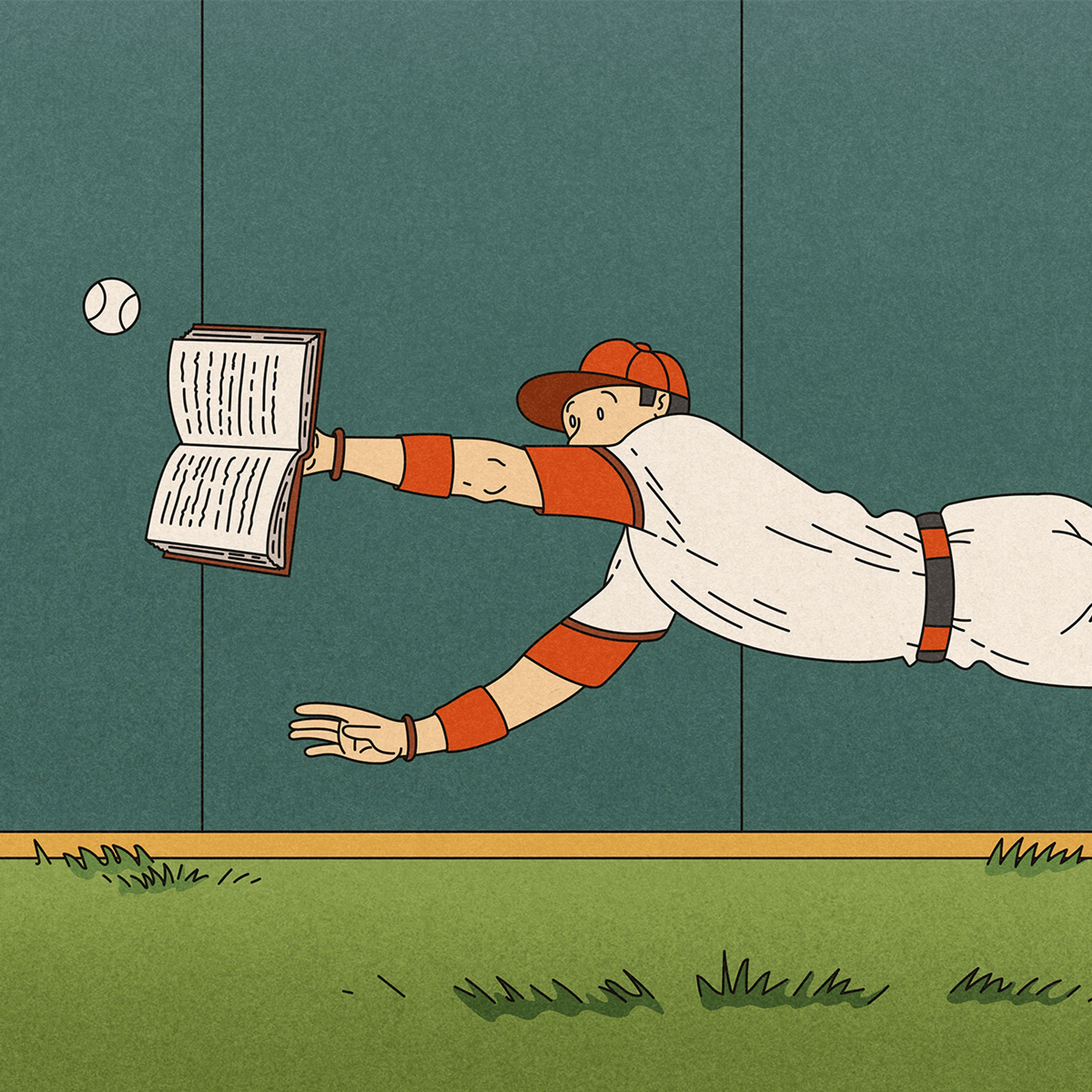
Wait a minute — was that “ping” of the bat? Of course, it should be the crack of the bat. Wood bats “crack.” Metal bats “ping.”
Nothing in life is perfect — even baseball. At the big-league level in the 1960s, ’70s, and ’80s, for example, new stadiums opened featuring artificial turf and domes. Baseball played indoors on a carpet is a grotesque distortion of America’s pastime. And don’t get me going on the designated hitter.
But that annoying “ping” is heard at the amateur level — in Little League Baseball, schools, colleges and universities. It was during the 1970s that metal bats began replacing wood bats. A big factor in the nearly ubiquitous use of metal at the amateur level is cost. Wooden bats break; metal bats generally don’t. Matters have degraded so far that while coaching my son’s Little League team last year, one player wanted to use a wooden bat, but was not allowed. Fortunately, Major League Baseball has held firm on this fundamental tool of the trade. But what should baseball traditionalists do about getting back to the crack of the bat among amateurs after some three-plus decades of those distressing pings? Should we cheer for the New York City Council’s ban on metal bats in high schools? When something people care deeply about is changed or cheapened, there is the temptation to call on government. As politicians and government bureaucrats increasingly feel the need to stick their noses into all aspects of life, it should surprise no one that individuals and special interests feel justified in getting the government involved. But New York City’s metal bat ban, however, had nothing to do with how the game is supposed to be played. As councilman Lewis Fidler observed, “This is not about whether baseball should be the crack of the bat or the ping of the bat. It’s about eliminating unnecessary risk from high-school competition before one of our kids gets hurt or killed for no reason.” Most people who have played baseball or softball seem to recognize that the ball travels faster and farther with metal bats. That was confirmed in a 2002 study by researchers from Brown University. Metal bats change the game. Writing in the Staten Island Advance on March 10, columnist Jack Minogue reported that Amherst College coach Bill Thurston makes a yearly comparison between players’ statistics in the wood-bat Cape Cod League and those same players’ metal-bat college stats. The difference is gripping; as Minogue reports, out of 102 players, “batting averages were down 81 points; slugging percentages were down 147 points; and home runs declined 60 percent.” So metal bats are unfair — but a significant dispute exists as to whether or not they actually increase the risks of injury while playing baseball.
It would seem to follow that a ball traveling faster off a metal bat increases the chances of pitchers getting hurt. But industry representatives are quick to point out that no reliable studies exist pointing to metal bats creating greater risks over wood bats.
The New York City ban proceeded on anecdotes, not data. As councilman Tony Avella pointed out during the debate, “Sometimes you do have to have the facts to back up the argument, and the statistics are simply not there.” (Did he say “sometimes”?) And although former Mets relief pitcher John Franco summoned up his perspective — “standing on the mound for 22 years” — to argue for the ban, Yankees pitcher Mike Mussina noted that being “hit in the face…is just part of the game” regardless of what sent the projectile flying.
Even if there are real safety issues with metal bats, it would seem that change or remedies can occur without politicians getting involved. In his March 14 column, The AP’s Jim Litke reported: “Metal bats began producing faster line drives, especially dangerous when they were hit back at the pitcher. Batting averages, home runs and scores all soared. People in the industry point to the 1998 College World Series as the final straw, when Southern California’s 21-14 win over Arizona State so embarrassed the NCAA that it appointed a panel to take some of the sting out of the metal bats. The centerpiece of the new standards the researchers drew up is a measurement called the ‘ball exit speed ratio (BESR),’ which must be low enough so that the ball rebounds off a metal or composite bat at a maximum speed in the mid-90s. That’s the same speed a ball hit on the sweet spot of a wood bat would produce, and since the standard was put in place, studies show injury rates are about the same as when only wood bats were used. In 1992, Little League reported 146 injuries by batted balls. In 2004, after the new standards were in effect, the number was 26. In both instances, the number of players were about 2.6 million and they compiled 160 million at-bats.”
Beyond questioning the propriety of a government that sees baseball bats as within its auspices, government intervention’s other pitfall is its costliness. On March 13, the New York Times reported: “According to the Council, it would cost the city’s public high schools $253,500 to replace 5,070 metal or metal-composite bats used by 169 baseball teams with wood bats, and $67,600 a year thereafter to replace broken wood bats. The bill’s sponsors said they would ask donors to defray the costs for private and parochial schools.” One has to wonder how hard and for how long politicians will push donors to pay for baseball bats at local private schools.
Government intervention might promise a restoration of wooden bats but there are, fortunately, cases where the baseball people are getting back to real baseball. On Long Island last year, for example, the Nassau-Suffolk Catholic High School Athletic Association tossed out metal in favor of wood bats. A couple of Newsday reports noted that the results include better hitting skills, more bunting, improved ability to hit and run, and tighter defense — namely, better fundamentals.
Especially with the jury still out of metal bats’ safety, baseball decisions should be left to the baseball people. The crack of wood versus the ping of metal is a question for those who love, play, manage, and operate the game. This is baseball, not politics.
– Raymond J. Keating is a columnist with Newsday on Long Island. He is writing a book for the Cato Institute on sports, politics and government.
Just Can’t Get Enough? John J. Miller wouldn’t give up baseball on his wedding night. Rich Lowry admits Yankee fans can be jerks.




Comments