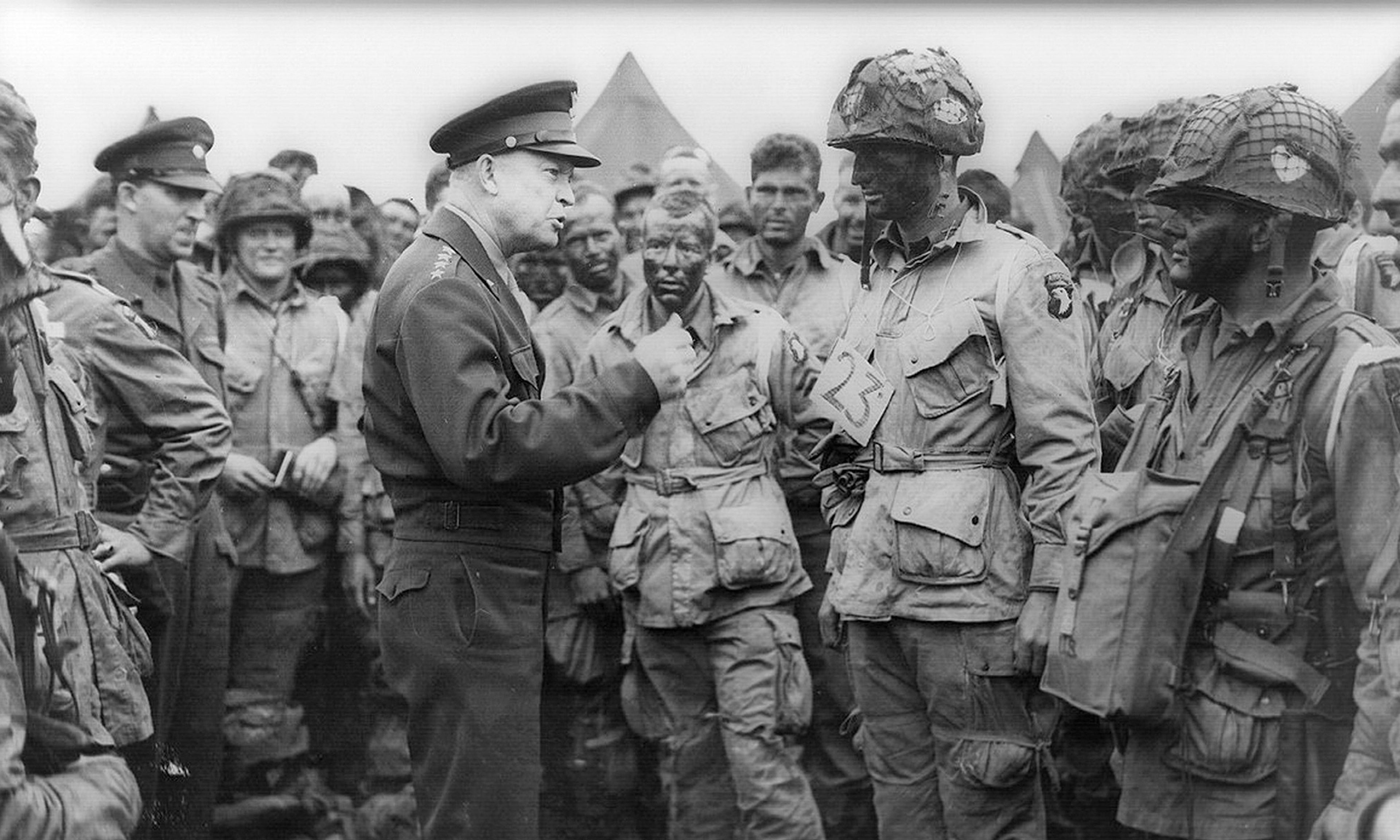
Today marks the 80th anniversary of the most important day of the 20th century — June 6, 1944, forever known as D-Day. World War II was the preeminent event of the 20th century and the bloodiest event in human history, and D-Day was the most important day of that conflict. June 6, 1944, was the day it would be determined whether the United States and her allies could execute by far the largest and most daring amphibious assault in military history and successfully establish a strong, secure beachhead in Normandy, on France’s northern coast. From there, they would begin the liberation of Western Europe and the final defeat of Nazi Germany.
As I write this article, it is a bittersweet reality that the unyielding effect of time now dictates that, as the 80th anniversary of this monumental event approaches, only a tiny handful of D-Day veterans remain alive who can bear witness to their personal experiences on that decisive day. The D-Day invasion, code-named “Operation Overlord,” was a massive undertaking involving over 6,000 ships, ranging from battleships to troop carriers, along with nine combat divisions of roughly 175,000 troops who would be sent into action on the first day. Five of the combat divisions were American: the 1st, 4th, and 29th Infantry divisions and the 82nd and 101st Airborne divisions. Three British and one Canadian division constituted the rest of the initial combat force.




Comments