About 2,000 volts, properly applied, would have obviated the utter bedlam that recently concluded in upstate New York.
Up to 1,200 local, state, and federal law-enforcement personnel spent 22 days hunting down Richard Matt and David Sweat, at an estimated daily cost of $1 million. On June 6, these two killers hacksawed their way out of the “inescapable” Clinton Correctional Facility in Dannemora, 20 miles from America’s northern frontier.
After eluding cops and canines for nearly three weeks, Matt was shot fatally on Friday, when police found him in dense woods near Malone, N.Y. When he refused to put down a stolen 20-gauge shotgun, a U.S. Customs and Border Protection officer dispatched Matt with three bullets to his head.
Two days later, cops caught Sweat only two miles from the U.S.–Canadian border. He is hospitalized and recovering from two non-lethal gunshots that New York State trooper Sergeant Jay Cook fired into Sweat’s torso before he was arrested.
Now, rather than all of this danger, expense, and titanic inconvenience, imagine if these two convicted murderers had been strapped to “Old Sparky,” the once-busy electric chair at New York’s Sing Sing prison, and given all that they deserved.
Sweat and another killer shot a New York policeman 15 times, drove over him with a car, then shot the officer twice more, in his face, with the cop’s own gun.
Matt kidnapped his former boss, 76, and then tortured, killed, and dismembered him — with a hacksaw! Matt fled to Mexico after that 1997 atrocity. He then murdered a man in a bar fight and spent nine years behind Mexican bars before being extradited to New York.
Rather than “life without parole,” these two should have been sentenced to death and executed years ago. Had they been, they never would have had sex with prison seamstress Joyce Mitchell, who, police say, fell in love with them and furnished them drill bits, saw blades, and the other means to flee their “high security” penitentiary.
From New York State to Pennsylvania, the Canadian border, and even the Mexican frontier, officials were on the lookout for Matt and Sweat. They were considered highly lethal, which terrified residents of the Northeast. Law-abiding citizens wondered if every strange shadow or spooky sound might be one or both of these killers, creeping around a corner.
The $22 million incinerated by this massive manhunt could have financed a year’s average pay for 490 local teachers, 571 police officers, or 653 firefighters in Clinton County, N.Y.
So, Matt and Sweat should have received volts and amps, rather than “life in prison,” which proved to be wishful thinking.
Matt and Sweat were not the first convicted murderers for whom “life behind bars” was just a suggestion.
Matt and Sweat were not the first convicted murderers for whom “life behind bars” was just a suggestion. Consider these other killers on the road, courtesy of news accounts and ProDeathPenalty.com.
‐Jose Fernandez Bustos-Diaz was serving a 35-year-sentence for fatally slitting the throat of his boss, Deborah Gail Kay, at her horse stable when he was 16. In April 2010, he crawled to freedom through the ventilation ducts at Briscoe Prison in Dilley, Texas. Officials reckon that Bustos-Diaz is somewhere in Mexico.
‐Convicted murderers Calvin Adams and Jeffrey Grinder were serving life without parole at the Cummins Unit penitentiary in Grady, Arkansas.
That facility happens to make attire for prison guards. On May 29, 2009, Adams and Grinder snatched two uniforms, slipped into them in the jailhouse library, and then strolled out during a shift change. They located a burgundy sedan that had been left for them and drove off into the sunset. They were back in custody that June 2, after being stopped for a speeding violation 90 miles southeast of Buffalo, N.Y. — perhaps en route to Canada.
‐Larry Woods was serving 111 years for killing the manager of the Indianapolis restaurant where Woods was employed. As a yard worker at Indiana’s Michigan City prison, Woods freely roamed most of its grounds. On July 9, 2001, Woods hopped into a garbage truck and rode out of jail; he remains at large.
‐Lee John Knoch was serving life without parole for five counts of aggravated murder, including that of Robert Holliday. Knoch buried Holliday alive just days before Holliday was set to testify against Knoch in an earlier case, in which he was accused of torturing Holliday. On February 28, 2001, Knoch cut a hole in a fence and slithered out of Oregon’s Snake River Correctional Institution. Knoch was caught that March 2 after he entered a man’s house in Idaho and then was neutralized by its shovel-wielding owner.
• Jerry Vernon was locked up in New Mexico for life plus 19 years for fatally shooting his friend Larry Stevens twice in the face. Vernon faked an ailment and was transferred to the less secure geriatric ward of Los Lunas Prison. Foreshadowing the incident at Dannemora, internal accomplices handed Vernon the tools that he used to cut through a fence and flee in March 2001. He was recaptured in June 2003 in Hot Springs, Ark.
• Glen Stark Chambers was on death row for lethally beating his girlfriend in 1975. He used a bedsheet to climb out of a jail in Sarasota, Fla. He soon was nabbed and locked up again. A judge then cut his sentence to life in prison. That did not satisfy Chambers. In February 1990, while working in the furniture factory at another state prison, Chambers persuaded fellow inmates to stuff him inside a crate. It was loaded onto a truck, which drove out of the lock-up. Chambers escaped the container and has been on the lam since that day.
• Joanne Chesimard, a.k.a. Assata Olugbala Shakur, fled a Garden State jail in 1979. As columnist Michelle Malkin recalled, this former domestic terrorist with the Black Liberation Army was sentenced to life for killing New Jersey State trooper Werner Foerster in 1973. She escaped and decamped to Cuba, where she enjoys political asylum, palm trees, and (who doesn’t?) mambo music.
Clarence Thomas is right: Certain crimes are “egregious enough to merit the severest condemnation that society has to offer.” The Supreme Court justice expressed his concurring opinion on Monday in Glossip v. Gross, the case that declared constitutional the use of the drug midazolam in executions by lethal injection.
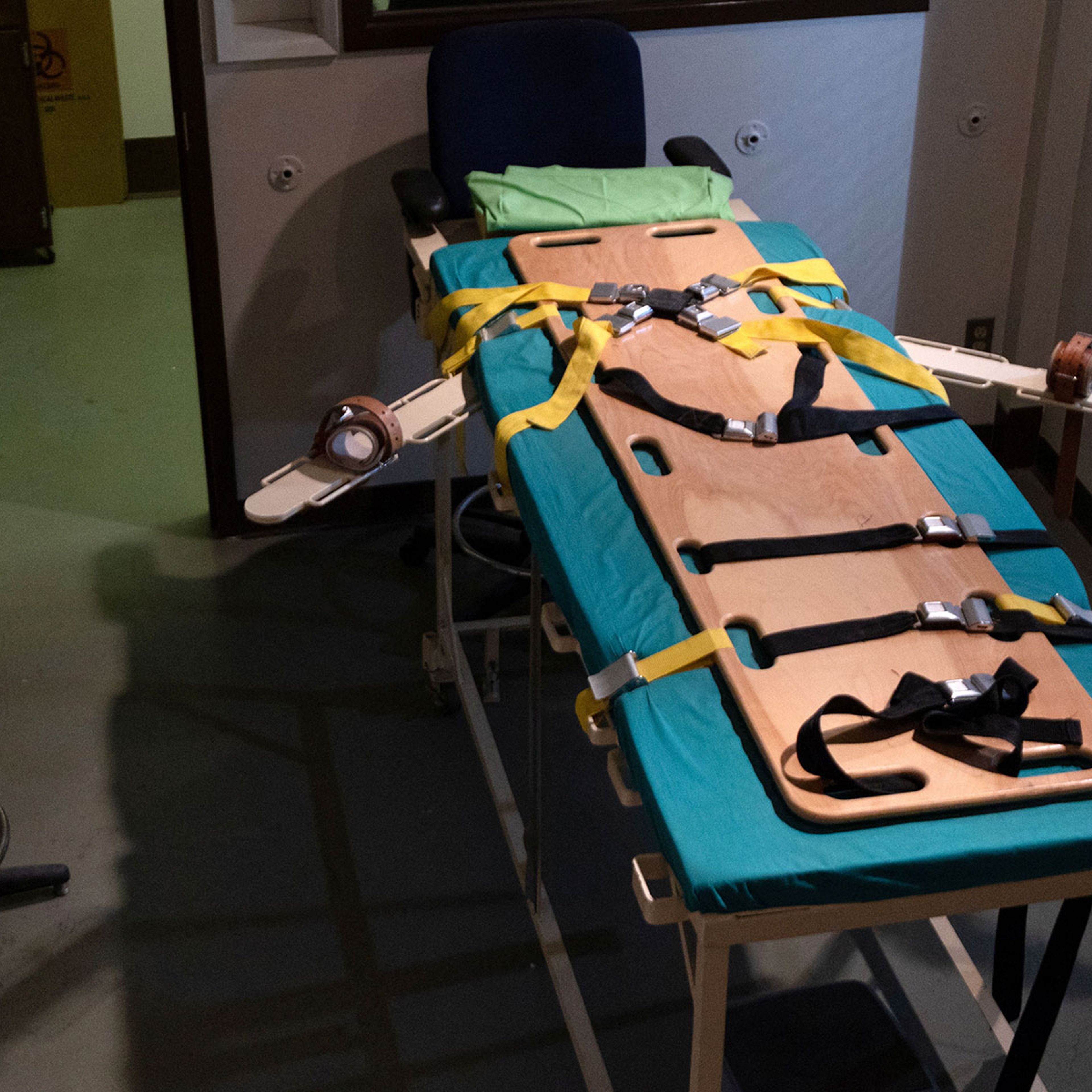
Swabbing death-row inmates’ arms with alcohol and then sticking them with needles seems both ghoulish and an overly intimate intermingling of medicine, state action, and death. It’s far better to dust off electric chairs and gallows around America and use them to execute convicted murderers, rather than lock them up “for life” — whereupon they either escape or get released for “good behavior,” potentially to kill again.





Comments