
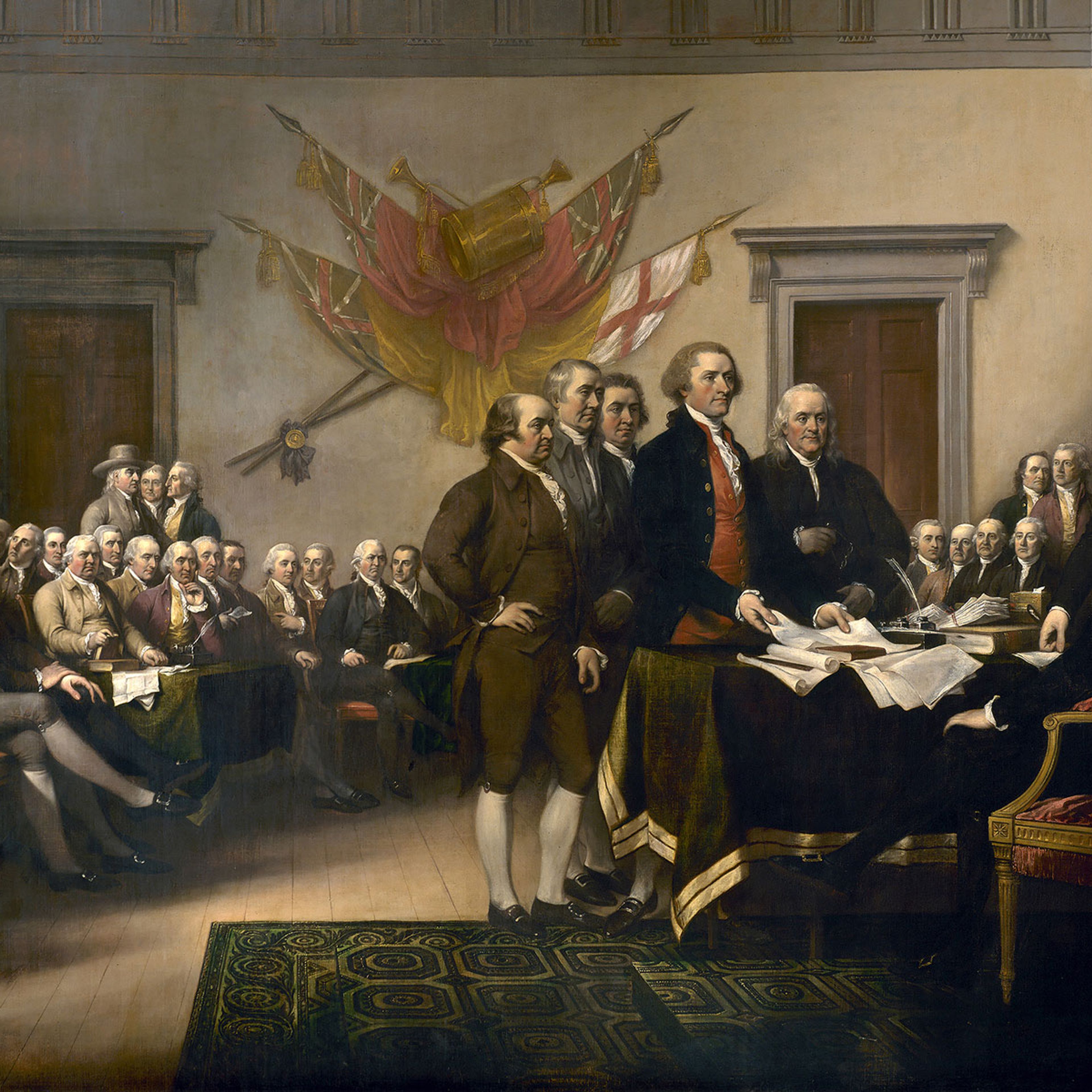
Amid our national dialogue over race and justice, my family’s reading of the Declaration of Independence will be even more meaningful than usual this Fourth of July. At the core of the Declaration — the founding political document of America — is the principle that the consent of the governed is the foundation of the moral legitimacy of government.
That principle follows from three preceding propositions in the preamble: “We hold these truths to be self-evident, that all men are created equal, that they are endowed by their Creator with certain unalienable Rights. . . . ” By appealing to self-evident truths, the American Founders relied on an extensive philosophical heritage which affirmed certain moral truths that flow logically from their premises once the terms of the proposition are understood. While a belief in moral truth is dismissed today for promoting intolerance, the foundation of tolerance is not moral skepticism, which fosters the will to power, but the humble recognition of transcendent truths that bind all of us, as human beings, equally.




Comments