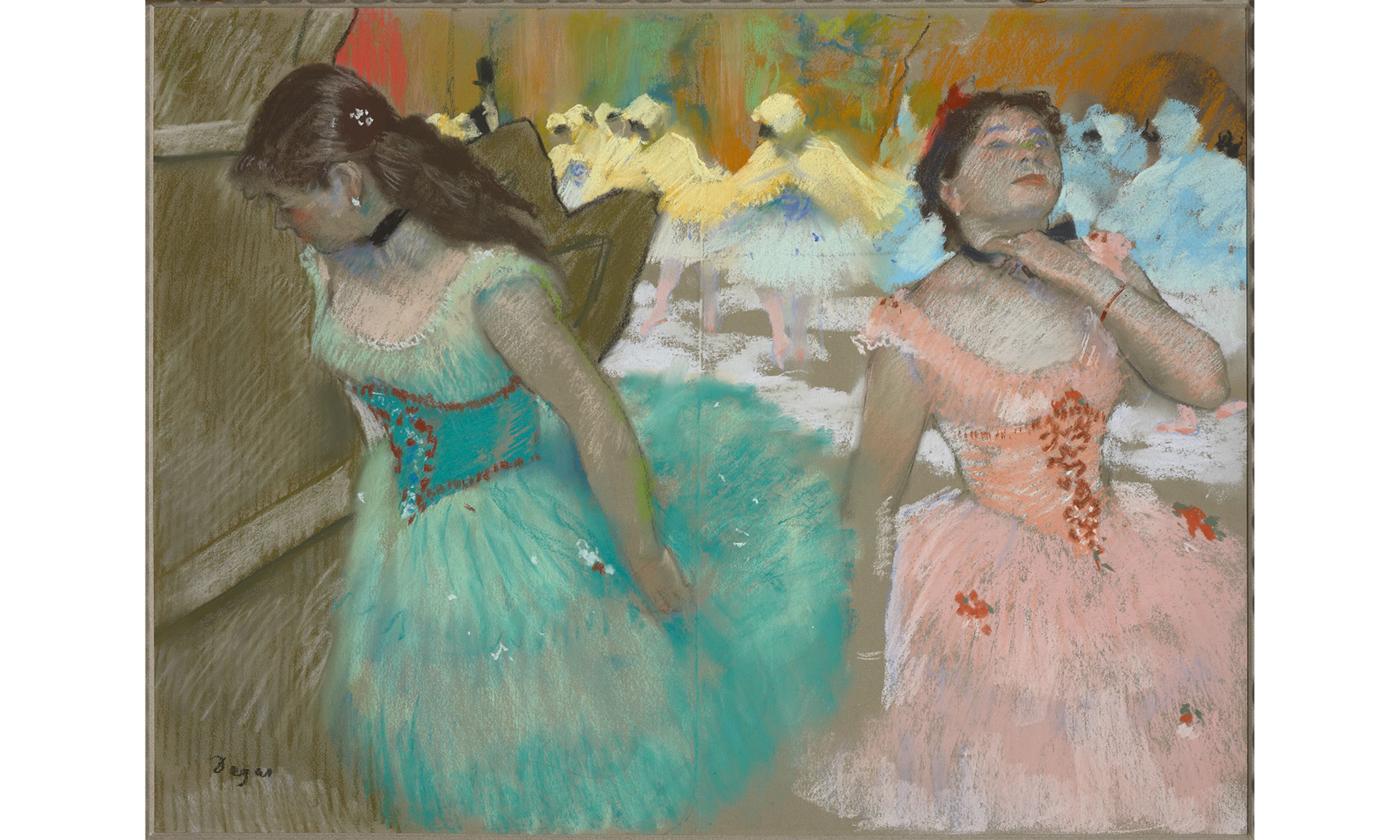
This year is the 150th anniversary of the first Impressionist exhibition. From mid April to mid May 1874, a new collective called the Anonymous Society of Painters, Sculptors, Printmakers, Etc. displayed art at the studio of the famous photographer Felix Nadar. That Nadar was also a pioneer in balloon aviation is no coincidence. The Impressionists had lofty, airy dreams of a new art, not just a new style. Not only the art of pastel colors and gauzy forms, Impressionism was a fresh take on realism and an embrace of the spontaneity of life. It was, like all contemporary art, about the now of its day. Immediacy, bourgeois life, weather, sunlight, color, and what the flâneur — or voyeur — spies are all Impressionist topics.
There is no more congenial or all-embracing place to ponder Impressionism than the Clark Art Institute in Williamstown in northwestern Massachusetts. Its founders, Sterling and Francine Clark, loved Impressionism idiosyncratically and, from the early 1920s to the mid ’50s, collected well and aplenty. Since the museum opened in 1955, its trustees, curators, and directors pushed the Clarks’ Impressionists at the margins, so the Clark today is the essential stop, in America at least, in the quest for an Impressionist nirvana. Last week, I visited the Clark’s new exhibition on Edgar Degas (1834–1917), who exhibited in seven of the eight Impressionist exhibitions between 1874 and 1886.





Comments