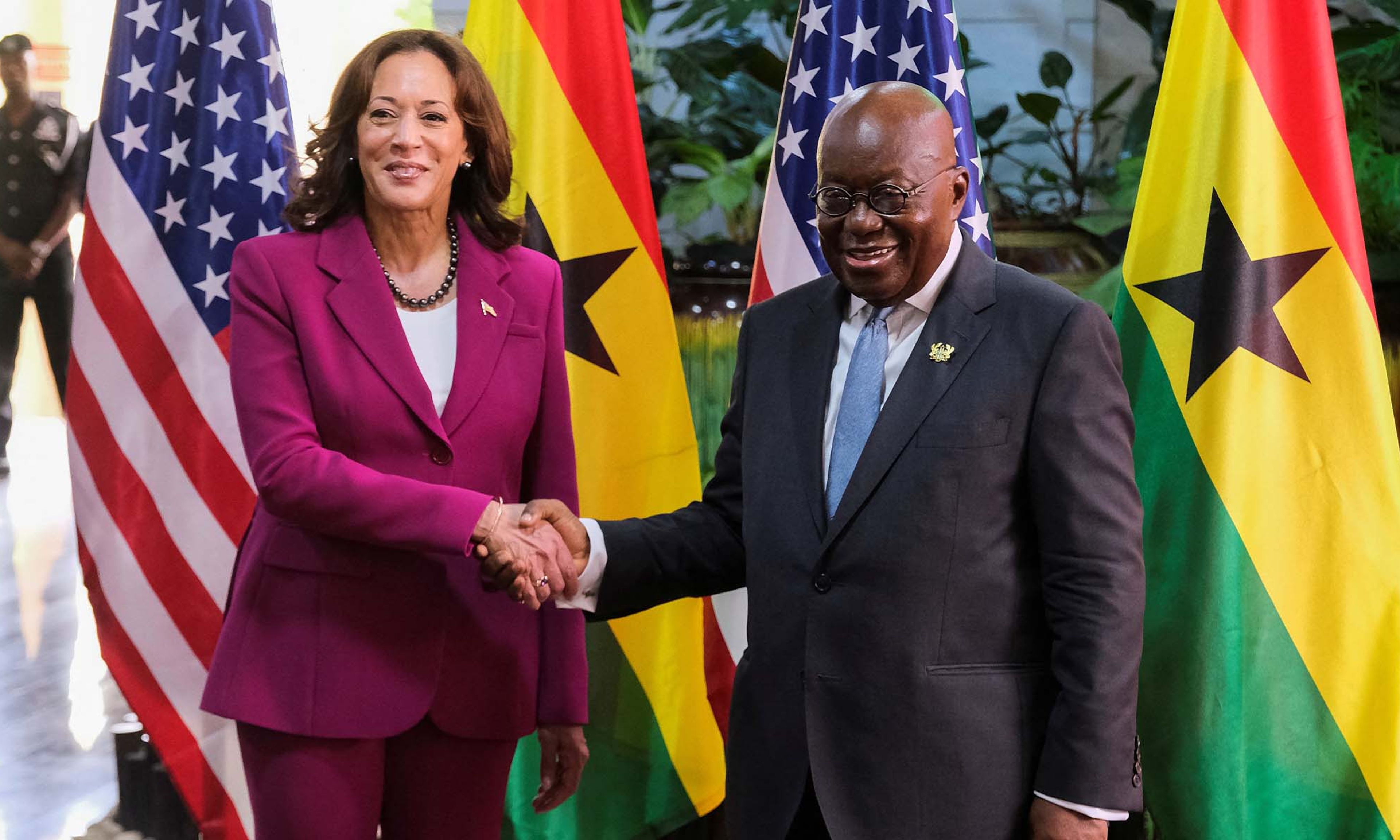
In a recent National Review article warning about growing Chinese influence in Africa, Mike Coté argues that countering such influence requires the United States to “reprioritize national interests over progressive values.” Though Coté’s piece raises some important points, his assertion that values such as the “respect for human rights” and “our belief in democracy” ought to play a “supporting role in an age of great-power conflict” is misguided. Indeed, to advance core interests like countering China, the U.S. should put the promotion of its democratic values and institutions at the forefront of its Africa policies.
American engagement in Africa during the Cold War serves as a cautionary tale about the perils of a values-neutral approach to the continent. Fear of Soviet incursion led the U.S. to support the overthrow of Moscow-aligned governments in favor of dictators who would supposedly toe the Western line. For example, in Ghana, President Kwame Nkrumah’s perceived flirtation with the Soviet Union led the U.S. to tacitly support his overthrow — a policy that inadvertently triggered decades of political instability that saw Soviet influence expand dramatically. Today, framing the threat of Chinese influence in Africa as a zero-sum competition threatens a return to the flawed Cold War approach that undermined American interests on the continent. However, thanks to President Ronald Reagan’s vision outlined at Westminster “to foster the infrastructure of democracy,” the U.S. now maintains the resources and programming to support the development of political institutions abroad, especially in Africa.




Comments