We’re reaching a dangerous point in American politics. Many millions of our most engaged and most politically passionate citizens fervently believe that when they lose close elections, it’s because the other side has “stolen” victory. They believe that if elections are truly free and fair, their side will win. And they’re not just getting that idea from the fever swamps of the conspiracy-theory Internet, they get it from the leaders of American political parties. Donald Trump, for example, famously attributed his popular-vote loss to the unlawful votes of illegal immigrants:
The claim was total unsupported nonsense, but that hasn’t stopped Trump from doubling down on it time and again — to the point of claiming, for example, that the “system is rigged.” This is the president of the United States claiming that our electoral system isn’t just flawed, that it’s corrupt. You can’t trust its results.
But lest you think the Democrats are any better, I bring you 2016 Democratic presidential nominee Hillary Clinton and 2020 Democratic presidential contender Elizabeth Warren. Two of the most prominent Democrats in the land are injecting their own toxic and false assertions into the body politic. They’re delegitimizing American elections with at least as much gusto as Donald Trump, and it’s just as intolerable.
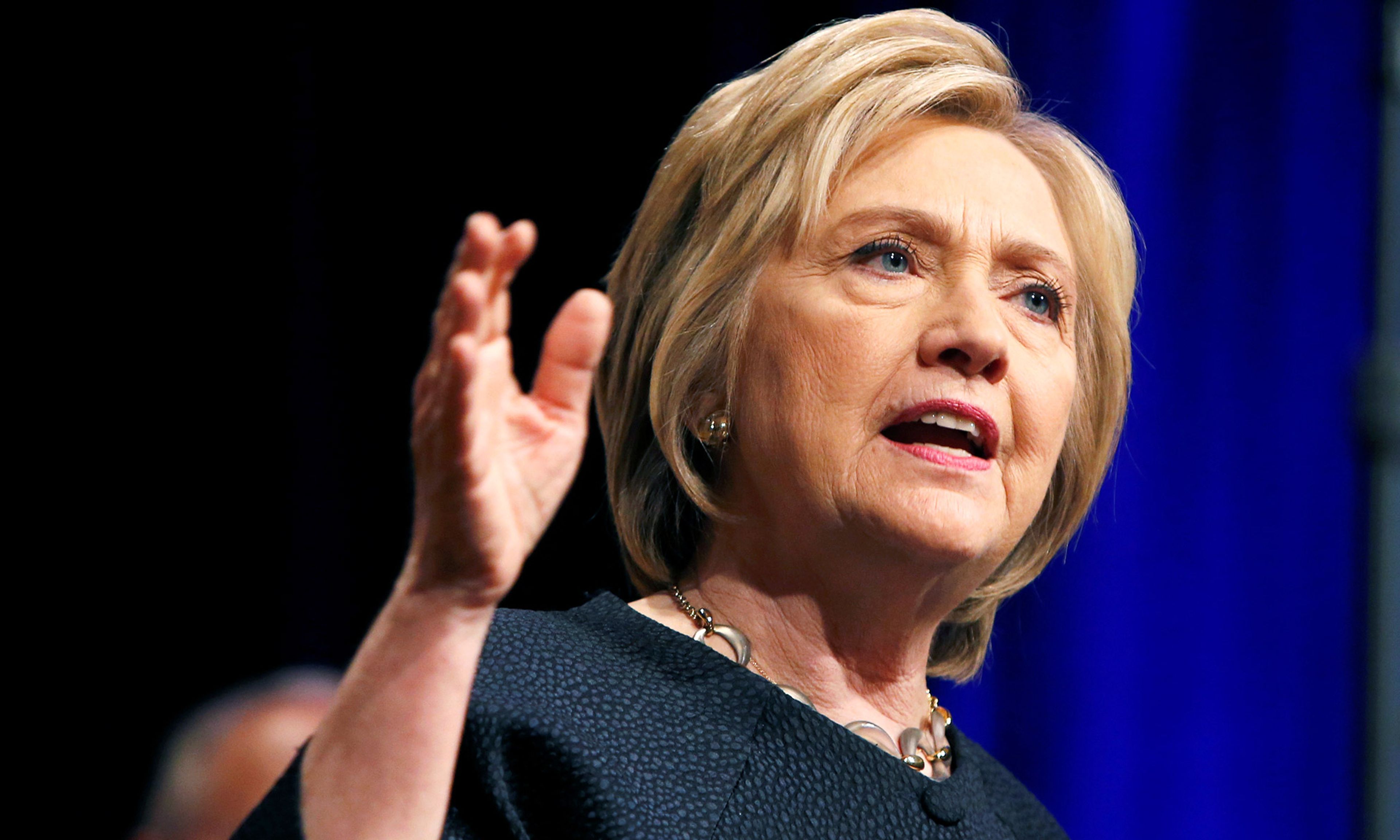
Let’s start with Hillary Clinton. Just last month she said this:
I was the first person who ran for president without the protection of the Voting Rights Act. I’ll tell you, it makes a really big difference. And it doesn’t just make a difference in Alabama and Georgia. It made a difference in Wisconsin, where the best studies that have been done said somewhere between 40,000 and 80,000 people were turned away from the polls because of the color of their skin, because of their age, because of whatever excuse could be made up to stop a fellow American citizen from voting.
She also claimed that in 2016 “there were fewer voters registered in Georgia than there had been those prior four years.”
Where to begin? In his fact check of Hillary’s remarks, the Washington Post’s Glenn Kessler notes that that relevant portion of the Voting Rights Act (Section 5) didn’t even apply to Wisconsin. Voter registration in Georgia actually increased in 2016. Moreover, there was a general decline in black turnout across the nation — in states with and without voter-ID laws.
Kessler’s conclusion was brutal. Hillary’s claims were “wrong on multiple levels, seriously misleading and worth a cumulative Four Pinocchios.”
Now let’s turn to Elizabeth Warren. If possible, her claims were even more irresponsible. Not only did she repeat the now-common talking point that “massive voter suppression” was responsible for Stacey Abrams’s defeat in Georgia, she made an extravagant claim of Republican perfidy and Democratic electoral power, declaring that “they know that if all the votes are counted, we’ll win every time.”
As I wrote late last year, Democratic claims that Republicans stole the Georgia gubernatorial race through “massive voter suppression” are specious. Turnout in the Georgia election was extraordinary. Almost 2.5 million Georgia citizens voted in the 2014 gubernatorial election. In 2018 that number hit 3.9 million. Abrams received 1.9 million votes and lost. In 2014, Republican Nathan Deal received 1.3 million votes and won. Georgia’s turnout exceeded the national average, and a record percentage of voters were nonwhite.
Thus, the completely unprovable argument is that turnout would have been even farther above national averages had the alleged “massive suppression” not occurred. But even when one dives into the details and examines Democratic complaints about “purged” or “pending” registrations, it’s plain that then–secretary of state (and now governor) Brian Kemp was not only applying valid state law, he wasn’t blocking any person from voting.
“Purged” voters included individuals who had moved, died, or been removed from the rolls under a “use it or lose it” law passed by a Democratic legislature and signed by a Democratic governor. Under the use-it-or-lose-it law, voters are removed from the rolls if they don’t have any contact with the electoral system for three years, fail to respond within 30 days to a written notice, and don’t vote in the next two general elections. Any purged voter can reregister online.
A voter’s registration was considered “pending” if there was a mismatch between the last name, first initial, and date of birth of the voter-registration information and the same information in the state’s database. Even then, however, a voter could still cast his vote in person if he showed up with an ID that was a “substantial match” with the voter’s record.
Kemp won by almost 55,000 votes, so the argument here is that but for the purges and pending registrations (where voters could register and vote nonetheless), Abrams would have netted additional votes by the tens of thousands. There is zero meaningful support for this claim.
But that doesn’t stop Hillary Clinton. Days after the election, she said that if Abrams had a “fair election,” she would have won. That obviously doesn’t stop Elizabeth Warren. That hasn’t stopped Stacey Abrams herself (who still says she won) or a host of other Democratic officials and activists.
When elections are close, the belief that only your victories are legitimate doesn’t just undermine faith in American democracy — a phrase without concrete meaning. I fear that it may also toss a match onto the volatile kindling of American polarization.
Our nation has been very fortunate since 2016. It’s been fortunate that the congressional baseball shooter wasn’t a better shot — and that Capitol Police officers were able to immediately return fire. It’s been fortunate that the Trump superfan bomber wasn’t better at his craft. But if we keep telling Americans that they’re being robbed by a dysfunctional democracy, we can’t be surprised when more people turn to undemocratic means to accomplish their aims.
As we move into a presidential-election cycle that is likely to be even more contentious than 2016 and 2018, it’s time for restraint. Claims of voter fraud or voter suppression may excite a crowd, but our leaders are playing with fire. American elections are imperfect, but they are free and fair. Any other message is reckless and dangerous and has to stop.





Comments