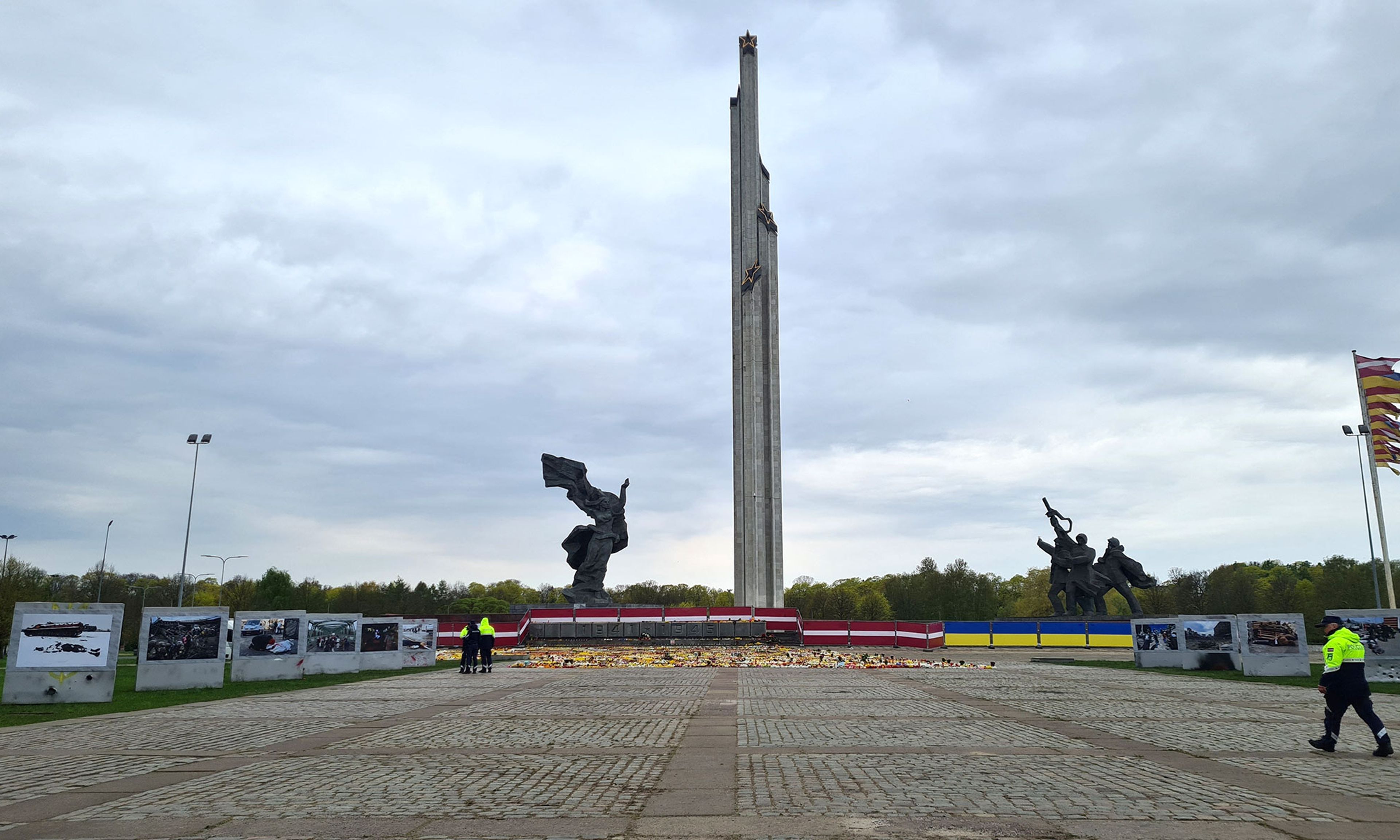
Conquerors like to remind the conquered of who is in charge. One way of doing so is by the construction of monuments, symbols of the new order — and by their permanence, of its permanence. The Soviets were no exception to this rule, distinguishing themselves only by the ugliness and, not infrequently, the gigantism of the works they fashioned. Not far enough from the center of the Latvian capital, Riga, there’s an archetypal example of this genre: overbearing, grandiloquent, and brutal. It dates from the later years of the Soviet occupation, a time when the Kremlin was using memories of the “Great Patriotic War” to bolster a regime struggling to deal with ideological failure, economic stagnation, and growing disaster in Afghanistan.
Formally the “Monument to the Liberators of Soviet Latvia and Riga from the German Fascist Invaders,” this bleak, decaying totalitarian shrine is more usually referred to as the Victory Monument (more concise, less confrontational), at least by its fans or those who cannot be bothered with either the actively pejorative or passively negative (the “Soviet monument”). In a recent speech on plans to demolish it, Latvia’s President Egils Levits opted for the former, calling the monument “the object left by the Soviet Russians in Pārdaugava.”





Comments