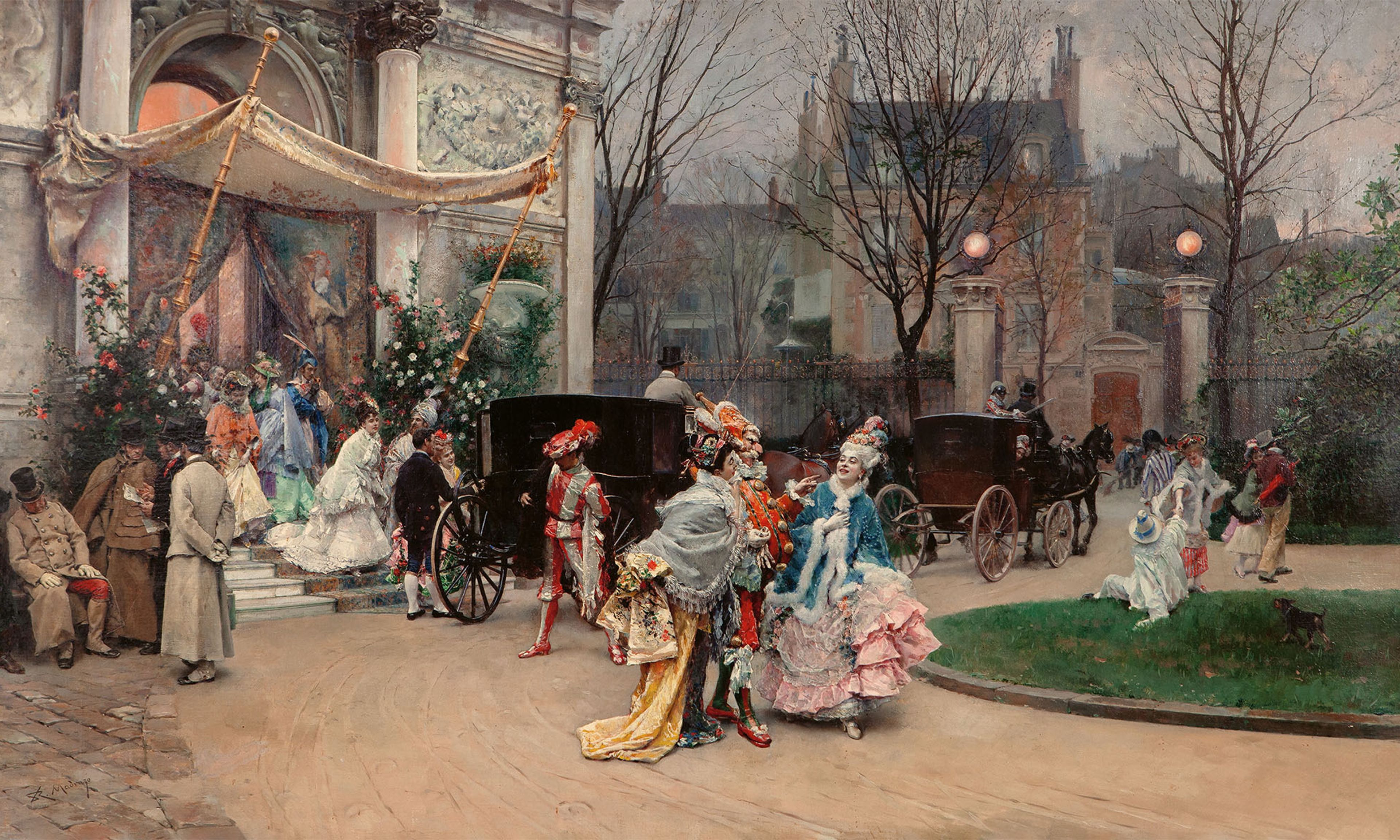
I always enjoy visiting the Meadows Museum, the art museum at Southern Methodist University in Dallas. Its founder, Algur Meadows, wanted what he called “a Prado on the prairie,” and that he got and more. The Meadows collects Spanish art from the tenth century to our time — and what treasures. It’s got plenty of Spanish medieval art, often an amalgam of Italian, French, and Flemish style with a Moorish touch. The Meadows has top-notch work by Velázquez, Goya, El Greco, Murillo, and Ribera, too, but the time between Goya, who died in 1828, and Picasso, coming into his own around 1900, is hardly a black hole. The Meadows excels there, too.
Lovers of Spanish art know Mariano Fortuny, the Catalan savant who died in 1874 at a young age but was on a parallel track heading toward Impressionism. His son was the famous Venice-based textile designer. Only Spanish specialists tend to know Fortuny’s brother-in-law and peer, Raimundo de Madrazo y Garreta (1841–1920).


Comments