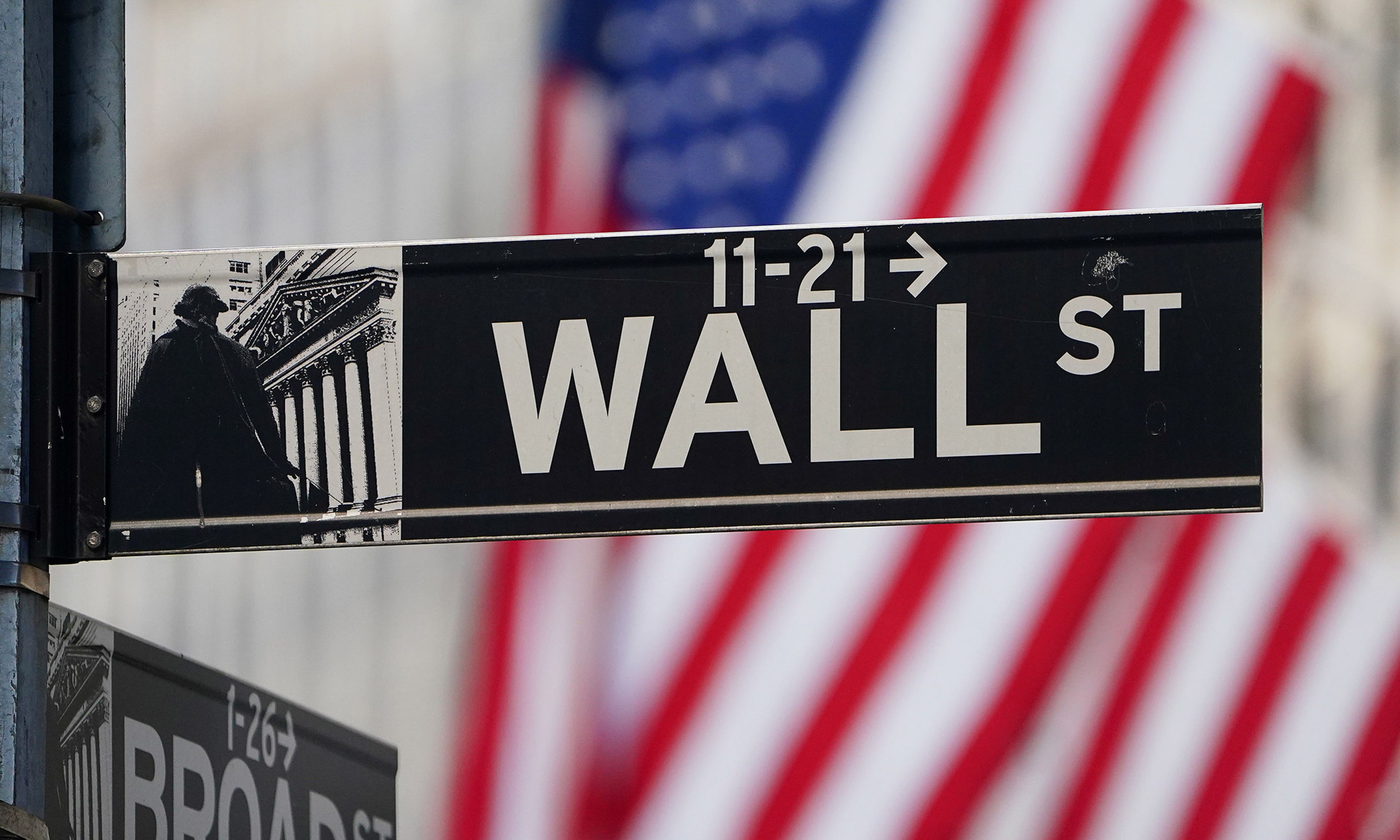
The most interesting aspect of the recent Wall Street coverage is the spectacle of our talking heads’ not only letting a banished word get by, but actually reviving it. “Depression” is back in all its upper-case glory, wearing its de rigueur initial cap to differentiate it from mere sadness.
Ironically, it began as a euphemism for “Panic,” an earlier word for economic collapse, as in “the Panic of 1893.” After the stock-market crash of 1929, the Hoover administration, fearing a revolution, sought to calm the public by substituting the sleepy-sounding “Depression” for the wide-awake-sounding “Panic.” It may have helped at the time, but later on, when people looked back on the ’30s, “Depression” caused panic.
Thereafter it was scrupulously avoided, replaced by “Recession,” which didn’t sound too sleepy because it had to do with walking, yet didn’t sound too wide awake because it had to do with stately walking. You walked in during a processional and out during a recessional, so a “Recession” was a perfunctorily planned temporary absence —what economists meant by “The market is correcting itself,” or what stage managers in movies about the Ziegfeld Follies meant by “Take five, girls.”
Whenever Wall Street stumbled, the airwaves filled with references to “Recession.” This lasted until the baby-talk era, when it was changed to “the R-word,” but no matter how bad things looked, e.g., 1987, nobody dared say “Depression” or make the slightest reference to it, which is why we have never had a “D-word.”
Then the tiptoeing stopped. Starting earlier this year at the peak of the mortgage crisis and mounting steadily through a summer of bankruptcies and a September of three-digit losses in the Dow, “Depression” became the designated driver of every talk show. Suddenly we were seeing “the worst Depression since 1929 . . . worse than the Depression of 1929 . . . another Thirties-style Great Depression . . . it’s 1932 all over again . . .” The years 1929 and 1932 were repeatedly invoked, occasionally accompanied by old news footage of bread lines, soup kitchens, and the sunken cheeks of Appalachian children paired with the incredibly round ones of moon-faced Herbert Hoover. After one such retrospective, a frenzied seer warned, “We’re headed for the worst Depression in the history of the world!”
What is behind this sudden change in vocabulary? The simplest answer is that we really are on the ropes but what is not so simple is why the media are being so honest about it. It’s just not like them to do anything without an ulterior motive, and motives can get pretty ulterior in a field whose twin occupational hazards are schadenfreude and egomania. I can think of a couple of talking heads who would welcome “the worst Depression in the history of the world” as long as they could cover it with the sweet delirium that comes over them when, like Narcissus gazing into his pool, they look into the camera with the red light.
The far-Left heads are the easiest to figure out. They’re trying to scare us into electing Obama with audience-training techniques culled from Pavlov. Choose a key word and keep saying it over and over, keep the fear of hunger in the forefront, and make sure we can sniff out the Bad from the Good: Depressions are caused by Bad Republicans, Depressions are cured by Good Democrats; Bad Hoover had a round face, Good Obama has a narrow face, etc.
Once they get Obama in the catbird seat, the revolution they yearn for will come to pass. Not the pike-and-guillotine kind, but a civilized, educated, advanced socialism that will make the world trust America and make America trust itself. Roosevelt’s New Deal experimented with socialism, but Obama’s New Heal will finish the job and transform us into a post-nationalistic, post-ethnic, guiltless garden of egalitarian delights with two government programs in every pot.
I thought I had solved the mystery of the run on “Depression,” but then came Bailout Week. Congressmen and senators, Republican, Democrat, right-wing, left-wing, and mister-in-between all clamored to accentuate the negative and eliminate the positive. Ben Bernanke spoke of “financial devastation”; others recited a thesaurus of downbeat synonyms: “scary . . . dire . . . brink . . . collapse . . . chaos . . . disaster,” until finally we got Bush himself in his emergency speech, listing all the elements of a bona fide Depression, including “financial panic,” then warning that we just might have a “RECESSION”! I wish I had been a fly on the wall during that speechwriters’ meeting. When only the president is required to call it a “Recession,” you know we must be up that infamous creek without a paddle.
As I write this, the going theme on cable news is “How Scared Should Americans Be?” This is the Bailout Gang’s way of saying that they themselves don’t understand the crisis, so we the public must be even dumber. I may not know what derivatives and commercial paper are, but I know the root cause of the present debacle.
It’s the D-word: “Democracy.”
Comparing contemporary America with the America that lived through the Depression of 1929 will not generate the Happy Talk we now demand. The 1920s have been thoroughly misunderstood. Despite the “roaring” and bootlegging it was a disciplined society in which the middle class really was a middle class, composed of professionals and businessmen, not the jumped-up helots who are called — and call themselves — middle-class today. The 1920s did not have 30-year mortgages. The real middle class bought homes on seven-year mortages, with a final balloon payment. The helot class rented, and if they ever said, “I got a right to the American Dream and I want it now,” they were ignored because nobody cared whom they wanted to have a beer with.





Comments