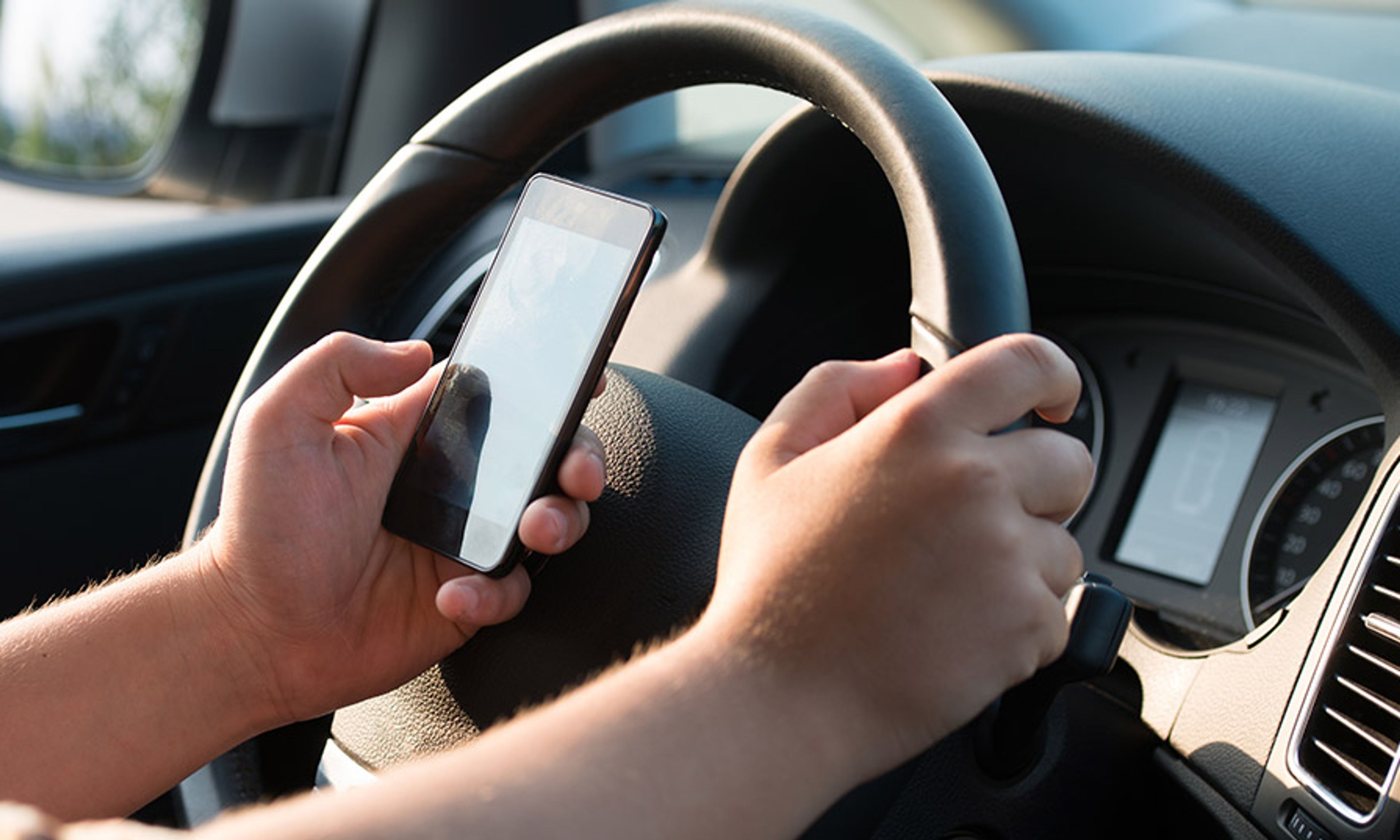
Last Wednesday, 20-year-old Jack Dillon Young plowed his Dodge pickup truck into a church bus on a two-lane road 75 miles west of San Antonio, Texas, killing 13 people. Before the accident, Jody Kuchler told the Associated Press that he witnessed Young’s truck driving erratically, weaving on and off the road and in and out of incoming traffic, for 15 minutes before the accident. Kuchler was so alarmed by the scene that he even called 911 to try to have Young stopped. Afterward, Young was apologetic and admitted that he had been texting, but the damage had already been done.
Young’s tragic mistake only magnifies what is an increasingly hot-button issue as smartphones and other electronic gadgets gain near universal usage: What should society do about distracted driving? A growing number of people seem to answer that we should do more. But at some point, the law must stop as personal responsibility kicks in.
The crux of the matter, as it often is in public-policy debates, is how best to balance personal freedoms with public safety.
Every time even one person dies in an accident, it’s a tragedy. In the wake of such fatal tragedies, we understandably empathize with those grieving for the victims, and fear for our own safety and that of those we love. We also tend to quickly fall back on that old refrain: “There ought to be a law!” There is a powerful impulse to seek government action in the wake of preventable deaths, and it’s not always easy to argue with the logic.
Distracted driving is undeniably a real problem. According to the website of the government agency dedicated to educating the public on the issue, 3,179 people were killed and 431,000 were injured in crashes involving distracted drivers in 2014 alone. Since the federal government can’t simply “ban” distracted driving, the site instead encourages the states, which are charged with regulating driver behavior, to deal with the problem by passing legislation. And most have complied, to one extent or another. Text messaging while driving is banned in 39 states, novice drivers are banned from cellphone use in 32 states, and ten states and the District of Columbia ban all drivers from using hand-held cellphones. Interestingly, then-governor Rick Perry vetoed a statewide ban on cellphone use while driving passed by Texas’s GOP-controlled legislature in 2011. Perry called the prohibition “government micromanagement” and advocated driver education instead.
In the broadest possible terms, Perry was on to something. The term “distracted driving” covers more than just texting and driving. According to the aforementioned National Highway Traffic Safety Administration website, “ANY activity that could divert a person’s attention away from the primary task of driving” counts as a distraction, which raises the question of what in-car behavior will be banned after texting. After all, the website’s list of distractions includes using a cellphone or smartphone, eating and drinking, talking to passengers, grooming, reading (including maps), using a navigation system, watching a video, and adjusting a radio, CD player, or MP3 player.
Granted, certain “distractions” could pose a danger, but it seems like there are a lot of factors at play — including, among other things, road conditions, weather, the number of vehicles nearby, and especially the driver’s age, experience, and temperament — that would seem to preclude any sort of draconian, one-size-fits-all law.
In 1982, not long before Mothers Against Drunk Driving (MADD) was founded, 26,173 people died on America’s roads because of drunk driving or alcohol-related behavior. In the years that followed, laws and public perception changed and, despite an increase in drivers, America’s roads gradually got safer. In 2011, there were “only” 9,878 drunk-driving fatalities, and the annual fatality rate has remained relatively stable since.
Almost 10,000 drunk-driving deaths a year is too many, even if such deaths are much rarer than they once were. Yet it’s still almost three times as many deaths as occur annually because of distracted driving. And what’s more, while being drunk seems to impair all drivers, wrecks involving distracted driving are a much greater problem among newer, teenaged drivers, as Young’s tragic accident suggests. Does this mean older drivers don’t turn the radio knob, talk to fellow passengers, or sip a bottled water on occasion? No, of course not. It just means that some “distractions” don’t necessarily affect every driver’s performance behind the wheel.
The states that eschew a blanket ban in favor of laws targeted toward teenaged drivers have enough common sense to acknowledge these facts, but they are increasingly the exception rather than the rule. More and more states are instead going the way of California, which recently banned drivers from holding a cellphone altogether for any reason. Already, California drivers are wondering why the state is picking on cellphones when there are so many other distractions to choose from.
There will always be some drivers who can’t handle the responsibility of staying focused behind the wheel, but there are already laws against reckless driving one could use to prosecute those folks when their behavior becomes a danger to the other cars on the road. After all, Texas may not have a statewide ban on driving while texting, but that doesn’t mean Jack Dillon Young will go unpunished.
Nobody should text and drive, but perhaps adults just might, at least most of the time, have the capacity to act like adults without the government dictating their every move, down to whether or not they can take a sip of coffee or change the song playing on their stereo.
By painting all forms of “distracted driving” with the same broad brush, aren’t we essentially making criminals out of everyone?



Comments