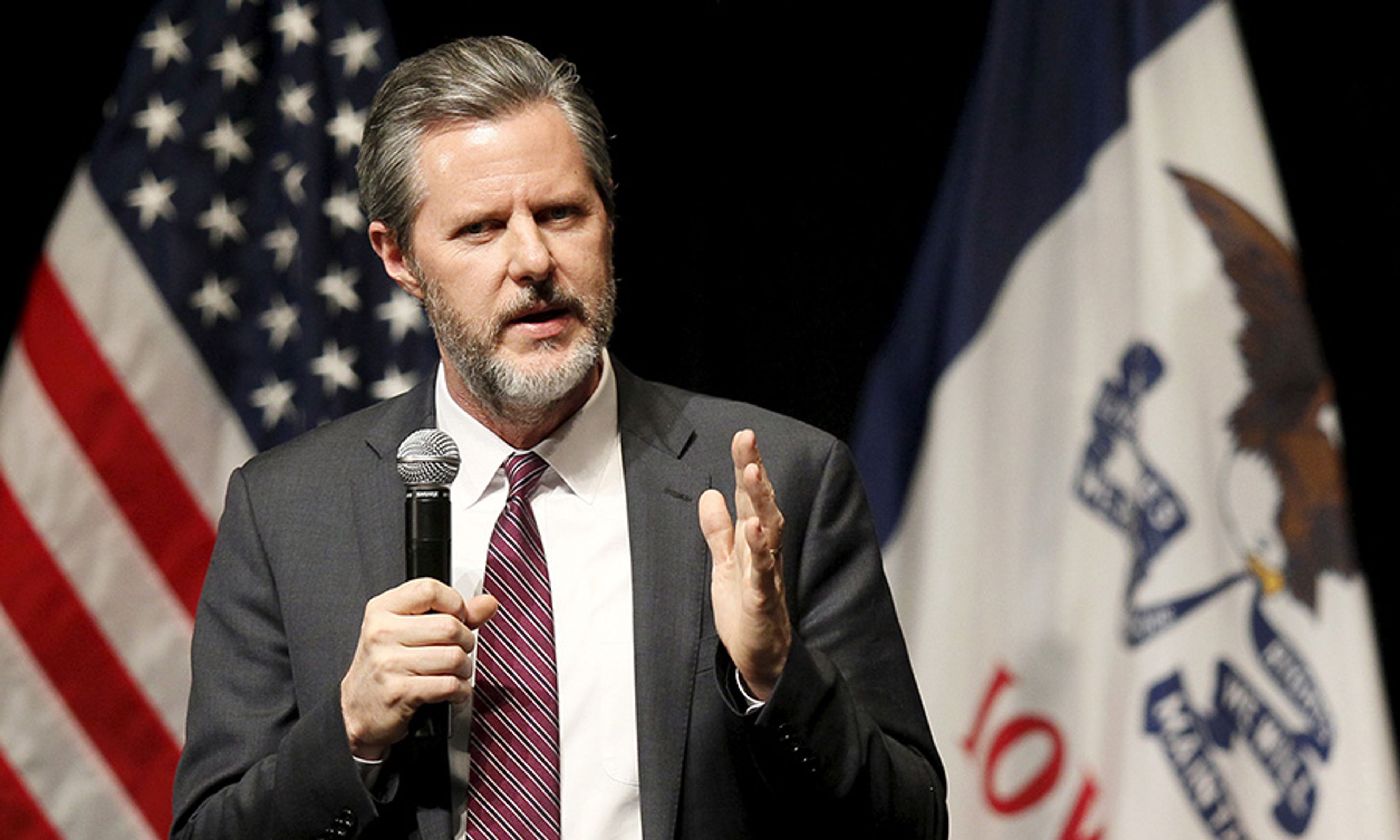
Donald Trump’s “Evangelical executive advisory council” has reached its ignoble nadir. Sex scandals are normally the time when politicians engage the religious community in a show of repentance, but it seems Trump hasn’t bothered to consult his own faith advisers in the current imbroglio.
Pastor James MacDonald, who serves on the council, lamented in an e-mail he shared with Christianity Today that Trump has largely ignored the advisory body. In the wake of the Access Hollywood video, MacDonald wrote to other members of the council, “If Mr. Trump isn’t seeking our counsel now — 1) to be repentant 2) on how to portray that repentance, then the idea of a faith council (which has deteriorated into influence brokering anyway) is really kind of a joke right?” He has since fleshed out his criticism, saying that he did not want to condemn Trump, but rather intended to point out his lack of genuine repentance.
Organized to help Trump engage with religious leaders, the council did not require that members endorse the candidate, but his staunchest Evangelical supporters were among its most prominent members. They have dug in their heels in their reactions to the Access Hollywood video.
Jerry Falwell Jr., Ralph Reed, James Dobson, and others on the council made statements reaffirming their support for Trump after the video surfaced, and indications are that Trump is not taking this campaign crisis as an opportunity for constructive criticism from his religious advisers.
Samuel Rodriguez of the National Hispanic Christian Leadership Conference, who is not a member himself but has colleagues and friends on Trump’s advisory council, told National Review that Trump has relied on fears about abortion and religious liberty to keep Evangelical leaders on his side. “I’ve had conversations with these people — and I can tell you there is nothing else. I kid you not. It’s angst that a Hillary Clinton presidency will do egregious harm for the advancement of the gospel of Jesus in this country — that she is so against Judeo-Christian values on life and religious liberty.”
The support for Trump in the wider Evangelical community has started to show some cracks, however. Evangelical theologian Wayne Grudem, who made waves by writing a lengthy endorsement of Trump in July, rescinded his endorsement following the Access Hollywood video. Others — such as Southern Baptist leaders Al Mohler and Russell Moore — have been against Trump from the beginning. As David French noted recently in NRO, Barna research has found that more than four out of ten Evangelicals do not plan to vote for either major-party candidate.
The fact that Trump is managing to drive many of them away even with Hillary Clinton as his opponent demonstrates how diametrically opposed his personal values are to theirs — and it also shows that he doesn’t much care what they think. “He has some very powerful individuals on that adviser team — some of the most influential Christian leaders in America on that team,” Rodriguez says. “He has yet to engage them.” Evangelicals shouldn’t hold their breath.
Are these leaders embarrassed by their candidate’s apparent lack of concern about faith or morals? I was unable to reach any of the major Evangelical members for comment about the council’s role in advising Trump. Dobson’s official statement on the issue reads, in part: “First, I do not condone nor defend Donald Trump’s terrible comments made 11 years ago. They are indefensible and awful. . . . I am, however, more concerned about America’s future than Donald Trump’s past. I wonder about how Bill Clinton’s language stands up in private?”
These Evangelical leaders may wake from the nightmare of a candidate that does not listen to them to find a country that doesn’t, either. Rodriguez, for his part, does not predict that Evangelicals as a group will go to the left or be permanently damaged by Trump, but he does think there will be a “changing of the guard” that will bring to the forefront “younger people, ethnic people, people not married to the Republican party at all, but rather to life, religious liberty, racial unity, limited government.”
#related#But if Evangelicals as a group cannot wield serious influence with a candidate that includes them on his advisory council, there is good reason to think that their influence in politics will continue to wane. Meanwhile, the visible support given to Trump by leaders like Falwell has exposed the institutional weaknesses in Evangelicalism. Falwell is facing a strong rebuke from the students of Liberty University — the largest Christian college in the world, where he’s president — and Dobson is associating the name of the organization he leads, Focus on the Family, with a man who boasts about conducting affairs and grabbing women’s genitals without warning.
In response to Trump’s actions, many Evangelical leaders have abandoned their duty to stand up for women, for Christian morality, and for their own public witness. All the while, Trump’s campaign has confirmed his lack of character by counterattacking rather than showing repentance and remorse. Perhaps they deserve each other.




Comments