‘Do not let trials and pains overwhelm you.”
Pope Francis said this during Mass in Mexico City on the night of February 13 this year at the Shrine of Our Lady of Guadalupe. Moments after Mass ended, news broke that Justice Antonin Scalia had died. I was stunned by the news, as all the country was. I had seen him almost exactly a month before, as he was taking on Thomas Aquinas on law in front of a room of Thomists.
My friend Bill McGurn at the Wall Street Journal called this the Justice Scalia election. It was that, in more ways than one. I read his column as I listened to church ladies in Florida tell me they had to vote for Donald Trump, despite their misgivings, because “Supreme Court, Supreme Court, Supreme Court.” The Supreme Court was the place that seemed to make bad law, affirm unconstitutional law, and keep good law from staying put if interest groups were persistent and strategic enough. And that wasn’t quite the way the Constitution sounded in school or on Schoolhouse Rock. With the death of Justice Scalia, the Supreme Court also became the place that couldn’t even restore the religious liberty of the Little Sisters of the Poor, the religious women who love the suffering poor in their final days, making them feel as if they are not forgotten but precious royalty.
When Pope Francis was in Mexico that night, he preached on the Gospel of the day, the Visitation. A pregnant Mary went out to meet her cousin Elizabeth, and “she set out without delay, without doubts, without lessening her pace, to be with her relative who was in the last months of her pregnancy.” Mary’s world was somewhat upended when presented with the news that she had been called to be the mother of God. It was the end of the world as she knew it, you could say. But she had a peace, a confidence, and a love that could not be shaken. And when you fast-forward, you know, too, she would not be shaken at the foot of the cross of her son. She went on, she moved forward, she knew who she was in the eyes of her Creator.
Looking around at the reactions to the results of the election, I find it hard to shake the idea that there was a message in the convergence of events on February 13.
“Hope” was mentioned six times in the pope’s homily during Mass. What did the election of Donald Trump — and the defeat of Hillary Clinton — mean for hope and change, the mantra that Barack Obama rode all the way to the White House?
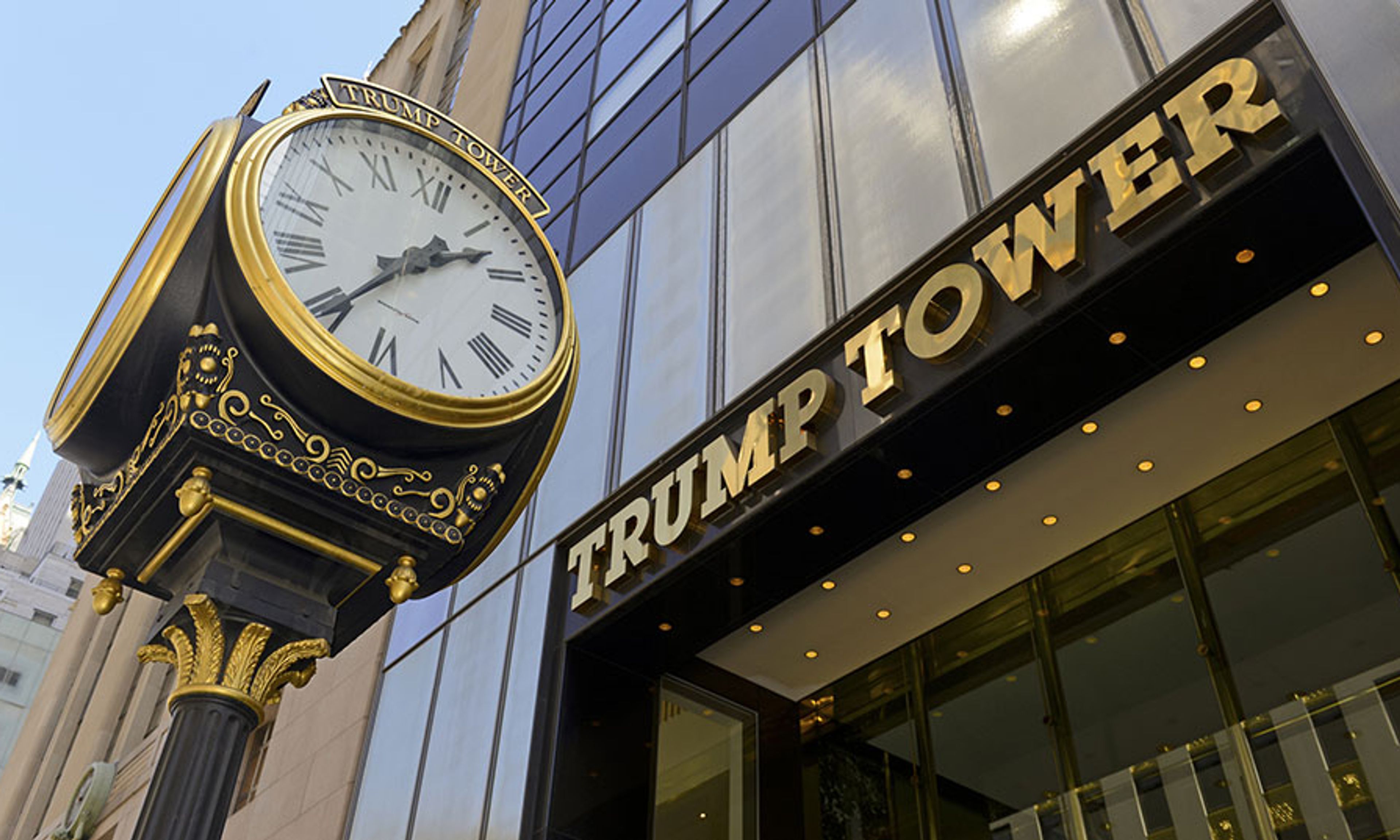
I was thinking about this on the way to Friday Mass at St. Patrick’s Cathedral, passing the security all around Trump Tower on Fifth Avenue, noticing that most of the people who put him over the top in those difference-making states probably couldn’t afford to shop many places on the walk between Trump Tower and the cathedral (Harry Winston, Gucci, and friends dominate the storefronts). But one does look up a lot on Fifth Avenue. It’s not quite “Morning in America” or a “Shining City on a Hill,” but does Trump Tower represent something about dreaming again?
The people who put their misgivings about Donald Trump aside voted for him because they’ve had it with politics; they’ve had it with business as usual; they want to have time to look up again.
The people who put their misgivings about Donald Trump aside voted for him because they’ve had it with politics; they’ve had it with business as usual; they want to have time to look up again. For most of the people I know and have talked with over the past year who supported Trump, “Make America Great Again” is about a culture of dreams — they hope to see their dreams come true rather than see them strangled by ideology. They reject hope as a political manipulation. Donald Trump is a big-league gamble, but he’s not more of the same tightening its stranglehold.
In Guadalupe, Pope Francis said, “There are so many situations that leave us powerless, that make us feel there is no room for hope, for change, for transformation.” He encouraged the faithful listening: “We can build shrines by sharing the joy of knowing that we are not alone.”
Is there any doubt, listening to some of the cry-ins on university campuses and grief and grievances on the streets, that the Beatitudes are needed? Could this havoc of an election make for a more ordered view of politics — maybe we don’t need to look for politics to give us hope? And maybe we can also refrain from labeling as “bigots” people whose identity is to live by those Beatitudes — who help make hope real and change less overwhelming?





Comments