Presidential elections are not national elections; they’re a race to 270 electoral votes that turns on maybe a dozen key swing states. And those states are won and lost in a handful of suburban bellwether counties between heavily Democratic cities and heavily Republican rural areas.
Performance in a primary doesn’t necessarily correlate to performance in a general election. In 2012, Mitt Romney won only three of South Carolina’s 46 counties in the GOP primary; in the general election he won 25, taking the state by ten percentage points. But it’s worth noting that Donald Trump has not done particularly well in the counties on which a general election turns.
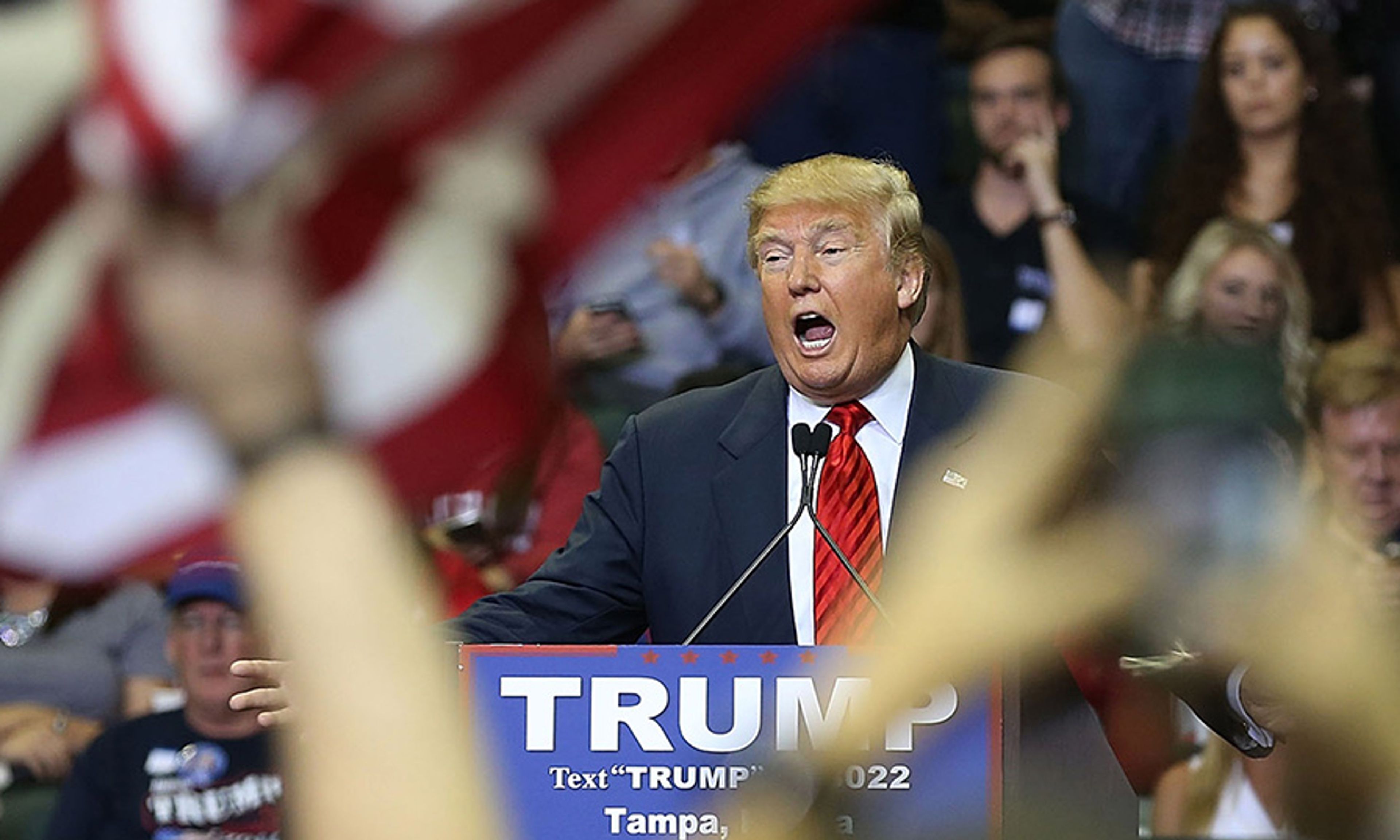
Let’s begin with the good news for Trump. In Florida, where he beat home-state senator Marco Rubio handily, he carried Hillsborough County, which consists of Tampa and its surrounding suburbs, with 40.8 percent of the vote. The presidential candidate that carries Hillsborough has won Florida in every general election since 1960. The six counties of the I-4 corridor, a stretch between Tampa and Daytona Beach that includes Orlando, have voted for the statewide winner since at least 1992, and the national winner since 1996. Trump enjoyed roughly the same level of support in these key counties: He won 45.7 percent statewide, 44.9 percent in Polk, 46.9 percent in Osceola, 39.8 percent in Orange, 41.6 percent in Seminole, and 53.3 percent in Volusia.
RELATED: Why There Will Be No Trump Landslide in November
Outside of Florida, Trump’s performance hasn’t been nearly as encouraging. Trump won 35 percent of the vote in Ohio. In Franklin County, which includes Columbus and its suburbs, Kasich crushed the front-runner, 63 percent to 22 percent. In Hamilton County, which includes Cincinnati and its suburbs, Kasich won 47.9 percent of the vote to 29.1 percent for Trump. In Wood County, which includes the suburbs of Toledo and has voted for the eventual winner in every presidential election since 1980, Kasich won 48.5 percent to 30.5 percent for Trump.
Trump narrowly won North Carolina over Ted Cruz with 40 percent of the vote. But he got crushed in Wake County, home to the highly educated, population-dense “Research Triangle” of North Carolina universities, losing to Cruz by eleven points and failing to crack 30 percent of the vote.
#share#Trump narrowly won the Virginia Republican primary, but he ran terribly in the suburbs of Washington, D.C., which in recent cycles have held the key to statewide victory. In Prince William County, he ran about even with Rubio, losing by less than one point. But Rubio dominated Prince William’s northern neighbor, Loudon County, taking 40.9 percent of the vote to Trump’s 27.9 percent. Loudon, the third-most populous county in the state, was narrowly carried by President Obama in 2008 and 2012, but it broke big for then-gubernatorial candidate Bob McDonnell won in 2009. Then there’s Fairfax County, the gargantuan D.C. suburb home to one in seven Virginia voters, which also backed Obama and McDonnell. A Republican needs to at least minimize his losses in Fairfax to have a chance of carrying Virginia, and Trump got throttled there — 40 percent to 25 percent, a margin of about 20,000 votes.
RELATED: Trumpism: ‘It’s the Culture, Stupid’
Cedar County, Iowa, is one of those odd bellwethers; it’s not terribly populated, yet it always seems to reflect the statewide vote within one percentage point. In 2000, Gore and Bush each got exactly 4,025 votes in Cedar. In 2012, Obama won it 51 to 47 percent, roughly matching the state and national vote. In this year’s caucus, Trump lost it narrowly to Cruz, barely cracking 25 percent of the vote. Polk County, which includes Des Moines and its suburbs, was traditionally Democratic but is getting more competitive; Governor Terry Branstad won it in 2010 and 2014, and Joni Ernst only narrowly lost it en route to the Senate last cycle. Rubio carried Polk, winning 26.9 percent of the vote to Ted Cruz’s 25.3 percent and Trump’s 21.8 percent.
#related#After the bitter disappointment of the 2012 elections, Republicans examined Mitt Romney’s vote totals and found an inexcusable under-performance among key groups of voters. They declared that the next GOP nominee had to reduce the gender gap, win more votes in cities, win the suburbs, win a larger share of Hispanics, at least compete for a larger share of African Americans, make inroads among Millennials, and build a larger margin among college-educated voters.
It’s no accident that the country’s most important swing counties are brimming with the demographics Republicans need to broaden their base. But for a candidate who touts his ability to attract new voters to the GOP at every turn, Trump hasn’t yet proven that he has strong appeal with the new voters the party needs most. And for anyone still on the fence about his candidacy, that should give pause.
— Jim Geraghty is the senior political correspondent for National Review.






Comments