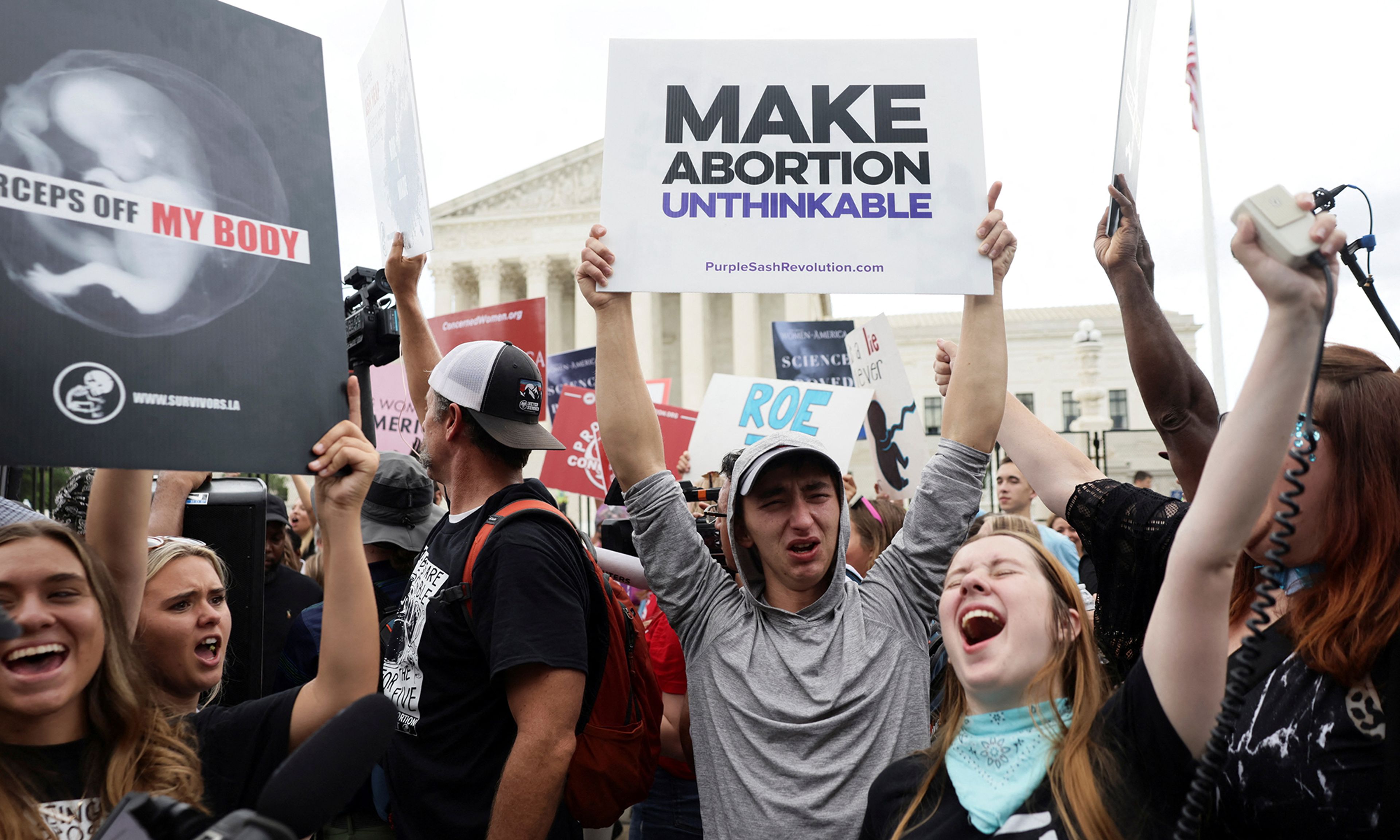
When the Supreme Court swept away the restrictive laws on abortion in the states in 1973, it made abortion the ongoing business of the federal courts, and a poison in our national politics. The Court also assumed for itself a monopoly of the authority to shape the laws on abortion, state and federal. With the decision in the recent Dobbs case, the Court has returned this matter to the political arena in the states. And yet it’s a trick of the eye to see no role for the federal government any longer on this issue.
Even before Roe v. Wade, as Professor Gerard Bradley of Notre Dame has pointed out, abortion was very much the business of the federal government when it came to abortion in military hospitals, diplomatic outposts abroad, and the governance of the District of Columbia and the territories. These levers of authority remain in place, and the decision in Dobbs does not entail a decision to bar abortion in any of these places within the reach or influence of federal authority. From reports I’ve read, I gather that virtually every hospital in this country receives some key funding from the federal government. The pro-lifers, when in control of Congress, never made the move to bar abortions from all hospitals and clinics receiving federal aid. The famous Hyde Amendment, introduced in 1976, barred public funding of abortions (except in the cases of rape and incest, and when the life of the mother was in danger). But that measure was focused on facilities and programs run by the federal government: Medicaid, the Indian Health Service, the Children’s Health Insurance program, and, over time, federal prisons, the Peace Corps, and the Federal Employee Health Benefits Program. Henry Hyde, a Republican from Peoria, introduced his amendment as a rider to an appropriation bill, when Congress was under Democratic control. That is when there were still pro-life Democrats in Congress, and the Hyde Amendment could pass in the House, 312-93. But Joe Biden campaigned in 2020 to repeal that amendment — an amendment he had voted upon with bravado in the past. It is an illusion to think that the Democrats, in their current state, would hesitate for a moment in sweeping away that amendment — and all other regulations withholding support for abortions — if the Democrats came into a firmer control of Congress, along with the White House. For this is a party that has recently voted twice, with high cohesion, to oppose a bill that would protect the infants who survive abortions.





Comments