Welcome to the Capital Note, a newsletter about business, finance and economics. On the menu today: Dow moves up, Yellen to move in, GMO and vaccines, urban tax crunches, a secret Chinese plan, and flat tax successes.
The Dow, Yellen, and some reasons to worry
Some of us are old enough to remember the (in)famous Dow 10,000 hats from the height of the dotcom/CNBC (there was a difference?) bubble. I think one of our traders may have had one.
Wandering down the memory lane curated by Google all the way back until 1999, I came across this from The Wall Street Journal:
A few Wall Street traders, hat in hand, are looking to make a buck from a new bull-market commodity — and the New York Stock Exchange isn’t happy about it.
Their wares: the baseball caps tossed into the cheering throng of traders last week by Big Board officials to commemorate the Dow Jones Industrial Average’s first-ever close above 10000.
At the closing bell on March 29, there was a rush to grab the hats. Now, a few savvy traders are testing the market for the hats emblazoned with “Dow 10,000” by hawking them on the Internet.
There were many signs (and not just in retrospect) that the run-up in Internet stocks was going to go horribly wrong. This was probably one of them.
Probably?
Fast forward to January 2017, and a somewhat chastened CNBC is reporting on Dow 20,000.
One of the people interviewed had this to say:
“When the Dow hit 10K in March 1999 I had sold my first company six months earlier and was riding high. I had no idea there could ever be a crash. I was stupid and young and inexperienced. Volatility happens no matter how high or low the Dow is. . . . When it happened, I bought a big apartment, I invested a ton of money in stupid businesses. I was like a drunken rock star on steroids. Two years later I was dead broke.
He continued:
“I don’t think Dow 20K means anything. People need to ask: Will the innovation that is happening now change the future? If yes, find the most innovative companies out there, invest, and close your eyes for the roller coaster. The future is not served on a dish. It’s a tough ride to get there and requires leaders and technology and people with vision and passion. But it will get there, like it always does and we’ll all eventually look back on Dow 20K and see it as just another blip on the ride.”
Just over two years later, the Dow troughed at 6,547.05.
And so now, here we are at Dow 30,000.
A rotation into industries that are set to benefit most from an economic recovery propelled indices higher worldwide, with the energy and financials sectors leading gains. The move marked an acceleration of a trend that began in the wake of Joe Biden’s election win earlier this month and has been accelerated by a series of positive results from trials of Covid-19 vaccines.
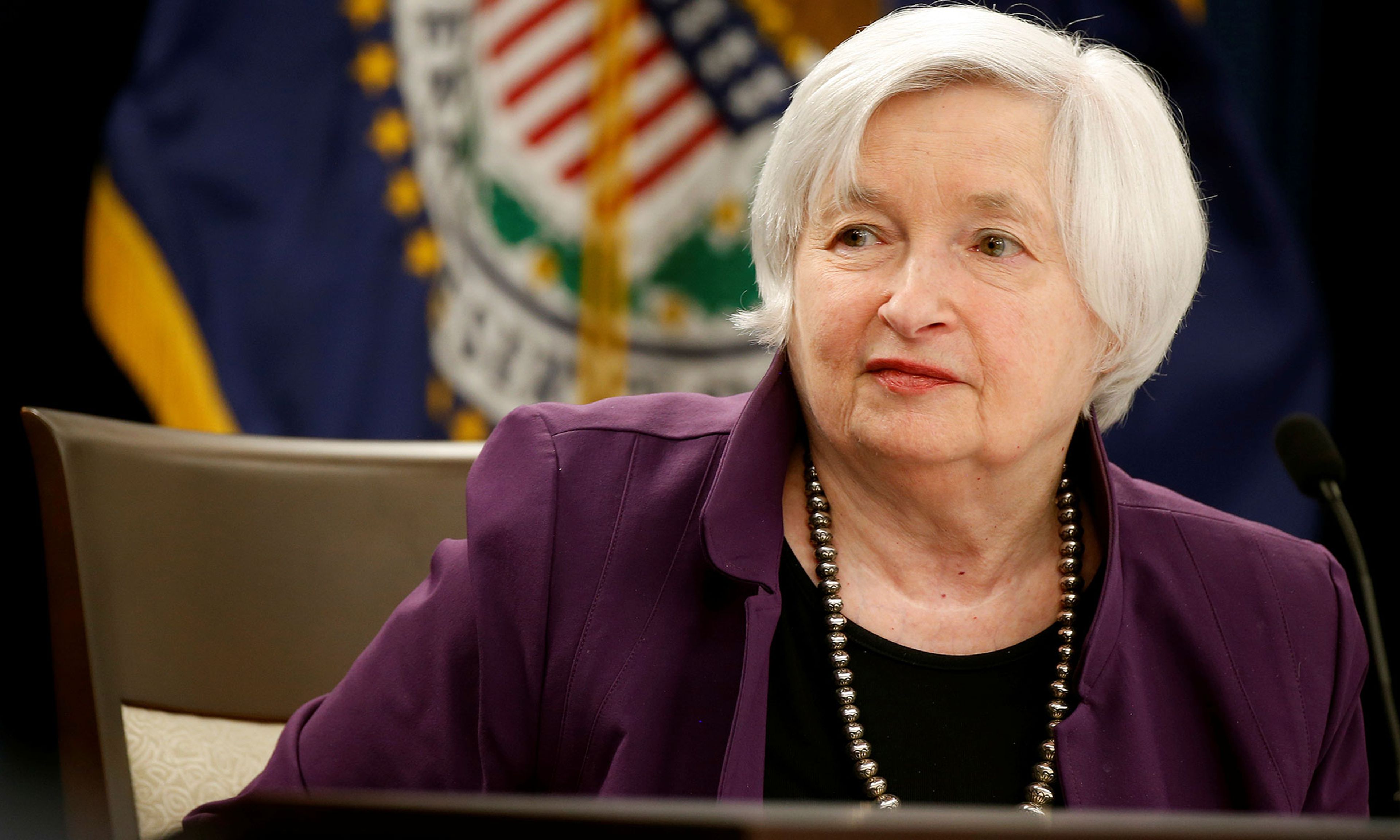
Donald Trump’s decision to allow the presidential transition to begin after weeks of delay boosted sentiment across trading desks. Indications that Mr Biden will seek to appoint Janet Yellen, the former Federal Reserve chief who is widely respected for her experience in labour economics, as his Treasury secretary added to the upbeat mood.
These factors have all played their part, but the Wall Street Journal took an implicitly darker view, including this observation (my emphasis added):
The market appears locked into a self-perpetuating upward cycle, defying the pandemic and accompanying economic woes. Some pessimists say today’s gains will inevitably lower returns tomorrow. But low interest rates mean investors big and small can’t expect to make much money in less-risky investments like bonds. So they are betting that the market’s momentum will continue, whether passively through index funds or actively with a buy-on-dips mantra.
The mispricing of risk that flows from artificially low interest rates is, in effect, leaving investors with very few places to go for return. As any material yield has (all but) evaporated other than for the riskiest debt securities, all that’s left (to grossly oversimplify) for those chasing return in the markets are dividends, themselves “devalued” by rising share prices and, of course, the hope of capital gains from successful stock trading. Meanwhile, Joe Biden’s capital gains tax plans are still lurking, waiting to see how Georgia goes.
Most on the right are, by instinct, pessimists. I am no exception, and it is hard to imagine that the current round of malinvestment — because artificially suppressed interest rates can only end in malinvestment — is going to end well. My foreboding is not diminished by reading in that Journal report about an investor (who has — good for him — done well in the market). He has substantially increased his trading and has “began watching CNBC in the mornings while pedaling” his Peloton, language that (minus the Peloton) has more than a hint of 1999 about it.
In 2007, Chuck Prince, then the CEO of Citigroup (in)famously commented that “as long as the music is playing, you’ve got to get up and dance.”
We all know what happened next. That said, it is reasonable to expect that Janet Yellen will neither close down the band any time soon, nor, to use an older analogy, will she take away the punchbowl. The market’s reaction to the prospect of her appointment makes sense for now.
Yellen also has, to many investors, something else going for her: She is not Elizabeth Warren. Even though the chances of a Warren appointment were extremely remote — a Republican governor would have chosen her successor as senator — confirmation that she was not going to get the job must have come as something of a relief to the markets.
But Yellen’s appeal amounts to more than not being someone worse.
The genius of choosing Ms Yellen lies in the fact that people of all political persuasions can find some reason to cheer her appointment. That means she will almost certainly be confirmed by the Senate. Take monetary policy. Hawks point out that on Ms Yellen’s watch the Fed raised rates from near zero to 1.25-1.5%. Doves counter that hawks were over-represented in the rate-setting panel at the time, and that Ms Yellen did a good job of keeping them in check.
It is a similar story on fiscal policy. Shortly before Mr Trump became president, Ms Yellen argued that “fiscal policy is not obviously needed to provide stimulus to help us get up to full employment”. She is on the board of the Committee for a Responsible Federal Budget, an organisation that spends a lot of time warning people about the dangers of high public debt. Yet during the pandemic Ms Yellen has argued for “extraordinary fiscal support”. In June she co-signed a letter arguing that “Congress must pass another economic recovery package.”
Passing another stimulus bill may be her first big task. Republicans and Democrats have been unable to agree on a replacement to the bill passed in April, with particular disagreement on the size of the eventual package, even as it is now clear that the economic recovery is slowing. It is a lot to expect that the sheer force of one person could help break the deadlock, not least because Republicans are likely to retain control of the Senate for a while yet. But if anyone can do it, it may be Ms Yellen.
That overstates her powers of persuasion, but even if GOP senators continue their current “journey” toward greater fiscal rectitude she may be able to persuade them to agree to a deal that is larger than it would otherwise have been.
Axios furnished some useful additional detail about Yellen here. This included drawing the attention of their readers to her testimony before Congress in July.
Some extracts that caught my eye below.
The first related to the financial position of the states, something that will be an enormous issue in 2021:
Congress should provide substantial support to state and local governments. The enormous loss of revenue from the recession together with the new responsibilities imposed by the response to the pandemic has put their budgets deeply in the red. To avoid the recessionary effects of major fiscal cuts by those governments, federal support should be substantial and conditions on the aid should not be overly restrictive. Following our advice would further increase the already record level federal budget deficit. With interest rates extremely low and likely to remain so for some time, we do not believe that concerns about the deficit and debt should prevent the Congress from responding robustly to this emergency.
The second speaks for itself:
One day in the future, we will have to get deficits, after this is over and the economy is recovered, we’ll have to deal with deficits and get them under control, but now is the time when I think it’s not necessary to worry about it.
Then there was this Reuters interview from October in which two of her musings stood out, and not in a good way:
There really is a new kind of recognition that you’ve got a society where capitalism is beginning to run amok and needs to be readjusted in order to make sure that what we’re doing is sustainable and the benefits of growth are widely shared in ways they haven’t been.
If there really has been “a new kind of recognition” that capitalism is “beginning to run amok,” more people need to be taking their meds. This is as bizarre a point of view as that held by individuals forever grumbling about “market fundamentalism” and (in the European context) “ultra-liberalism,” two phenomena noticeable only by their absence. That Yellen seems sympathetic to such talk is . . . not reassuring.
In a Capital Note last week, I noted how the Fed seemed to be gearing up for a significant entry into the climate war, an example not only of mission creep, but of the way that climate warriors prefer to bypass the democratic process and rule by regulation instead.
Judging by what she was saying in October, Yellen will be going down the same twisted path:
“What I see is a growing recognition on both sides of the aisle that climate change is a very serious concern and that action needs to occur,” she said.
Yellen was speaking ahead of the launch on Thursday of a report from a working group she co-chaired with former Bank of England Governor Mark Carney setting out steps governments, regulators, businesses and investors can take to accelerate a shift to a low-carbon future.
Among the recommendations, compiled by the G30 network of former central bankers, academics, policy-makers and financiers, was a gradually increasing price on carbon to help transition economies to net zero emissions.
I wrote about Carney back in June:
A sometimes overlooked aspect of the extent to which some leading central banks are going astray has been their foray into climate politics.
A particularly notorious offender was Mark Carney, the former governor of the Bank of England.
Via Reuters, here he is in 2019:
“Financial services have been too slow to cut investment in fossil fuels, a delay that could lead to a sharp increase in global temperatures, Bank of England Governor Mark Carney said in an interview broadcast on Monday….
Earlier this month, the BoE said Britain’s top banks and insurers should be tested together for the first time in 2021 to quantify the potential financial damage from climate change on their businesses.”
I wonder what would happen to any bank or insurer that gave the ‘wrong’ sort of answer.
This, of course, is legislation by regulation, a reminder that much of the more hysterical climate-change agenda is being pursued through methods under which the voters do not have a say.
Carney has since moved on:
“Having just stepped down after seven years as Governor of the Bank of England and, having previously served as head of Canada’s central bank, Mark Carney has now taken on two new, profoundly important roles: the UN Secretary-General’s Special Envoy for Climate Action and Finance, and for this year, the UK Prime Minister’s Advisor on Finance for COP26, the next UN climate conference postponed until 2021…
These new roles will also give Mark Carney the opportunity to build on and merge the great work he has been doing on climate change in the finance community with the many commitments and initiatives that were announced last September during the Secretary-General’s Climate Action Summit and carry them forward to the climate COP in Glasgow later this year. Those efforts include ambitious commitments by a number of investors to ‘align’ their portfolios with net zero emissions trajectories through initiatives like the Net Zero Asset Owner Alliance. Its current membership already represents more than $4 trillion in assets.”
Carney has now added yet more to his resume.
Mark Carney, United Nations special envoy for climate action and finance, has joined Brookfield Asset Management as vice chair and head of ESG (environmental, social, governance) and impact fund investing.
Supply and Demand
We have today launched Supply & Demand on Capital Matters. This column, which will appear regularly, will be written alternately by Casey Mulligan and John Cochrane.
Casey ought to be familiar to regular readers, and to many others besides. He is a professor of economics at the University of Chicago, and served as the chief economist of the White House Council of Economic Advisers in 2018–19. He is also the author of the recently released You’re Hired! Untold Successes and Failures of a Populist President, which details conflicts between President Trump and special interests.
John Cochrane is an economist, specializing in financial economics and macroeconomics. He is the Rose-Marie and Jack Anderson Senior Fellow at the Hoover Institution. Previously he was a professor at the University of Chicago Booth School of Business and Department of Economics. He is also author of the blog, The Grumpy Economist. Loyal readers of the Capital Note may remember that I recently quoted extensively from his (must read) recent paper on mission creep by central banks:
Working for a central bank is a bit boring. One may feel a longing to do something that feels more important, that helps the world in its big causes. One may feel longing for the approval of the Davos smart set. Why does Greta Thunberg get all the attention? But a central bank is not the Gates Foundation, which can spend its money any way it likes. This is taxpayers’ money, and regulations use force to transfer wealth between very unwilling people. A central bank is a government agency, and central bankers are public servants, just like the people who run the DMV.
Central banks must be competent, trusted, narrow, independent, and boring. A good strategy review will refocus central banks on their core narrow mission and let the other institutions of society address big political causes. Boring as that may be.
Around the Web
The American Council on Science and Health asks whether “COVID [will] end the anti-GMO movement?
We were pro-GMO before the term “GMO” [genetically modified organisms] was even invented. That’s because the acronym “GMO” is not used by scientists, but is instead a colloquialism employed by the media, activists, and the general public.
What are popularly referred to as GMOs are properly called transgenic organisms. The term “transgenic” derives from transgene, which is a gene taken from one species and artificially placed into another. For example, a gene that causes a certain species of jellyfish to glow green can be extracted and placed into the genome of another animal, like a fish, which then also glows green. (Then, entrepreneurs sell these glowing fish to your kids!)
There’s nothing inherently right or wrong with transgenics. Like all technologies, it depends on what the inventor plans to do. So far, all such endeavors have been noble, none more so than “Golden Rice,” a transgenic variety that produces a precursor of vitamin A that could help prevent blindness and death due to vitamin A deficiency in poor countries . . .
The ACSH notes that the anti-GMO movement has been growing stronger over the years, but wonders whether that will change:
[Pfizer and Moderna] are using RNA (which has been genetically edited or modified in some way) as the key ingredient in their coronavirus vaccines. The recent news that their vaccines are 90% and 95% effective, respectively, means that biotechnology is a savior of humanity rather than a horseman of the Apocalypse. This is obviously bad news for people who make a living by telling people that science is scary.
Americans love to hate Big Business, particularly Big Pharma and Big Ag. But when we need them to rescue us, we run to them for help. They usually deliver. Let’s hope the new vaccines are so successful that they are able to end not only the coronavirus but anti-GMO ideology, as well — in other words, wiping out two viruses at once.
The short answer is that anti-GMO ideology will survive. It rests on fear, irrationality, and rather primitive views of what is and is not “natural.” Confronted with facts, irrational and primitive ideas usually prevail. It won’t be different this time.
Via the Manhattan Institute, Michael Hendrix and Don Boyd look at tax erosion in American cities.
One bleak extract gives some flavor:
Recent tax changes also might make New York’s fleeing high earners less enthusiastic about returning. The federal income-tax cap on the state and local tax deduction (known as the SALT cap), instituted in 2018, increased the effective state and local rates paid by many taxpayers throughout the country and, in effect, magnifies the higher marginal tax rates of the city relative to other competing jurisdictions. For a top-bracket New York City taxpayer, the combined federal, state, and local income tax actually increased by about 1.25 percentage points, despite the cut in federal rates.[2] Furthermore, a lower-tax state such as Florida suddenly became 3%–5% less expensive in taxation for wealthier residents than New York City. How these higher costs in taxes outweigh the other benefits that residents receive from living in New York remains to be seen, and taxpayers may have expected federal tax law to change or have been skittish to leave based on taxes alone, thus delaying potential relocations.
New York City is heavily dependent on its high earners for revenue. In 2018, the 17.3% of filers reporting $100,000 or more in adjusted gross income accounted for 80.2% of New York City’s income-tax revenue, which, in turn, accounts for 22.6% of the city’s total tax revenue.[3] Such taxes apply only to Gotham’s residents, thus providing an incentive to establish residency elsewhere, even to just outside the city’s boundaries. The city’s unincorporated business tax is easier to escape. It taxes firms operating in multiple jurisdictions based on where services are performed, so individuals working from a second home outside the city could allocate their income there, beyond the reach of the city’s tax. And, of course, anyone not living in or visiting New York City is unlikely to be paying the city’s sales taxes.
Much has been made recently of the way that China is embarking on the long march to net zero carbon emissions. With Joe Biden set to take the U.S. back into the Paris climate agreement, we can be sure that those who say that any U.S. efforts to decarbonize will be an irrelevance when set against the growth of China’s CO2-spewing economy are going to be confronted with arguments to the effect that China really, really wants to change its ways.
Right on cue (from, naturally, Bloomberg Green):
The secret drive for China’s 2060 target took shape inside Tsinghua University, where climate scientists had quietly spent more than a year modeling different pathways to reach net zero. Xie Zhenhua, a former environmental bureaucrat and veteran diplomat, oversaw the work from his threadbare office as head of the college’s Institute of Climate Change and Sustainable Development. Few within China’s strict hierarchy can match Xie’s mastery of government bureaucracy and climate science, making him an influential voice on the issue among the ruling elite.
Xie is modest about his role. “We made policy proposals to relevant leaders and departments,” he says in an interview on Tsinghua’s campus in late October, dressed like a typical Communist Party cadre in a dark suit and pressed white shirt. “It seems our proposals had some impact . . .”
A secret plan. Of course. I, for one, believe this.
Random Walk
Flat Taxes.
From Harvard’s Brian Wheaton: The Macroeconomic Effects of Flat-Taxation: Evidence from a Panel of Transition Economies
Spoiler: They’re good.
Wheaton’s conclusion:
Between 1994 and 2011, the spectre of flat-taxation haunted Eastern Europe and Central Asia — and, despite flat-tax repeals in several countries, flat income taxation remains in effect in most of the countries that introduced it during that era. The results of the analysis here demonstrate that flat income taxation had significant, robust, and economically large effects on GDP growth — an annualized 1.3 percentage-point effect in the main specification, which controls for lags of GDP growth, population growth, country fixed-effects, and year fixed effects. Although the effect varies somewhat depending on the precise specification used, it is always strongly significant, and it is found to endure for approximately one decade. Robustness checks aimed at controlling for the possibility that parties which introduce flat taxes are conceivably more likely to foster a pro-growth environment in other ways, controlling for electoral endogeneity with a restriction of the panel to countries where the flat-tax was introduced (repealed) after a close electoral victory, and combating potential econometric bias all retain strong significance of the aforementioned effect. Finally, deeper analysis of the channels through which the growth rate effect could possibly proceed reveals that domestic investment is the key element. A moderate effect on intensive-margin labor supply is also uncovered. However, no evidence is found for increased FDI, systematic budget deficit, or removal of sectoral distortions as a result of the flat-tax reforms.
Decomposing the flat-tax reforms into a reduction in the average marginal tax rate and a reduction in progressivity (the standard deviation of the marginal tax rate), I find that both of these play a statistically-significant role. In other words, in terms of boosting investment and (transitionary) economic growth, tax progressivity matters above and beyond simply the average level of the tax rate, consistent with the implications of my simple model of consumption and saving under varying tax rates and progressivity.
The extent to which these findings have applicability outside of Eastern Europe is certainly open to discussion. On the one hand, all of these countries have very similar shared histories over the course of the past three-quarters of a century – being devastated by World War II, then transformed into a Communist-led planned economy, and finally beginning a turmoil-ridden transition to market economics in the early 1990s. Because developed Western countries did not suffer from massive amounts of capital depreciation in the 1990s, they may not necessarily have quite as much to gain from boosts to capital accumulation. On the other hand, one could argue that the developing world does indeed have much to gain from such a boost. As such, a potential avenue for fruitful future research could be examining the effects of flat income taxation (and other types of flat taxation) in the developing countries of Latin America and Africa where such taxes have recently begun to be adopted).
I will never forget receiving a fax from an Estonian diplomat the day that country’s flat tax was introduced in 1994: “New tax system: No hint of progressivity!”
A flat tax hasn’t been the only element in Estonia’s extraordinary success story since breaking from the USSR — far from it — but still . . .
Turn now to the Tax Foundation’s 2020 ranking of OECD countries’ tax competitiveness. No prizes for guessing which country emerged with the highest ranking:
For the seventh year in a row, Estonia has the best tax code in the OECD. Its top score is driven by four positive features of its tax system. First, it has a 20 percent tax rate on corporate income that is only applied to distributed profits. Second, it has a flat 20 percent tax on individual income that does not apply to personal dividend income. Third, its property tax applies only to the value of land, rather than to the value of real property or capital. Finally, it has a territorial tax system that exempts 100 percent of foreign profits earned by domestic corporations from domestic taxation, with few restrictions.
— A.S.
To sign up for the Capital Note, follow this link.






Comments