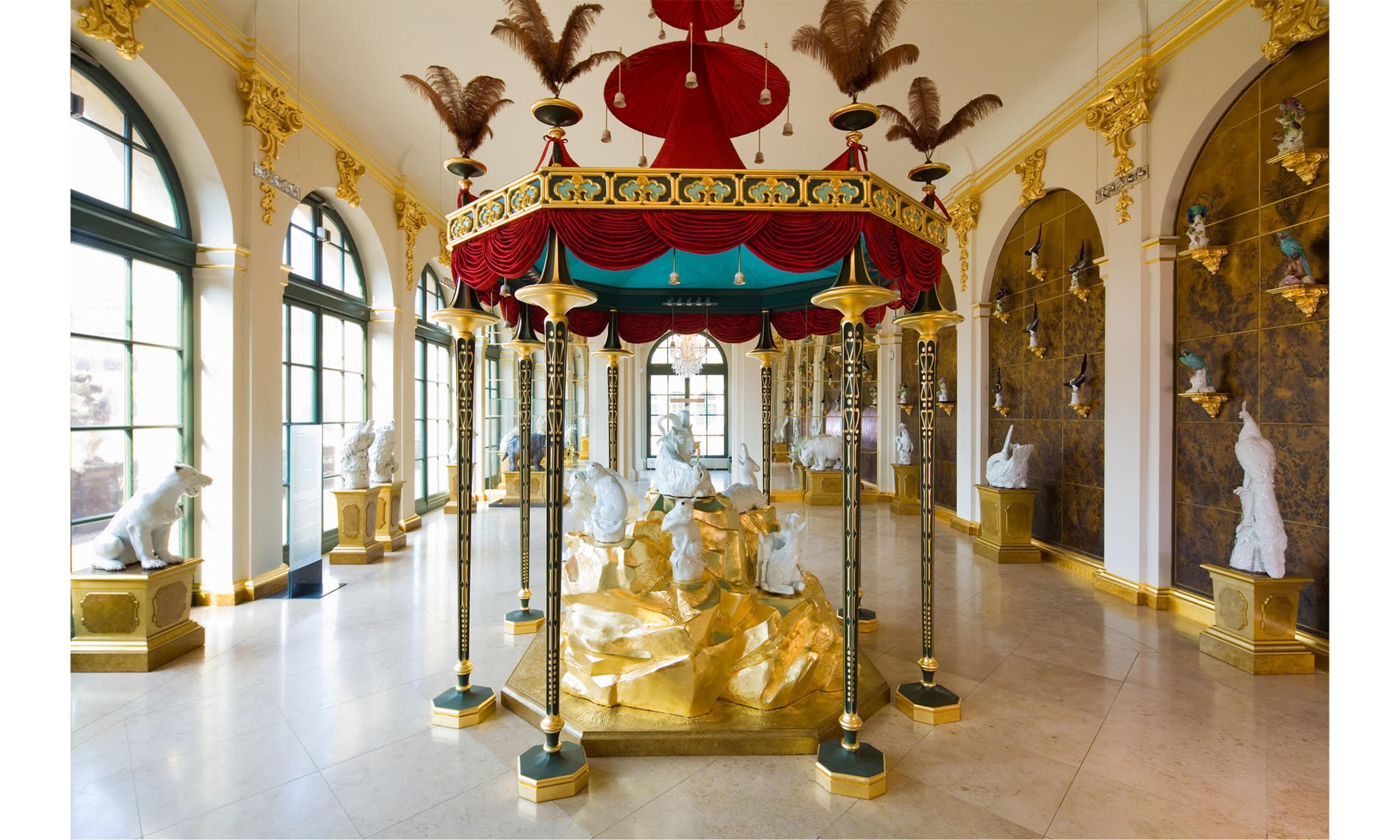
I’ve written about the jaw-dropping Old Master paintings collection at Dresden’s Zwinger Palace and the corporate collection at the Meissen porcelain factory near Dresden. In each story Augustus the Strong is the marquee name. Saxony’s grand duke, the king of Poland, and a Holy Roman Empire elector, Augustus (1670–1733) has to be counted as an art collector of the scope and taste of Charles I, the Hapsburg kings of Spain, and the Renaissance popes. His collection, started by his two or three predecessors and continued by a couple of his successors, is still intact and splendidly and intelligently displayed at the Zwinger Palace and the Dresden Palace nearby. These and the other Baroque buildings in Dresden’s old city were Augustus’s work, too.
I’m writing this third and last story about Dresden partly because of the sheer grandeur of the Saxon ducal collection and partly to atone for taking so long to get to Dresden. It was once one of Europe’s powerhouse capitals, but, aside from military and economic clout, its old city is a perfect Baroque and Rococo gem. Dresden is a place of pathos, too, owing to the February 1945 air raids that flattened it, followed by its 75-year-long restoration.


Comments