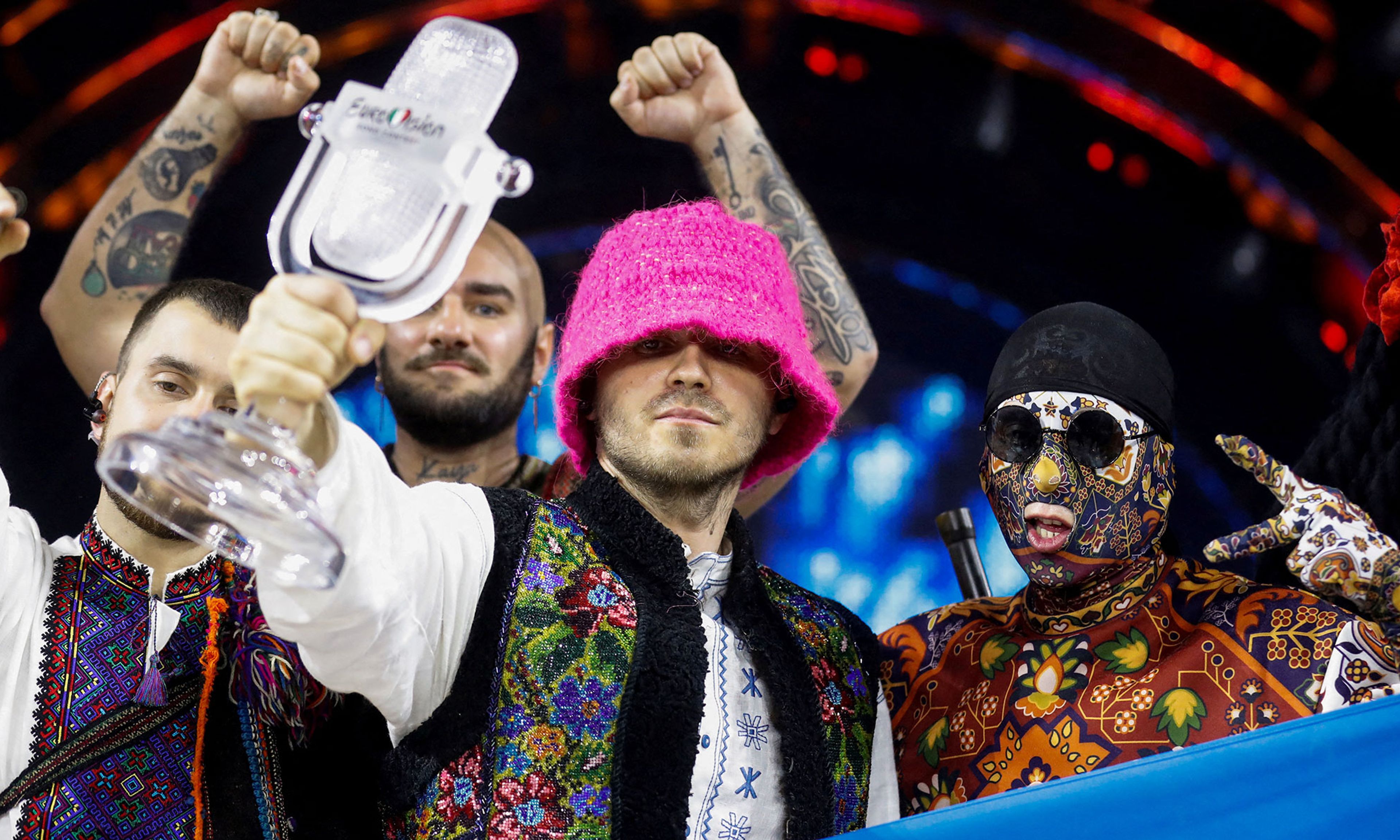
I write from Central Park on a Saturday afternoon, listening to bongos being played near Fifth Avenue and 79th Street. It draws a sizable crowd. My phone then buzzes with a notification from the BBC, informing me that a different “party” is kicking off. Which party? Eurovision.
Across the pond, the grand finale of the Eurovision Song Contest is under way. The event was created in 1956 by the European Broadcasting Union, one of the institutions now part of the EU community. Then as now, the Europeans wanted an “ever-closer union” between their countries — beyond a mere common market or common currency — that binds their social fabrics into a new imagined community. The contest’s creators saw it as a way to advance that goal. Each country would submit an original song, performed by a new artist, that viewers would vote to advance (they were not allowed to vote for their own country). Think of American Idol, but with singers representing states and with viewers voting across a continent. Unlike the dreariness of politics, it seemed an amiable and novel way to build camaraderie in Europe a decade after the Second World War and when the Iron Curtain was at its height.



Comments