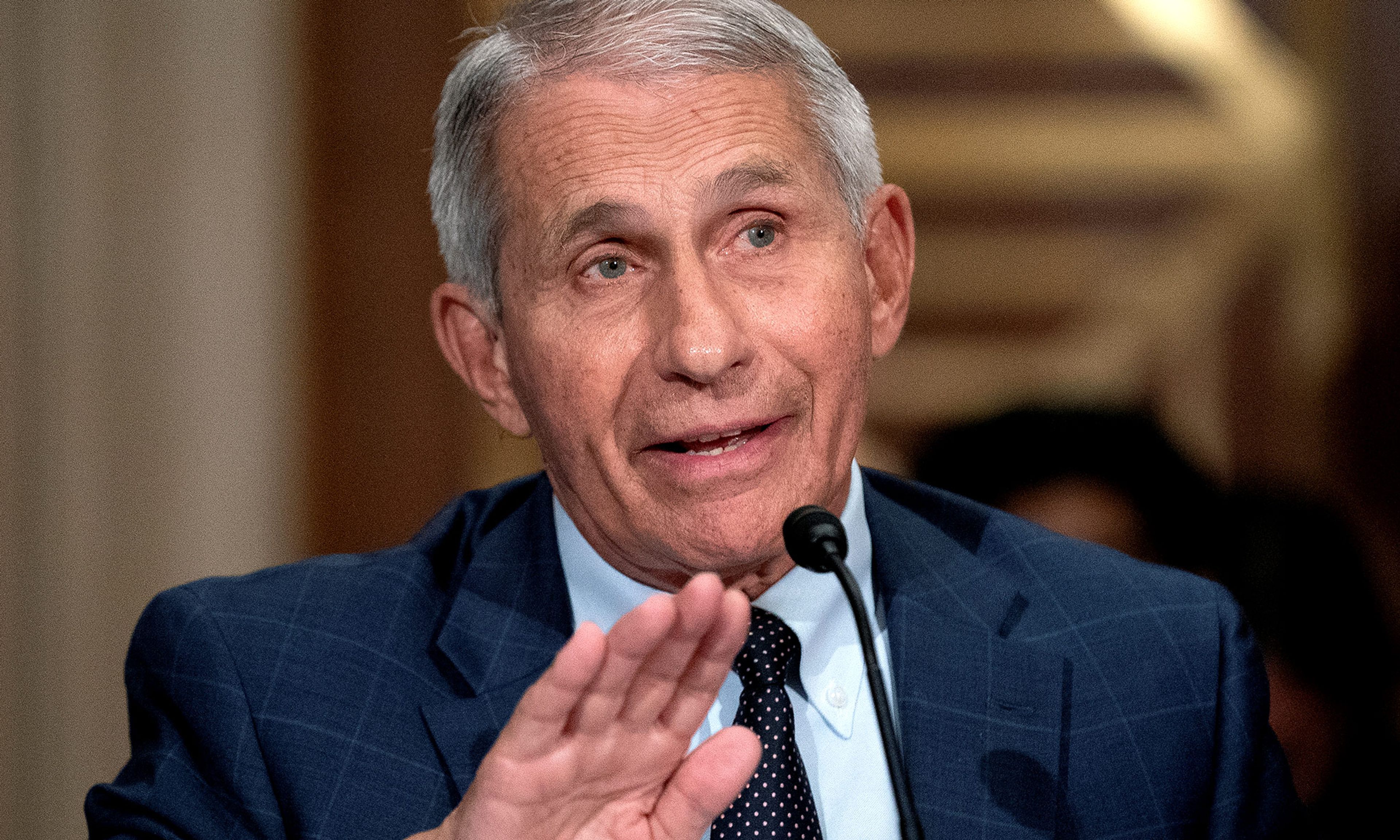
Dr. Anthony Fauci has finally acknowledged that there had always been good scientific reasons to believe that vaccines against the respiratory virus that causes Covid-19 — SARS-CoV-2 — would provide limited protection against infection that would not be long-lasting. That is precisely what happened: It quickly became apparent that protection against transmission lasted just a few months, and initial effectiveness declined as each new viral variant proved more contagious than its predecessor. Yet Fauci insisted that repeated vaccines were needed for everyone and until recently pushed for vaccine mandates. This has resulted in shortages of essential workers, poorer educational outcomes, and diminished trust in public-health authorities.
Last month in an article in the journal Cell Host & Microbe, Fauci wrote that vaccines against respiratory viruses generally provide “decidedly suboptimal” protection against infection and rarely produce durable, protective immunity. The reason is that most of these viruses, such as influenza, which causes the flu, and SARS-CoV-2, have short incubation periods during which they infect the respiratory mucosa and rapidly replicate there without spreading systemically. Moreover, according to Fauci, the human immune system has evolved to tolerate respiratory viruses during short intervals of mucosal viral replication. This leads to illness and onward transmission without eliciting a systemic immune response.





Comments