Firing University Presidents Won’t Fix Higher Education’s Fundamental Flaws

By removing these leaders, we succeeded only in eliminating an easy target of public criticism, a fact that allows the schools to deflect accountability.

Share this story

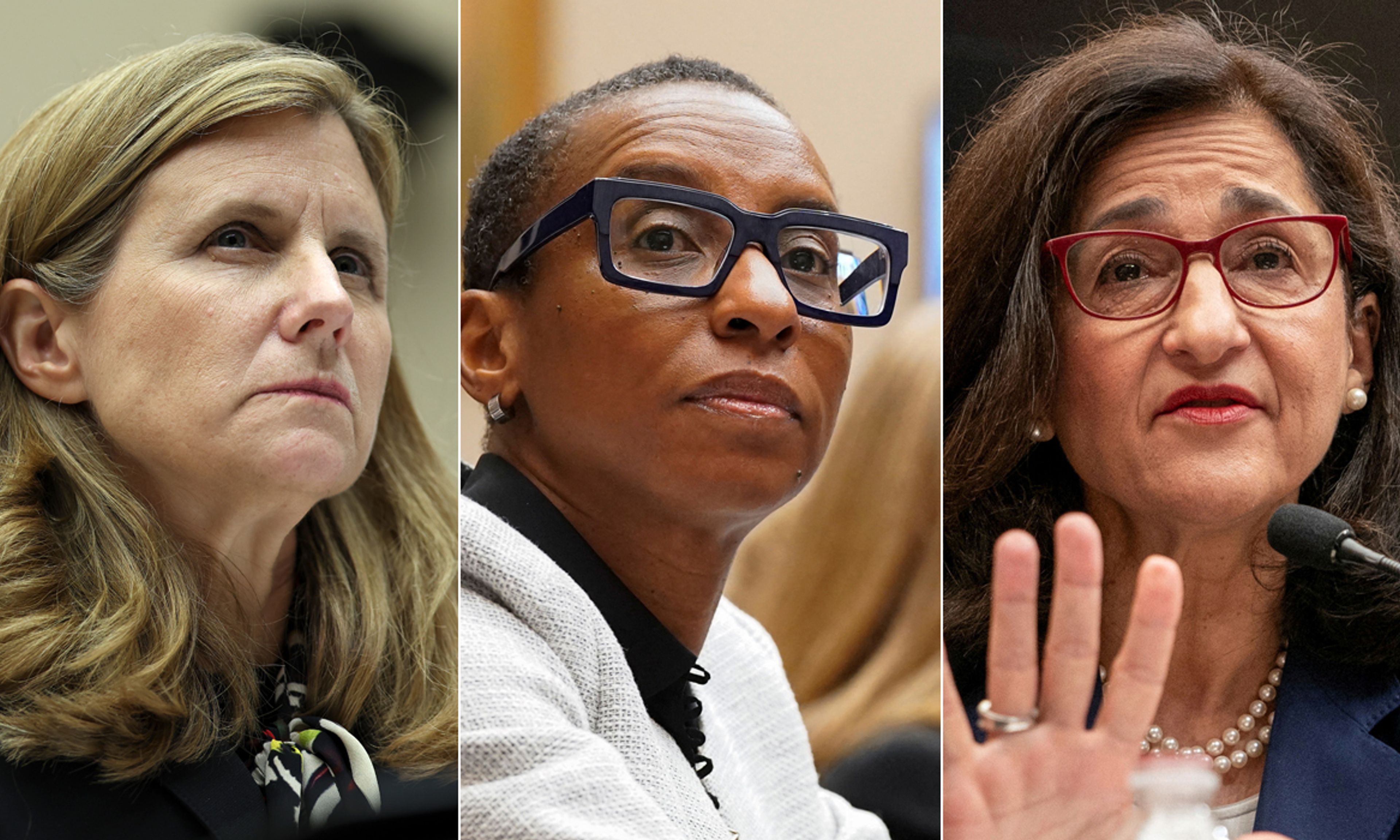
From left: Then-president of the University of Pennsylvania Liz Magill, then-president of Harvard University Claudine Gay, and then-president of Columbia University Minouche Shafik during their testimony on Capitol Hill.

Kevin Dietsch/Getty Images; Ken Cedeno/Reuters

We should all stop celebrating the resignations of Ivy League presidents.

Last December, Liz Magill, then president of my alma mater, the University of Pennsylvania, resigned. This was the result of a public-relations nightmare for the school, brought on by a rise in antisemitism on campus, widespread protests, and, of course, her disastrous performance in front of the House Education and Workforce Committee. While the Right celebrated, I wrote a cautionary tale about their excitement. Now, as Ivy League presidents keep dropping like flies, the latest victim being Columbia’s chief administrator, Minouche Shafik, we should all remember that new management doesn’t fix a broken business model. (After all, Magill is now headed to Harvard.)

LB

About the Author

Lexi Boccuzzi

Lexi Boccuzzi is a policy analyst at the Manhattan Institute. She is also a recent graduate of the University of Pennsylvania where she founded a new heterodox student publication, The Pennsylvania Post. She often writes about culture, conservatism, electoral politics, and higher education as it pertains to Gen Z. Her work can also be found in City Journal and Real Clear Politics.

Comments

Advertisement

Advertisement

