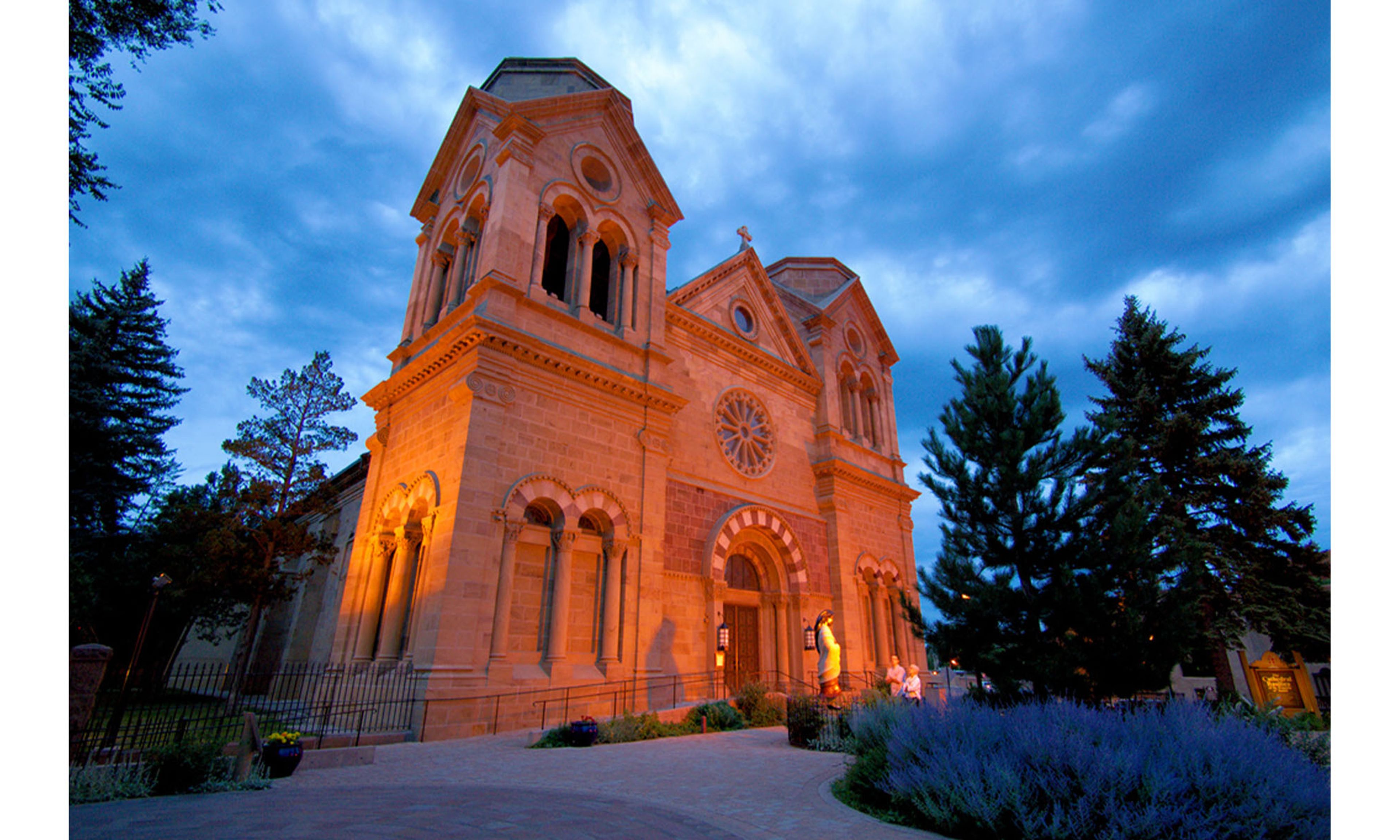
Greetings from Santa Fe, Death Comes for the Archbishop country. Willa Cather is among my most-loved writers for her empathy for rural settings and for her portrait of pioneers and the centrality of endurance, atmosphere, and history. Death Comes for the Archbishop, published in 1927, is set mostly in New Mexico between 1850 and 1890. Cather (1873–1947) translates into fiction the lives of two French missionaries: Jean-Baptiste Lamy (1814–1888), named Jean Marie Latour in the book; and Joseph Machebeuf (1812–1889), or Joseph Vaillant in the novel. The two are sent to New Mexico to build the Roman Catholic faith among frontier Mexicans and Natives, many of whom mixed traditional Catholic practices and beliefs with insurmountably pagan ones like priestly concubinage. Over decades, Latour and Vaillant prod and push, but they accommodate and integrate, too. And they learn to respect Native faiths so different from their own.
I was in Santa Fe for a few days for its first-rate opera festival but also to experience its vibrant visual arts scene and as much of Latour’s and Vaillant’s worlds as still exists, which is plenty. Santa Fe is old, founded in 1606 as the capital of New Spain, and it’s still small, having only about 85,000 people and keeping its Old West look.





Comments