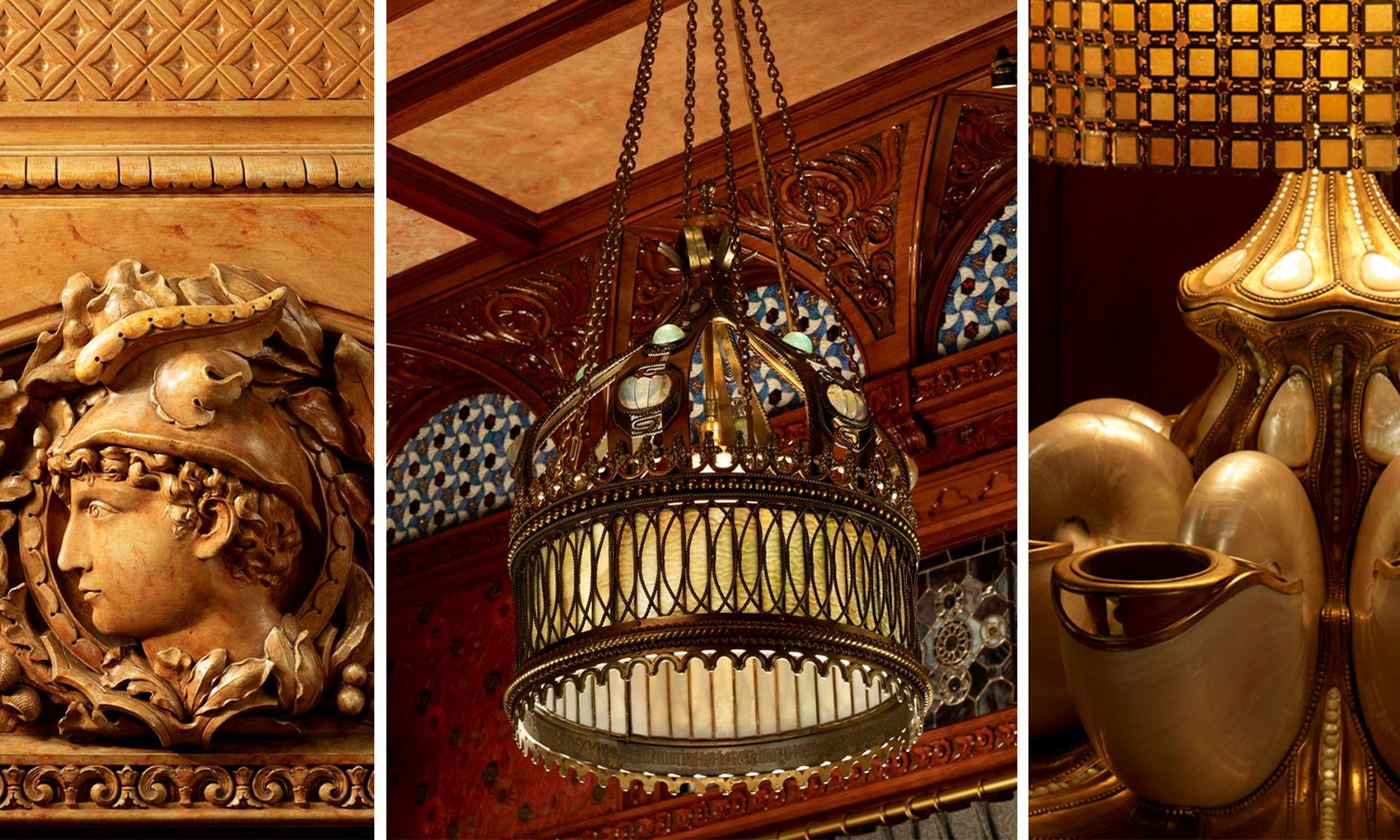
A few weeks ago, I was in Chicago to see the Art Institute’s splendid exhibition of the work of Gustave Caillebotte, but part of my mission was to see the Richard Driehaus Museum, a Gilded Age house I’d never visited. It’s been open only since 2008 and just opened a building next to it that it renovated and restored. Mostly it displays the collection of decorative arts, nearly all from around 1870 to 1910, of Driehaus (1943–2021), a lifelong Chicagoan and himself a man on a mission. It’s an extraordinary museum and an antidote to all that’s drab, common, cheap, and beige about contemporary American home design.
The Driehaus started as Samuel Mayo Nickerson’s Italianate mansion, built a few years after the Great Fire in 1871 for Chicago’s great banking, booze, and dynamite millionaire. It’s the museum’s biggest and grandest work of art. The neighborhood in the Near North Side of Chicago drew the city’s elites, and Nickerson poured out plenty of dough to make his new home what we’d call a Gilded Age palace, with 17 types of marble, alabaster, plenty of inlaid and carved wood details, tile, mosaics, and embossed wallpaper. Like many big Gilded Age houses, it’s a mix of styles — Renaissance Revival, Georgian Revival, Gothic Revival, Chinese, Japanese, Moorish Revival, and Second Empire. It’s lavish. Nickerson and his wife were deeply involved in Chicago high culture. He was a founding trustee of the Art Institute of Chicago. Both provided anchor leadership for the 1893 Columbian Exposition in Chicago. Their masked balls were renowned.



Comments