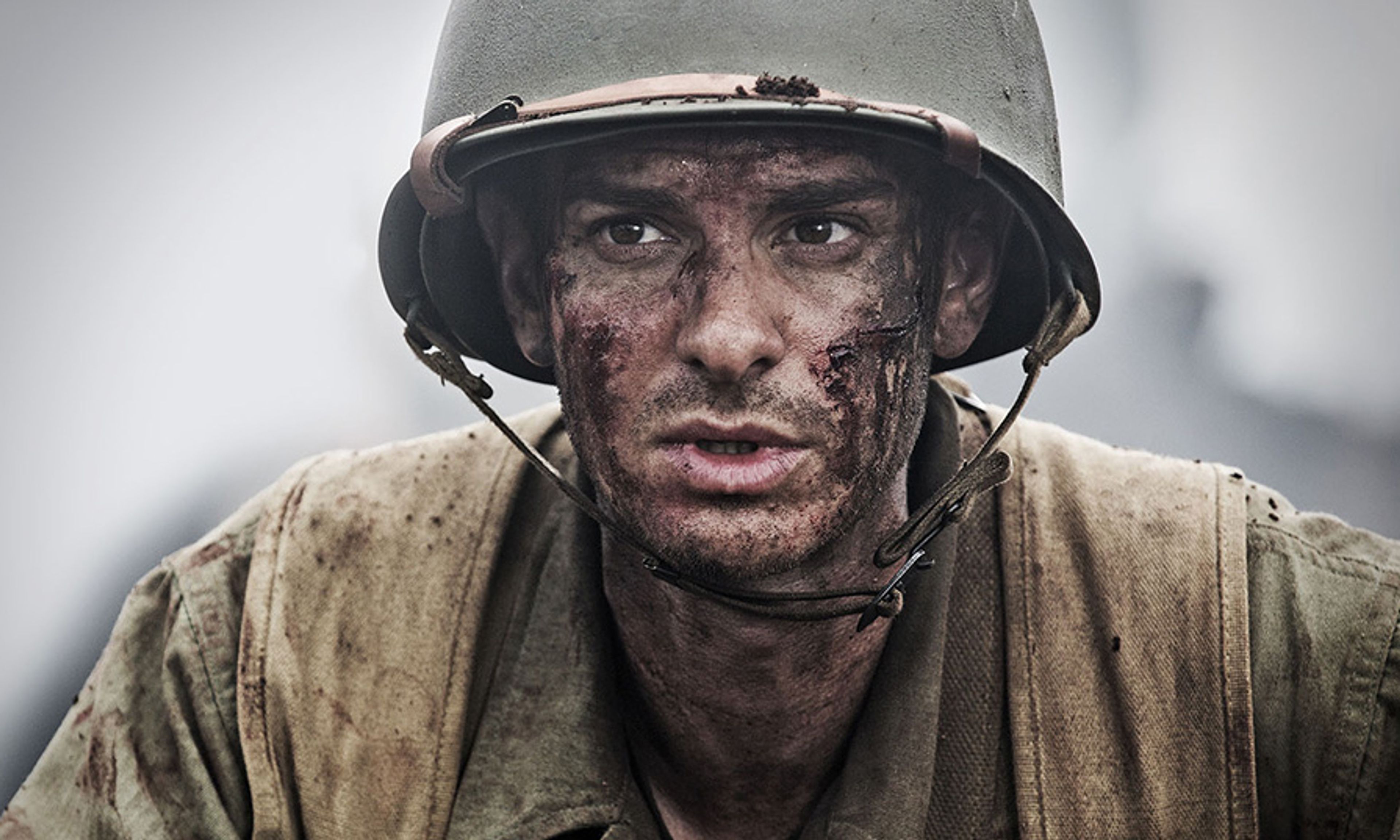
Mel Gibson’s Hacksaw Ridge is much more than a war movie. Titled after the 1945 Battle of Okinawa on the Japanese bluff known as Hacksaw Ridge, it tells the true-life story of Desmond Doss, a religious conscientious objector who nevertheless saved dozens of fellow soldiers’ lives while serving as a battlefield medic during the final days of World War II. Doss received a Medal of Honor from President Truman, but, ironically, the movie is the work of a famously Christian filmmaker who was publicly excoriated by the mainstream (i.e., secular) media, which lashed out against his 2004 The Passion of the Christ (discussed in my 2014 NRO article “The Year the Culture Broke”).
With Hacksaw Ridge, Gibson openly responds to what has now become a routine character-assassination attempt by the media; he envisions the Battle of Okinawa as a test of morality and religious faith. Doss, a Virginia-born Seventh-day Adventist (portrayed by Andrew Garfield), claimed conscientious-objector status based on his personal Christian pacifism. Gibson shows how that pacifism derived from Doss’s background: Having grown up as a violence-addicted son of a bitterly traumatized WWI veteran (Hugo Weaving), Doss as an adult becomes a devout pacifist who clashes with military tradition to win his right to service. What he encountered in fulfilling his faith and duty is movingly depicted in the film, but it’s the emotional undercurrent that makes Hacksaw Ridge extraordinary.



Comments