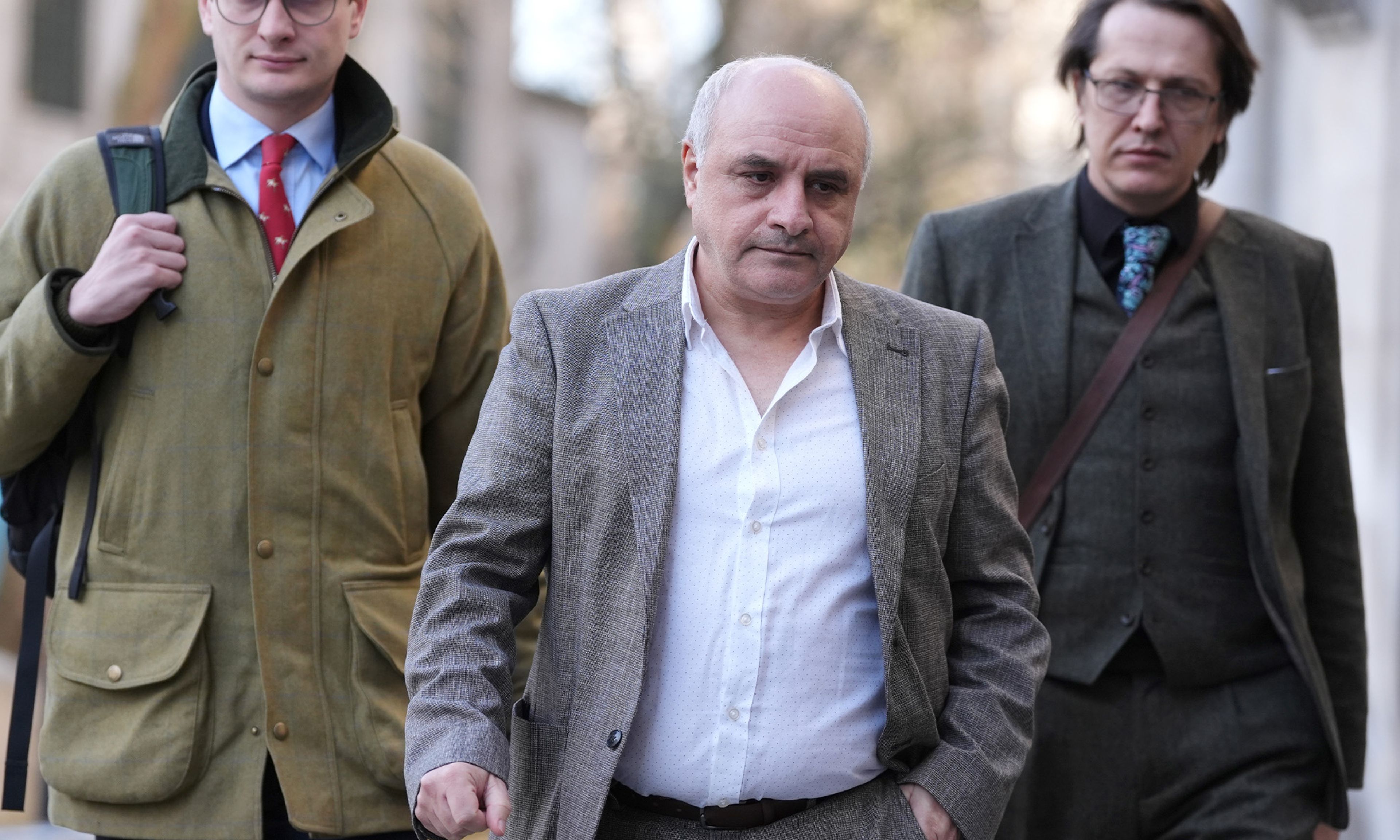
The third act of a dramatic show trial starring Hamit Coskun, who (in)famously burned the Koran, is over. Although the British court sided with Coskun, the decision cannot be celebrated as a victory for free expression or as a win for him. The protracted case constitutes a punishment that discourages similar demonstrations; the government’s lawyers subtly espoused special standards for Islam and Muslims; and the delicate judgments heavily relied on the environmental circumstances of the demonstration rather than the principles of protected expression. Perhaps the real accomplishment, though tragically coming at a great personal cost to Coskun, is that his lifelong status as a walking political bull’s-eye only reinforces the point of his protest, specifically that “Islam is the religion of terrorism.”
Coskun, who was born in Turkey and fled to England, was sentenced and fined for burning a Koran outside the Turkish consulate in London while yelling profane condemnations such as “F*** Islam.” While some witnesses seen on video appear entirely unbothered by the protest, Coskun was attacked by two individuals. A (still unidentified) deliveryman passing by on a bike kicked Coskun. Additionally, Moussa Kadri called Coskun a “f***ing idiot,” said he was going to kill Coskun, went inside to retrieve a knife, and then physically attacked Coskun. In court, Coskun argued that his demonstration expressed opposition to the Turkish president, Islam, and terrorists — not Muslims categorically. Judge John McGarva nevertheless determined that Coskun “has a hatred of Muslims.” Coskun was deemed guilty of a religiously motivated public-order offense under the Crime and Disorder Act 1998 and the Public Order Act 1986.





Comments