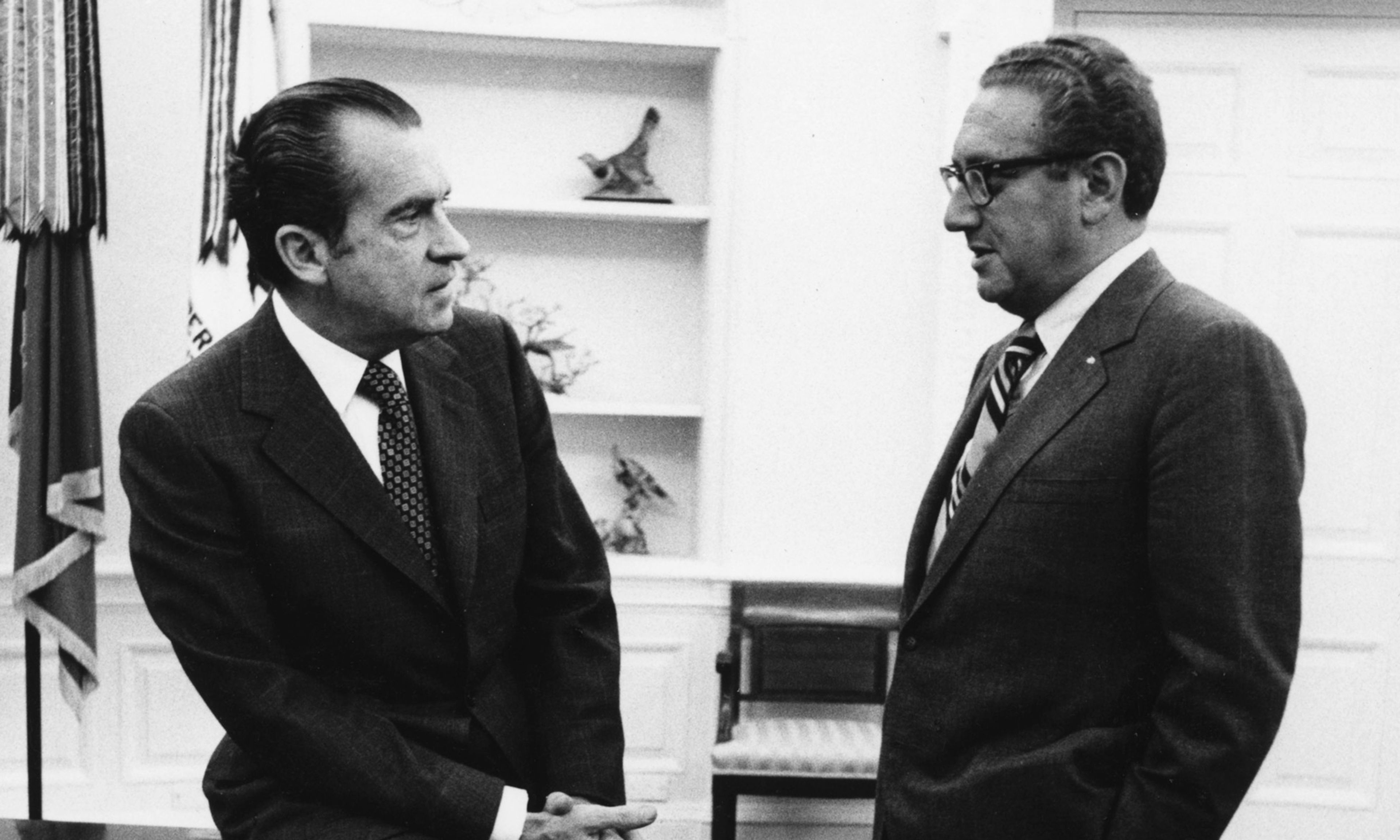
In a sense, Richard Nixon’s long-nursed hope that time would vindicate his presidency looks even more unlikely now than it did on that overcast August day in 1974 when the helicopter bore him away from the White House, and into history, covered in Watergate’s disgrace. Thirty-four years and six presidencies later, he still gets dreadful marks in historians’ polls and public-opinion surveys alike. And every attempt at rehabilitation — Conrad Black’s doorstop of a biography is probably the most impassioned recent example of the genre — finds itself quickly undercut by the release of yet another salvo from the arsenal of Nixon tapes, featuring our 37th president at his snarling, profane, and paranoid worst.
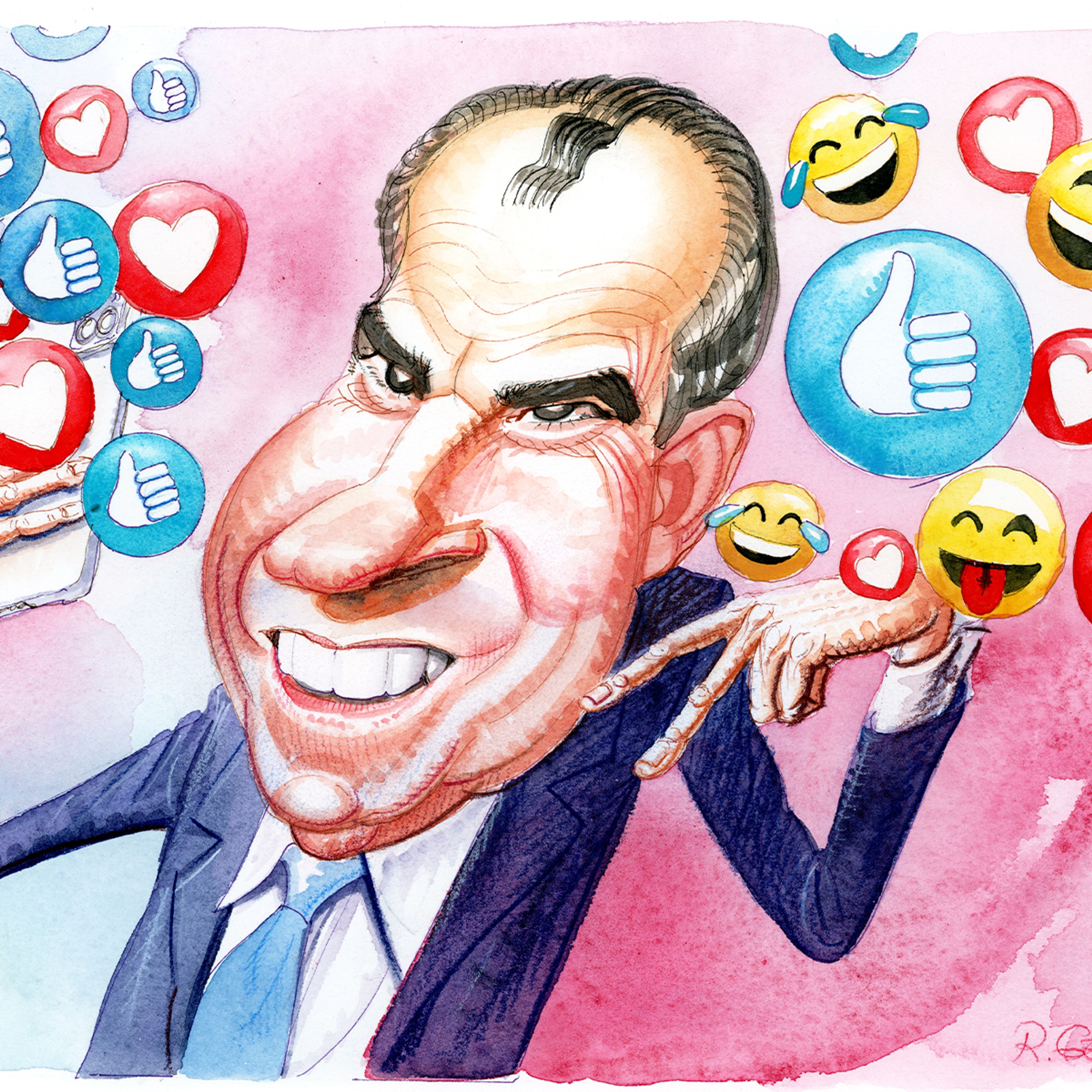
Yet part of Nixon might be pleased with how he’s remembered even so. We may not like him much, but more than almost any of his presidential peers, our culture can’t seem to let go of him. Reagan and Kennedy may be more beloved, but both have become plaster saints, remembered more as icons than as human beings. Nixon the man, meanwhile, is somehow more alive today than ever. Any president can earn the approbation of historians: Only Tricky Dick has become a figure out of Shakespeare. All the world’s a stage, and he stalks its floorboards even now — in literature and cinema, high culture and low culture alike. The book titles testify to his grip on our imagination: Nixon at the Movies, Nixon’s Shadow, Nixonland. You can almost imagine him cackling to Haldeman, in whatever dim purgatorial cell they share: They can’t get enough of me! They’ve got Anthony Hopkins playing me at the movies! You don’t see Academy Award winners lining up to play Jimmy Effing Carter, do you? And Nixon in China, my God . . . Nobody ever wrote an opera about Lyndon Johnson, did they?
Frost/Nixon, the hit play turned Ron Howard movie about the ex-president’s first big post-Watergate interview, only offers more grist for our ghostly Nixon’s mill. The interview, conducted over hours and days by the British celebrity journalist David Frost — who paid Nixon a cool $600,000 for the privilege — is an interesting historical footnote, but a footnote nonetheless, and it’s hard to imagine a similar encounter between, say, George W. Bush and Ryan Seacrest being turned into an Oscar-bait film in 2038. But this is Nixon, so the usual rules don’t apply: Even the footnotes are transfixing.
Still, the movie is trying a bit too hard. The original play and the screenplay alike are the work of Peter Morgan, a British dramatist with a facility for intimate portraits of powerful people in crisis. These have ranged from the sublime (Helen Mirren as a post-Diana Elizabeth II in The Queen) to the engaging (Forest Whitaker’s Idi Amin in The Last King of Scotland, gulping down the scenery and asking for seconds) to the irredeemably lousy (both Boleyn sisters and the king they loved in The Other Boleyn Girl). But all of these efforts had the advantage of revolving around an actual moment of political crisis, either for the English monarchy, past or present, or for the unhappy Uganda of the 1970s. In Frost’s interviews with Nixon, by contrast, the ex-president’s crisis, and the country’s, was long past; the stakes were high, in a sense, but only for the interviewer himself.
The movie pretends otherwise, insisting that this was a chance for Nixon to redeem himself in history’s eyes, and a chance for television to give the disgraced president the trial he never had. But really it was just a chance for Frost, who had staked a fortune and his reputation on a gambit that more legitimate reporters regarded with distaste, to pry enough interesting material out of his subject to generate ratings, cash flow, and respect. This is a movie about the television business, in other words, that thinks of itself as a movie about high politics — and strains, portentously and unsuccessfully, to make good on that boast.
The central conceit is the interview as boxing match: The bantamweight Frost (Michael Sheen), grinning and insecure, gathers his trainers — the choleric Jimmy Reston (Sam Rockwell) and the sanguine Bob Zelnick (Oliver Platt) — to prep him for the fight with endless reams of research. The confident heavyweight — Frank Langella, all gravelly gravitas and buried anger — awaits the challenger, huddling with his trainer (Kevin Bacon as Jack Brennan, Nixon’s ex-Marine adviser) and reassuring himself that the fight will be a record-padding knockout. The duel itself takes place in rounds, under klieg lights, with the two performers bobbing and weaving, looking for an advantage. Frost starts with a wild swing — “Why didn’t you burn the tapes?” — and misses badly, and for a while the champ has everything his way. But the last round decides the fight . . .
As the foregoing suggests, in the movie’s world Frost comes out the winner, because in the final hour of the interview his flurry of well-researched questions about Watergate makes his subject squirm, and produces the memorably appalling claim that “when the president does it, that means it is not illegal.” But in our world, the world of the moviegoing public, Richard Nixon wins Frost/Nixon in a walk. The ostensible protagonist never comes into focus as a character: Sheen’s performance is engaging but all surface, and the movie seems afraid to actually make him as unlikable a self-promoter as he probably was. Langella’s Nixon, though, is larger, physically and otherwise, than the real-life article, containing multitudes and throwing the rest of the cast into his shade.
True, we hear a fair amount about his crimes, particularly from the griping, self-righteous Reston, but what we see in Langella’s brooding, sympathetic portrait is what Nixon would no doubt wish for us to see: a Great Man brought low by his demons and mistakes, but shot through with greatness nonetheless. Nixon’s essential smallness, and the grasping grubbiness of his crimes and sins, is transmuted, for dramatic purposes, into the stuff of great American tragedy: Lear on the heath, Macbeth facing Banquo’s ghost. If this is how we’re to remember Nixon, then he’s on his way to winning history’s favor after all — not as our greatest president, perhaps, but as the most memorable.


Comments