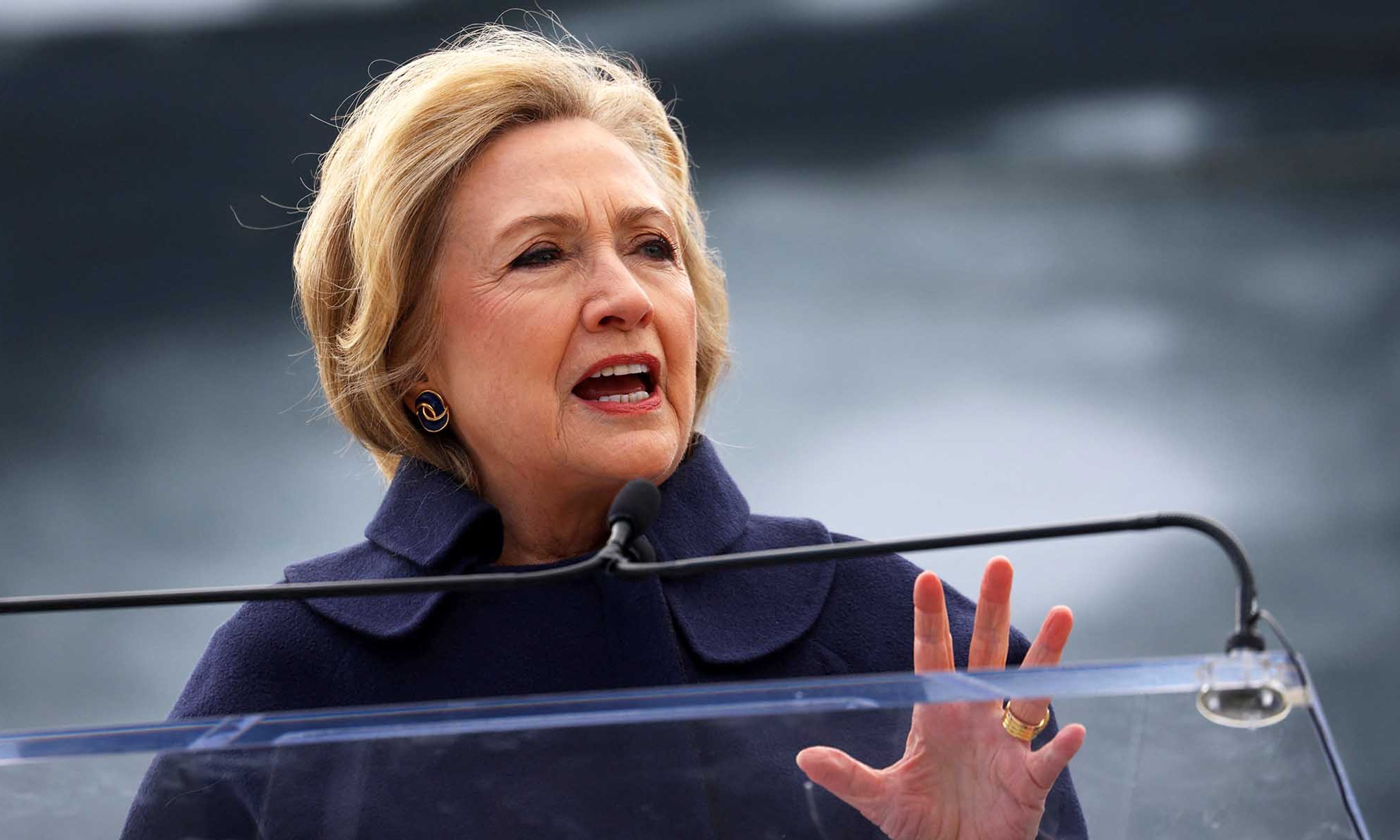
Hillary Clinton is worried about loneliness in the United States. Or, rather: Hillary Clinton is pretending to be worried about loneliness in the United States. “To defend America against those who would exploit our social disconnection,” she writes in today’s Atlantic, “we need to rebuild our communities.” “Over the past two decades,” Clinton observes, “Americans have spent significantly more time alone, engaging less with family, friends, and people outside the home.” That problem, she concludes, is not only bad for our health and well-being but for the future of the country. Why? Because social isolation “saps the lifeblood of democracy,” it has made us “susceptible to a would-be strongman and demagogue,” and it “diminishes civic engagement and social cohesion, and increases political polarization and animosity.”
I do not disagree with all of this. Writers from Robert Putnam to Tim Carney have chronicled the many ways in which Americans have become, in Clinton’s words, “more isolated, lonely, and unmoored from traditional sources of meaning and support.” The rise of the Internet has undoubtedly reduced the frequency of our in-person social interactions. And there, indeed, is a connection between the atrophying of certain communities and the rise of figures such as Donald Trump. But I must confess to finding it utterly astonishing that, in the course of 3,500 words on this topic, the only frame within which Clinton seems able to set the problem of American loneliness is the supposed perfidy of the Republican Party and its friends. Per Clinton, this is yet another story about the “vast right-wing conspiracy” — a phrase that she uses unironically — and the dastardly group of “right-wing leaders” who sustain it. As ever, Clinton’s tale is hilariously one-dimensional. Its villains are the “ultra-right-wing billionaires, propagandists, and provocateurs who see authoritarianism as a source of power and profit”; “right-wing politicians like Newt Gingrich and media personalities like Rush Limbaugh”; and Steve Bannon, whose “key insight,” Hillary proposes, was to turn “socially isolated gamers into the shock troops of the alt-right, pumping them full of conspiracy theories and hate speech.” Its heroes are “the significant investments being made under President Joe Biden,” which will “lift both incomes and aspirations,” “the historic legislation enacted by Biden and the Democrats in Congress,” and . . . well, Hillary Clinton, for having written a book titled It Takes a Village. “It’s clear,” she writes in saccharine self-congratulation, “that the problems I diagnosed in the 1990s ran deeper than I realized, and were more dire than I could have imagined.” Oh, Cassandra, what have we done?





Comments