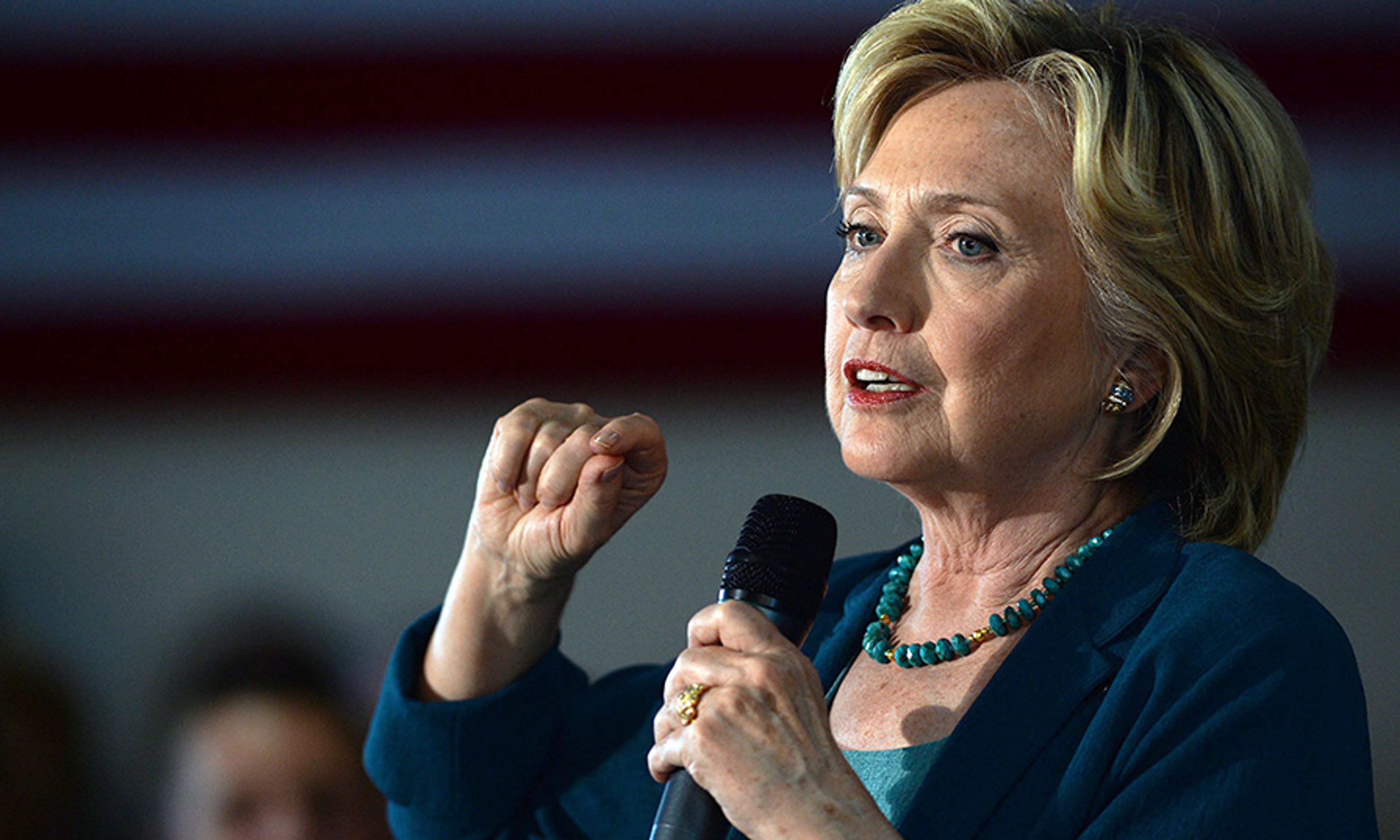
Democratic presidential frontrunner Hillary Clinton unexpectedly announced her opposition to the Keystone XL Pipeline during a health-care forum in Iowa on Tuesday, calling the long-stymied international petroleum project a “distraction from the important work we have to do on climate change.”
For months, Clinton has declined to voice an opinion on the pipeline, which requires White House approval because it crosses the Canadian border. Key Democratic constituencies fall on either side of the issue — union leaders argue that the project will create jobs and fuel the economy, while environmentalist activists say it will increase greenhouse-gas emissions and could lead to massive oil spills in certain key areas.
“I thought this would be decided by now, and therefore I could tell you if I agree or disagree,” she told supporters in Iowa on Tuesday. “But it hasn’t been decided, and now I feel like I have a responsibility to you, and [to] voters who ask me about this.”
“I think it is imperative that we look at the Keystone Pipeline as what I believe it is — a distraction from the important work we have to do on climate change,” she continued. “And unfortunately, from my perspective, one that interferes with our ability to move forward with all the other issues. Therefore I oppose it.”
#related#After taking flack from Democratic rival Bernie Sanders for refusing to stake out a position on the pipeline, Clinton hinted last week that a decision was coming. “I’m gonna tell you what I think soon because I can’t wait,” she told supporters in New Hampshire last week. “I thought they would have it decided . . . by now, and they haven’t.”
The Obama administration declined to take a position on the pipeline for years, allowing the project to languish before ultimately vetoing legislation approving its construction in February 2015. The pipeline — parts of which have already been completed — would pump crude oil from Alberta, Canada, to refineries across the midwestern United States and to shipping terminals in Houston, Texas.
— Brendan Bordelon is a political reporter for National Review.






Comments