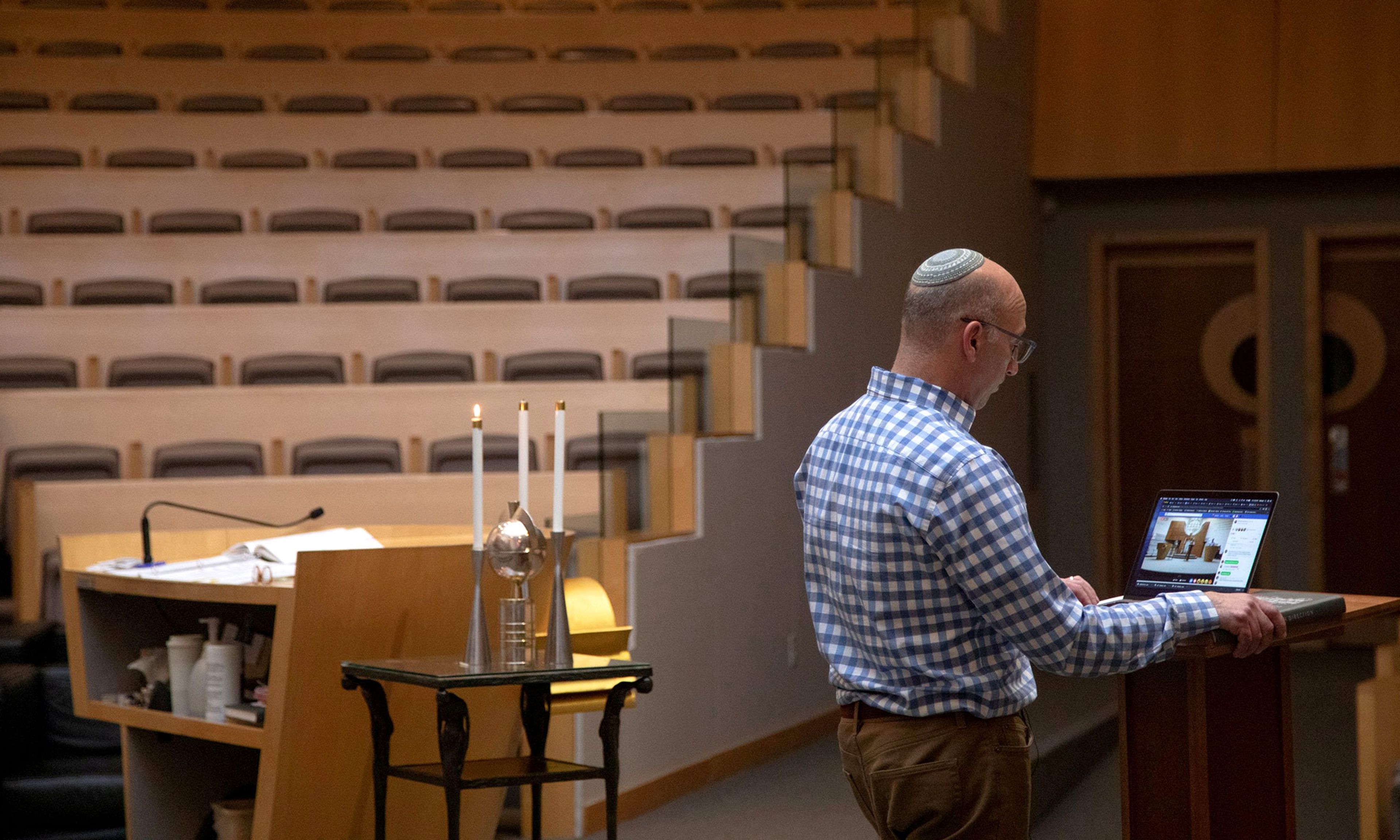
The Jewish circadian rhythm reboots every September. The high holidays of Rosh Hashanah and Yom Kippur bring many of us out of religious hibernation and back into contact with our communities. Their falling early this year allowed many to celebrate the holidays outside stodgy synagogues and amid open-air tents and the crisp fall air.
Unfortunately, that is perhaps the only upside that Jewish community leaders are finding these days. For the vast majority of American Jews, the pandemic has hit particularly hard a community already reeling from disconnection and dwindling numbers. According to a Pew Forum survey in 2020, nearly 80 percent of American Jews attended synagogues only on high holy days; these people are what many in the community jokingly refer to as “three-day-a-year” Jews. For them, the high holidays represent perhaps the only meaningful connection they share with the broader community in a given year.



Comments